Tea in Kashmir is not just a beverage — it is a cultural institution. The rituals around tea, the specific vessels used, the times of day when different teas are consumed, and the social contexts in which they are shared are all part of what makes Kashmiri tea culture worth understanding.
Two teas define Kashmir: Kahwa and Noon Chai. They are opposites in almost every way — different colour, different flavour, different character, different occasions. Both are worth drinking properly during any visit to the region.
Kahwa — The Green Tea of Kashmir
Kahwa is the tea that represents Kashmir to the outside world. If you have stayed on a houseboat, attended a function in Srinagar, or been welcomed into a Kashmiri home, you have almost certainly been offered Kahwa.
What Kahwa Is
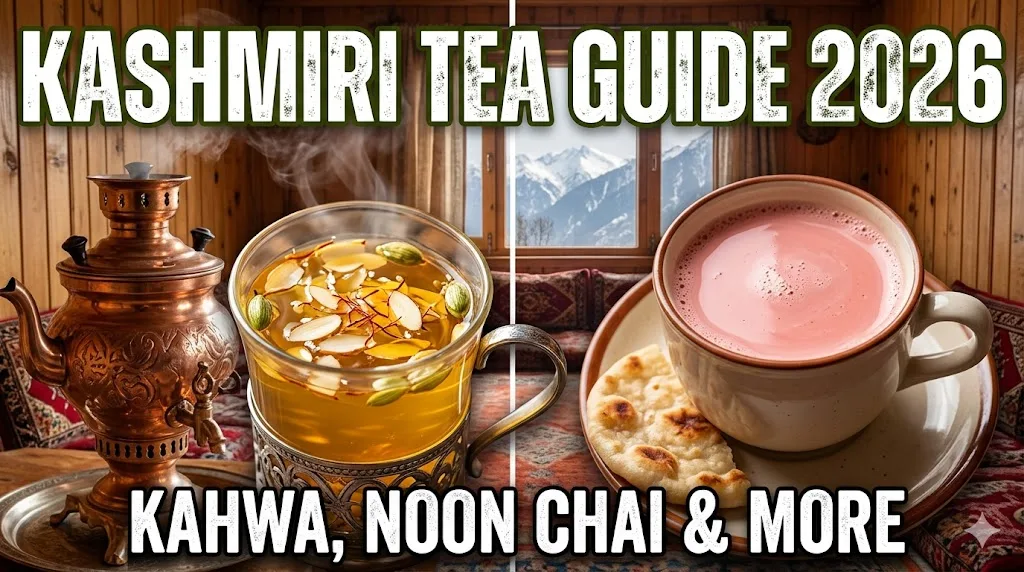
Kahwa is a spiced green tea — made from Kashmiri green tea leaves (sometimes called Qehwa leaves or Kehwa leaves, a variety of Camellia sinensis adapted to the Kashmir Valley’s conditions) brewed with whole spices and saffron. It is served hot in a special vessel called a “Samavar” (a traditional urn, usually copper or brass) and poured into small cups or glasses.
The core ingredients are consistent across every household and establishment that makes Kahwa properly:
- Kashmiri green tea leaves
- Saffron threads
- Cinnamon (a small piece of bark)
- Cardamom (2–3 pods, lightly crushed)
- Sometimes: cloves, rose petals, or fennel seeds
The garnish — floating on top of the poured tea — is crushed or slivered almonds, walnuts, or both.
What Kahwa Tastes Like
Kahwa is light, aromatic, slightly sweet from the spices, with the warmth of cinnamon, the fragrance of cardamom, and the distinctive character of saffron. It is not bitter like a standard green tea. It is not sweet in the sugary sense — any sweetness is from the spices and the natural quality of the tea.
It has no milk. Do not add milk to Kahwa. It changes the entire character of the tea and is not the traditional preparation.
The first time many visitors try Kahwa, they find it unusual — it does not resemble any tea they have had before. The second cup is always better than the first, as the flavour becomes familiar.
When Kahwa Is Served
Kahwa is served:
- As a welcome drink when guests arrive
- At breakfast, alongside bread and eggs on houseboats
- After meals as a digestive
- Throughout the day as a comfort drink in cold weather
- At celebrations, weddings, and formal gatherings
- At religious events and shrine visits
There is no wrong time for Kahwa in Kashmir. It is an all-day, all-occasion drink.
How to Make Kahwa
Ingredients (for 2 cups):
- 2 cups water
- 1 teaspoon Kashmiri green tea leaves
- 4–5 saffron threads
- 1 small piece of cinnamon bark
- 3 cardamom pods, lightly crushed
- Sugar to taste (optional — many purists drink it unsweetened)
- Crushed almonds for garnish
Method:
- Bring water to a boil in a small pot
- Add cinnamon and cardamom, let it simmer for 2 minutes
- Add the green tea leaves and saffron
- Let it steep for 2–3 minutes (do not over-steep — Kahwa should be light, not strong)
- Strain into cups
- Add sugar if desired
- Garnish with crushed almonds
The saffron should give the tea a faint golden-yellow colour. Do not use so much saffron that it becomes intensely yellow — Kahwa should be pale and delicate.
The Samavar
The Samavar is the traditional vessel for preparing and serving Kahwa at gatherings. A copper or brass urn with a central chimney (in which burning charcoal is placed to keep the tea hot) and a spigot for pouring — the Samavar is both functional and decorative. Traditional Samawar are elaborately engraved and represent significant craft skill.
At a traditional Kashmiri gathering, the Samavar is placed at the centre of the room and guests help themselves. The ritual of pouring from a Samavar, the small cups circulated, the communal sharing — this is the social function of Kahwa.
Smaller personal Samawar are also used in homes. Modern versions use an electric heating element rather than charcoal — functional but lacking the character of the traditional version.
Noon Chai — The Pink Tea
Noon Chai (also called Sheer Chai or Gulabi Chai — meaning pink tea) is the tea that surprises visitors most. It is pink. It is slightly salty. It is made with baking soda. And it is one of the defining daily drinks of the Kashmir Valley.
What Noon Chai Is
Noon Chai is made from a specific type of green tea — traditionally a variety called “Qehwa patti” or in some preparations, “gunpowder tea” (tightly rolled green tea leaves). The leaves are brewed with baking soda (sodium bicarbonate), which reacts with the tea compounds to produce the characteristic pink-red colour. Milk is added, and salt is added rather than sugar — “Noon” means salt in Kashmiri.
The core ingredients:
- Special Noon Chai tea leaves (or gunpowder green tea)
- Baking soda (this creates the pink colour)
- Milk (full-fat)
- Salt
- Sometimes: cardamom, star anise
What Noon Chai Tastes Like
Noon Chai is savoury-milky with a mild, slightly metallic tea flavour underneath. The salt is present but not overwhelming. The colour is the most striking thing — the deep pink-red of the tea in a white cup is genuinely beautiful.
Most visitors find Noon Chai an acquired taste on first encounter. It does not resemble any tea they have had before — neither green tea nor chai nor anything else. The savoury character is the most unfamiliar element for visitors accustomed to sweet tea.
Kashmiri people drink Noon Chai at breakfast — typically with traditional breads like Girda, Sheermal, or Bakarkhani from the kandur waan (local bakery). The combination of the salty, milky tea with the slightly sweet breads creates a balance that makes sense once you try it together.
When Noon Chai Is Served
Noon Chai is primarily a breakfast drink in the Kashmir Valley. It is consumed in the morning alongside freshly baked bread. Some households drink it throughout the day, but it is most associated with the first meal.
It is also served at celebrations and gatherings — the pink colour makes it a visually festive drink for special occasions.
How to Make Noon Chai
Making Noon Chai properly requires the specific tea leaves and takes more time than Kahwa. The traditional process involves an extended brewing and aerating process:
Traditional method (simplified):
- Bring 2 cups water to a boil
- Add 1.5 teaspoons Noon Chai leaves and a small pinch of baking soda
- Boil vigorously for 5–7 minutes (the extended boiling with baking soda creates the colour reaction)
- Add 1 cup cold water and continue boiling for 5 more minutes
- The tea should now be a deep maroon-red colour
- Add 1 cup full-fat milk
- Add salt to taste (start with 1/4 teaspoon)
- Simmer for 2–3 minutes
- Strain and serve
The colour deepens as the tea cools slightly. Adding cream to the top (as some traditional preparations do) creates a lighter pink layer over the darker tea.
Other Kashmiri Teas and Drinks
Sherbat-e-Gulab (Rose Water Sharbat)
A cold drink made from rose water, sugar, and sometimes milk — pink in colour (naturally, from the rose water). Served at weddings and celebrations. Sweet, floral, refreshing in summer.
Kehwa with Milk
A less traditional but widely consumed variation — Kahwa prepared with a small amount of milk added. The result is a lighter version of chai with the aromatic character of the spices. Not the traditional preparation but commonly available at restaurants and cafes serving visitors.
Kashmiri Chai at Cafes
Modern cafes in Srinagar — particularly around Boulevard Road and the tourist areas — serve Kashmiri Chai, which is typically a Noon Chai or a milky spiced tea marketed to visitors. Quality varies significantly. The best Noon Chai is from traditional households and local teashops, not from tourist-facing cafes.
Where to Experience Kashmiri Tea Properly
On a houseboat: The best Kahwa experience in Srinagar is on a quality houseboat. The combination of the lake view, the copper vessel, the morning light, and the properly made Kahwa is the definitive experience.
At a traditional bakery (kandur waan): Morning Noon Chai with fresh Girda bread from a local kandur waan in the residential areas of Srinagar — sitting at a small table in a neighbourhood bakery alongside local residents — is how Kashmiri people actually experience their morning tea. This is more authentic than any café version.
At shrine visits: Green tea (often a simpler version than full Kahwa) is frequently offered to visitors at major shrines and religious sites. Accept it — this hospitality is genuine and part of the cultural experience.
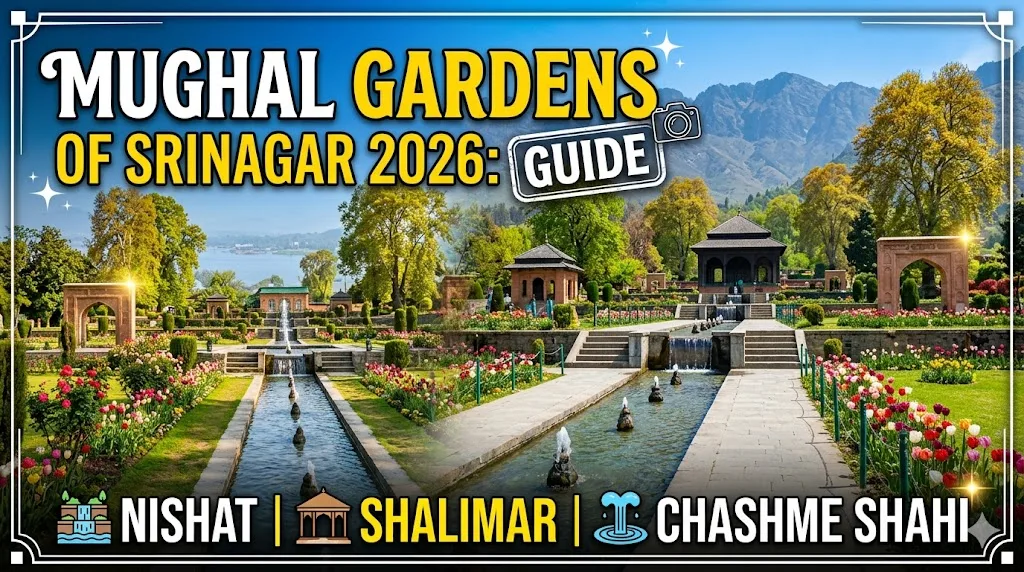
At Mughal Gardens: Several small vendors near the Mughal Garden entrances sell proper Kahwa in small thermoses. Drinking Kahwa while sitting in Nishat Bagh in the morning is a particular combination worth seeking out.
Buying Kashmiri Tea to Take Home
Kashmiri tea makes an excellent gift or souvenir — lightweight, easy to pack, and unique to the region.
What to buy:
- Kahwa blend: Pre-mixed Kahwa with saffron, cinnamon, and cardamom included. Available in attractive packaging at tea shops and handicraft stores throughout Srinagar. Quality varies — buy from a dedicated tea shop rather than a tourist handicraft store.
- Noon Chai leaves: The specific leaves used for Noon Chai. Available at local spice and tea shops. Ask specifically for “Noon Chai patti” or “Sheer Chai patti.”
- Kashmiri saffron: To make your own Kahwa at home with fresh saffron.
Where to buy: The spice and dry fruit shops in the market areas near Lal Chowk have the best selection at honest prices. Avoid buying tea from shops that primarily sell carpets or pashmina — the tea is usually low-quality and overpriced there.
Price guide:
- 100g Kahwa blend (with saffron): ₹200–₹600 depending on saffron quality
- 100g Noon Chai leaves: ₹80–₹150
- Saffron (separate): ₹300–₹500 per gram from a reputable seller
Published by VisitJK — honest travel guides for Jammu & Kashmir. Last updated June 2026.

Rahul Naik is a Jammu & Kashmir local who has spent years exploring the Kashmir Valley, Jammu region, and high-altitude areas of the Union Territory. He has personally visited every major destination covered on VisitJK — from Dal Lake houseboats to Gulmarg slopes to the remote villages of the Gurez Valley. VisitJK is built on that firsthand experience — honest, practical travel content written for visitors who want real information, not brochure language.