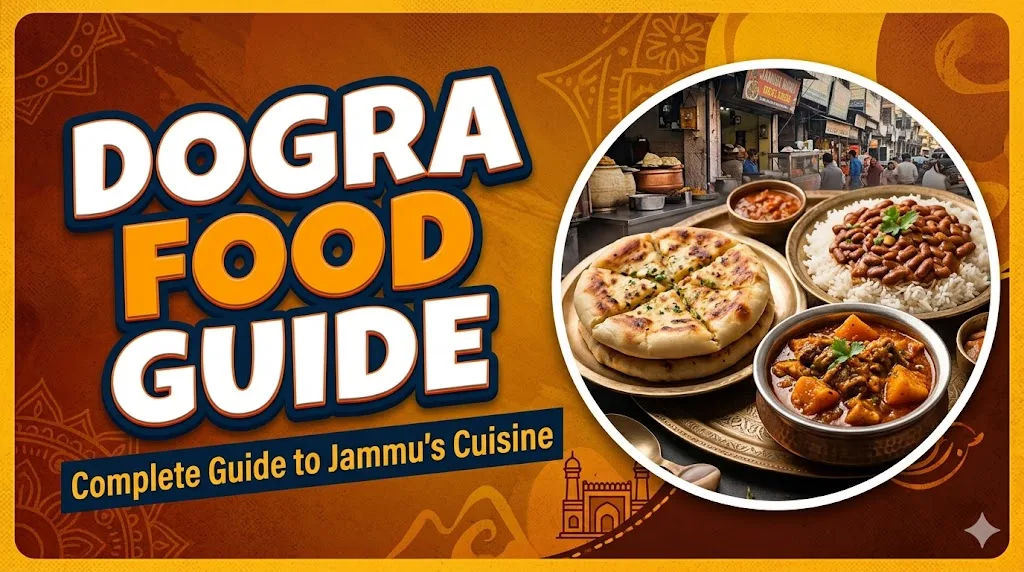
Jammu’s food culture is almost entirely unknown outside the region — overshadowed by the fame of Kashmiri Wazwan and the global recognition of Punjabi cuisine. This is a genuine loss, because Dogra cooking has a distinct identity, excellent ingredients, and dishes that are worth going to Jammu specifically to eat.
Dogra cuisine is the cooking tradition of the Dogra community — the dominant group of the Jammu Division with a history of ruling the entire Jammu & Kashmir region through the Dogra dynasty from 1846 to 1947. The food reflects the landscape and agriculture of the Jammu region — richer and more diverse in some respects than the Kashmir Valley, where the cold climate limits what grows.
What Makes Dogra Cuisine Distinctive
Several things set Dogra cooking apart from both Kashmiri and Punjabi cuisine:
Tamarind and souring agents: Dogra cooking uses tamarind (imli) and dried pomegranate seeds (anardana) extensively as souring agents. This gives many Dogra dishes a characteristic tangy, slightly sour quality that is different from the cream and yogurt-forward richness of Kashmiri cooking and the tomato-based tanginess of Punjabi food.
Local ingredients: The Jammu region produces excellent rajma (kidney beans) — a specific small, dark variety grown in the Jammu hills that is considered among the finest in India. Local vegetables, mustard greens, turnips, and the distinctive Kalari cheese are ingredients specific to the region.
Less cream, more spice: Dogra food tends to be more directly spiced than Kashmiri food. The heat level is generally higher. Kashmiri food is aromatic and complex; Dogra food is more assertive.
No pork, limited beef: The Dogra community is predominantly Hindu. The cooking uses mutton, chicken, and fish alongside vegetarian dishes.
Essential Dogra Dishes
Rajma
The most beloved everyday food of the Jammu region. Kidney beans slow-cooked in a sauce of onions, tomatoes, ginger, garlic, and spices. The Jammu rajma variety — a small, dark red bean grown in the Jammu hills — has a distinctive flavour and texture that is different from the larger variety used in Punjab.
Rajma is eaten with plain rice (Rajma-Chawal) — a combination that is the comfort food equivalent of macaroni and cheese for anyone from the Jammu region. The beans are always slow-cooked until completely soft, never al dente. The sauce is thick and deeply flavoured from the long cooking time.
Every family has its own Rajma recipe. Restaurant versions are good but the home-cooked version from a Jammu household is always better.
Where to eat: Any local restaurant or dhaba in Jammu city. Available everywhere and consistently good across most establishments.
Khatta Meat
The dish most distinctly associated with Dogra cuisine — mutton cooked in a tangy sauce of tamarind and dried pomegranate seeds (anardana). The sourness of the sauce is the defining characteristic. It is not subtle — Khatta Meat is aggressively tangy, with the richness of the mutton providing the counterbalance.
The cooking technique involves slow-cooking the mutton in a base of onions and spices, then adding the tamarind and anardana toward the end to preserve their sourness. The result is a sauce that is simultaneously sour, rich, and intensely flavoured.
Khatta Meat is not widely available outside Jammu — this is a dish you eat in the region, not elsewhere. Finding it in a good restaurant or home kitchen in Jammu is one of the genuine culinary experiences of J&K.
Where to eat: Local restaurants in Jammu city — particularly in the older commercial areas near Raghunath Bazaar. Ask specifically for it — not all restaurants serve it.
Kalari / Kalaadi Cheese
A hard, local cheese made in the Udhampur district of Jammu Division. The cheese is firm and slightly salty, with a texture that becomes stringy when melted. It is cooked by pan-frying in a dry pan without any oil — the natural fat in the cheese prevents sticking — until a golden-brown crust forms on the outside while the inside remains soft and slightly gooey.
Fried Kalari is eaten on its own as a snack, stuffed into bread as a Kalari-Kulcha (a popular street food in Jammu), or served alongside other dishes. The combination of the crisp exterior and the soft interior, with the mild saltiness of the cheese, is addictive.
Where to eat: Street food stalls in Jammu city — particularly in the Raghunath Bazaar area — serve Kalari-Kulcha. Small stalls that specialise in this are the best sources.
Ambal
A Dogra sweet-sour pumpkin dish cooked with tamarind. The pumpkin is cooked until soft, the tamarind provides sourness, and jaggery or sugar is added for sweetness. The result is a dish with a complex balance of sweet, sour, and the earthiness of the pumpkin.
Ambal is a traditional Dogra dish served at religious occasions and in traditional households. It is less commonly found in restaurants than Rajma or Khatta Meat but worth seeking out if you have the opportunity.
Maa Ki Dal
Whole black lentils (urad dal) slow-cooked overnight or for many hours until they break down into a thick, creamy consistency. The Jammu version is more simply spiced than the Punjabi version — less cream, more the pure flavour of the lentils. Rich, dark, deeply satisfying.
Served with rice or roti. A staple of Dogra households and available at most local restaurants in Jammu.
Kulth Ki Dal (Horse Gram)
A lentil preparation using horse gram (kulth) — a legume with a distinctive strong flavour and high protein content. Horse gram is less commonly used in Indian cooking than other lentils but has a long tradition in Dogra cuisine. The dal is cooked with minimal spicing to allow the flavour of the kulth to come through.
Kulth is also cooked as a dry curry and used in other preparations. It is a traditional cold-weather food — warming and sustaining.
Chana Madra
Chickpeas cooked in a yogurt-based sauce with whole spices. This dish bridges the Dogra and Himachali culinary traditions — a similar preparation is found in the cuisine of Himachal Pradesh, reflecting the shared mountain culture of the region. The yogurt sauce is cooked slowly until it thickens and the oil separates — a technique that produces a rich, complex flavour.
Meethe Chawal
Sweet saffron rice — a festive dish prepared for religious occasions and celebrations. Long-grain rice cooked with saffron, sugar, ghee, and whole spices including cardamom and cinnamon, garnished with dry fruits. The combination of the fragrant rice with the richness of the ghee and the sweetness of the sugar creates a dish that is festive in both flavour and appearance.
Dogra Street Food
Kalari-Kulcha
The most popular street food in Jammu. Fried Kalari cheese stuffed inside a soft kulcha (a leavened bread similar to naan). The warm bread, the molten cheese, the crisp exterior of the Kalari — this is Jammu’s answer to a cheese sandwich and it is far better than that description suggests.
Available from street vendors and small stalls throughout Jammu city, particularly in the Raghunath Bazaar and Canal Road areas.
Chickpea Chaat
Various chaat preparations using chickpeas — served with tamarind chutney, yogurt, and spice powders. The Jammu version of chaat tends to be more sour (more tamarind) and less sweet than the Delhi or Mumbai versions.
Patties and Samosas
Standard North Indian street food available everywhere in Jammu. The quality at the better street stalls in Jammu is consistently good.
Dogra Sweets
Pinni
A sweet made from whole wheat flour (atta) roasted in ghee, mixed with sugar, dried fruits, and seeds, then shaped into balls. Pinni is associated with winter — the calorie-dense combination of ghee, wheat, and sugar is warming and sustaining. Available at sweet shops throughout Jammu.
Gajrela (Gajar Ka Halwa)
Carrot halwa — slow-cooked grated carrots with milk, sugar, and ghee. A common North Indian sweet but prepared exceptionally well in Jammu where the quality of carrots from the region is high. The Jammu version tends to be less sweet and more carrot-forward than the Delhi version.
Kheer
Rice pudding cooked with full-fat milk, sugar, and cardamom, garnished with saffron and dry fruits. A staple festive sweet across the Jammu region.
Where to Eat Dogra Food in Jammu
Local restaurants near Raghunath Bazaar: The commercial heart of old Jammu has the highest concentration of restaurants serving traditional Dogra food. These are local establishments serving the neighbourhood — not tourist-facing — which means authentic food at fair prices.
Hotel restaurants: The better Jammu hotels serve Dogra specialities on their menus alongside standard North Indian and Punjabi food. Ask specifically for Dogra dishes — some menus highlight them, others include them without special labelling.
Dhabas on NH44: The highway dhabas on the Jammu–Srinagar road serve good Dogra food — Rajma, Maa Ki Dal, and regional dishes are consistently available. These are busy with travellers and locals and are a reliable, honest indicator of regional cooking.
During festivals: Navratri and other Hindu festivals are when Dogra food is at its most festive. Sweetshops and home cooking during these periods produce dishes that restaurants do not always serve year-round.
A Note on Dogra vs Kashmiri Food
Visitors who know only Kashmiri Wazwan cuisine will find Dogra food significantly different — more direct in spicing, tangier, and less cream-forward. Neither is better; they reflect different landscapes, different histories, and different cultural identities.
Understanding that J&K has two distinct major culinary traditions — Kashmiri and Dogra — and that tasting both gives you a more complete picture of the region is part of what makes a well-planned J&K trip different from a Kashmir-only trip.
Published by VisitJK — honest travel guides for Jammu & Kashmir. Last updated June 2026.
Frequently Asked Questions — Dogra Food & Jammu Cuisine

Rahul Naik is a Jammu & Kashmir local who has spent years exploring the Kashmir Valley, Jammu region, and high-altitude areas of the Union Territory. He has personally visited every major destination covered on VisitJK — from Dal Lake houseboats to Gulmarg slopes to the remote villages of the Gurez Valley. VisitJK is built on that firsthand experience — honest, practical travel content written for visitors who want real information, not brochure language.