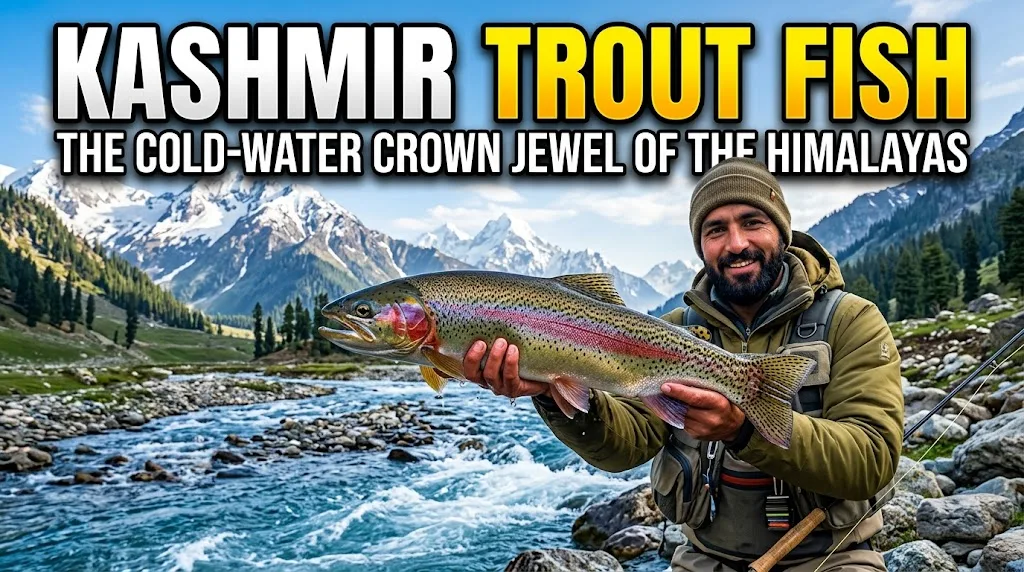
There are fish, and then there is Kashmir trout. Pulled from glacial streams that rush down through pine-lined valleys at altitudes above 1,500 metres, the trout of Kashmir carries a taste, a texture, and a story that no farmed freshwater fish from the plains can match. Locals call it the “silver queen of Kashmiri rivers,” and after your first bite — whether fried in mustard oil or slow-cooked in a wazwan-style gravy — you will understand why that title has never been disputed.
Kashmir has been producing trout for over a century. The British introduced Brown Trout (Salmo trutta) to the Kashmir rivers in the late 1800s, recognising that the cold, oxygen-rich waters of the Jhelum, Lidder, Sindh, and Bringi rivers were a near-perfect habitat. Today, Rainbow Trout (Oncorhynchus mykiss) dominates both commercial farming and recreational angling across the valley, making Kashmir the undisputed trout capital of South Asia.
This guide covers everything: habitat and species, health benefits, aquaculture, fishing regulations, where to eat or buy fresh trout, and why this fish is fast becoming a high-value export product for the region.
Native Habitat: Where Kashmir Trout Lives and Thrives
Trout is an extremely sensitive fish. It demands cold, clean, well-oxygenated water — conditions that much of Kashmir provides naturally year-round.
Key trout habitats in Kashmir include:
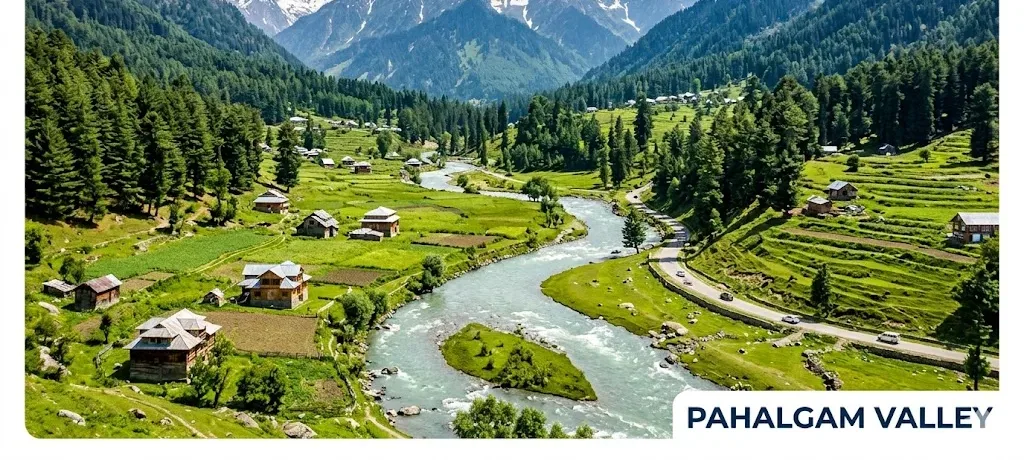
- Lidder River (Pahalgam): One of the most famous trout rivers in Asia. The stretch from Pahalgam town to Aru and Betaab Valley holds dense populations of both Brown and Rainbow Trout.
- Sindh River (Sonamarg): The glacial meltwater here keeps temperatures between 8°C and 14°C even in summer, ideal for trout.
- Bringi River (Kokernag): The Kokernag Fish Farm, run by J&K Fisheries Department, has been operating on this river since 1918 and is one of the oldest trout hatcheries in Asia.
- Bringi Nullah and Doodhganga River: Popular spots for smaller trout runs and easy accessibility from Srinagar.
- High-altitude lakes (Gangabal, Tarsar, Marsar): These glacial lakes host naturally self-sustaining trout populations that attract serious trekker-anglers.
The water temperature in these streams typically stays below 18°C — the critical upper threshold for trout survival. Any warmer, and dissolved oxygen drops, stress increases, and the fish die. Kashmir’s rivers, fed by snowmelt and glaciers, maintain this cold corridor even during the hottest July afternoons.
Species Found in Kashmir: Brown Trout vs. Rainbow Trout
Understanding which species you’re dealing with matters — both for anglers and consumers.
Brown Trout (Salmo trutta): The original species introduced to Kashmir rivers. Brown trout are wild, cautious, and significantly harder to catch than rainbow trout. Their flesh is firm, with a slightly more gamey, nutty flavour compared to rainbow. Brown trout above 2 kg are considered exceptional catches in Kashmir.
Rainbow Trout (Oncorhynchus mykiss): Now the dominant species in both wild rivers and fish farms across Kashmir. Rainbow trout grow faster, tolerate slightly warmer water, and are more manageable in aquaculture settings. Their flesh is orange-pink, rich in omega-3 fatty acids, and mild in flavour — making them the preferred choice for restaurants and home kitchens.
Nutritional Profile and Health Benefits of Kashmir Trout
Kashmir trout is not just a delicacy — it is one of the most nutritionally dense foods available in the region. Compared to farmed salmon flown in from Norway, locally grown Kashmir Rainbow Trout offers comparable nutrition at a fraction of the food miles.
Per 100 grams of cooked Rainbow Trout:
| Nutrient | Approximate Value |
|---|---|
| Protein | 26–28 g |
| Total Fat | 5–7 g |
| Omega-3 Fatty Acids | 1.5–2 g |
| Calories | 150–170 kcal |
| Vitamin D | 450–500 IU |
| Vitamin B12 | 3.5 µg |
| Selenium | 25–30 µg |
| Phosphorus | 280 mg |
The omega-3 content of Kashmir trout — particularly EPA and DHA — supports cardiovascular health, reduces chronic inflammation, improves brain function, and is especially important for populations in mountainous regions where access to marine fish is limited. Regular consumption of trout has been linked to lower triglyceride levels, improved joint health, and better cognitive performance in older adults.
For pregnant women and growing children in Kashmir, trout offers a safe, local, high-quality source of complete protein and essential fatty acids without the mercury concerns associated with larger ocean fish like tuna or swordfish.
Trout Farming in Kashmir: A Growing Industry
Kashmir’s trout aquaculture sector has expanded dramatically over the past two decades. The J&K Department of Fisheries operates multiple government hatcheries and rearing centres, while private farmers have also entered the sector in large numbers, particularly after the government began offering subsidised loans and technical training under schemes like PMMSY (Pradhan Mantri Matsya Sampada Yojana).
Key facts about Kashmir trout farming:
- The valley currently produces over 2,500 metric tonnes of trout per year from registered farms.
- Private raceways (long rectangular channels with flowing water) are the most common farming method across districts like Anantnag, Kulgam, Bandipora, and Ganderbal.
- Trout reach a marketable size of 300–500 grams in approximately 10 to 14 months under Kashmir’s cold-water conditions.
- The Fisheries Department distributes trout fingerlings from government hatcheries at subsidised rates to registered farmers.
- Feed conversion ratios in Kashmir trout farms typically range from 1.3:1 to 1.5:1, meaning it takes about 1.3 to 1.5 kg of feed to produce 1 kg of fish — making trout farming relatively efficient.
The government has also established a Trout Processing Unit in Anantnag that allows farmers to value-add their produce through cleaning, filleting, vacuum packaging, and cold storage before dispatch to markets in Delhi, Mumbai, and other metros. This infrastructure has significantly improved farmer income and reduced post-harvest losses.
Challenges remain, however. Water scarcity during dry summers, disease outbreaks (particularly Bacterial Kidney Disease and furunculosis), and inadequate cold chain logistics in remote areas continue to limit the sector’s growth potential.
Trout Fishing in Kashmir: Angling Rules and Best Spots
Sport fishing for trout in Kashmir is regulated by the J&K Fisheries Department under the Jammu and Kashmir Prohibition on Destruction of Fishes Act. A valid fishing permit is mandatory.
Fishing regulations to know:
- The closed season for trout angling runs from October 1 to February 28 to protect spawning fish.
- A daily bag limit of 6 fish per angler is enforced in most rivers.
- Minimum size limits apply — fish below 23 cm must be released.
- Only rod-and-line angling with artificial lures or flies is permitted. Net fishing and the use of electric shocks or poison are criminal offences under state law.
- Permits are available from the District Fisheries Officer in Anantnag (for Lidder River), Ganderbal (for Sindh River), and other district headquarters.
Best angling locations for 2025:
- Aru Valley and Betaab Valley (Pahalgam): Perfect for beginners and families. The river is accessible, the scenery is spectacular, and catch rates are consistently good.
- Sonamarg (Sindh River): More challenging terrain but rewards experienced fly-fishers with larger fish.
- Kokernag: Accessible, peaceful, and close to the government fish farm where the river stays naturally productive.
- Yusmarg (Doodhganga River): A quieter, less-visited option ideal for those who prefer solitude over crowds.
Where to Buy and Eat Fresh Trout in Kashmir
Fresh Kashmir trout is available at several dedicated fish markets and restaurants across the valley.
Markets: The main fish market at Sopore and the Partapur Fish Market in Anantnag are the two largest wholesale points for fresh trout in the valley. Srinagar’s Dalgate area and Hazratbal market also sell fresh trout, particularly on mornings when deliveries arrive from Pahalgam and Kokernag.
Restaurants: Most hotels in Pahalgam and Sonamarg serve freshly caught or farm-raised trout as a signature dish. In Srinagar, restaurants near Nagin Lake and Dal Lake frequently feature trout on seasonal menus, prepared as grilled fillets, pan-fried with Kashmiri spices, or cooked in a light saffron-infused gravy.
Home cooking tips: Kashmir trout is best cooked simply. A light marinade of salt, dried ginger, fennel (saunf), and mustard oil followed by shallow frying in a cast-iron pan brings out its natural flavour without overpowering the delicate flesh. Serve with Kashmiri roti (tschot) and a side of leafy greens.
Economic Importance of Trout to Kashmir’s Rural Economy
Trout farming and angling tourism together contribute several hundred crore rupees annually to Kashmir’s rural economy. For farmers along the Lidder and Bringi rivers, a single trout raceway of 20 metres can produce 500–700 kg of fish per cycle, generating net income of ₹1.5 to ₹2.5 lakh per crop after feed and fingerling costs.
The government’s push to export processed Kashmir trout to Gulf countries and Southeast Asia has added a new dimension to the sector. Vacuum-packed frozen trout fillets branded as “Himalayan Trout” have already found buyers in the UAE and Qatar, where premium cold-water fish command high retail prices.
For youth in rural Anantnag, Kulgam, and Pulwama districts, trout farming has emerged as a viable alternative to seasonal agricultural labour — providing year-round income, manageable infrastructure investment, and government support through subsidies and technical training.
Frequently Asked Questions About Kashmir Trout Fish
Q1. What type of trout is found in Kashmir rivers?
Kashmir rivers are home to two main species — Brown Trout (Salmo trutta), introduced by the British in the late 1800s, and Rainbow Trout (Oncorhynchus mykiss), which is now the most widely farmed and commonly found species across the valley. Rainbow Trout dominates both commercial aquaculture and sport fishing in rivers like the Lidder, Sindh, and Bringi.
Q2. Which river in Kashmir is best for trout fishing?
The Lidder River near Pahalgam is widely regarded as the finest trout fishing destination in Kashmir. The stretch from Pahalgam town through Aru Valley and Betaab Valley holds consistently high trout populations. The Sindh River near Sonamarg is another excellent option, especially for experienced fly-fishers targeting larger fish.
Q3. Do I need a permit to fish for trout in Kashmir?
Yes, a valid angling permit is mandatory. Permits are issued by the J&K Department of Fisheries through the respective District Fisheries Officer. You must carry the permit while fishing. Angling without a permit is an offence under the Jammu and Kashmir Prohibition on Destruction of Fishes Act.
Q4. What is the fishing season for trout in Kashmir?
The open angling season for trout in Kashmir runs from March 1 to September 30. The closed season from October 1 to February 28 is strictly enforced to protect spawning fish. Fishing during the closed season can result in fines and confiscation of equipment.
Q5. How much does fresh trout cost in Kashmir markets?
Fresh Kashmir Rainbow Trout typically sells for ₹400 to ₹700 per kg at local markets depending on size, season, and location. Farm-raised trout from Anantnag and Pahalgam is generally priced lower than wild-caught river trout. Prices in Srinagar restaurants for a plated trout dish range from ₹300 to ₹800 depending on the establishment.
Q6. Is Kashmir trout healthy to eat?
Absolutely. Kashmir trout is one of the most nutritious freshwater fish available in India. It is rich in high-quality protein (26–28 g per 100 g), omega-3 fatty acids (EPA and DHA), Vitamin D, Vitamin B12, and selenium. Regular consumption supports heart health, brain function, and reduces inflammation. Unlike large ocean fish, trout has very low mercury levels, making it safe for pregnant women and children.
Q7. Can I start a trout farm in Kashmir?
Yes. The J&K Department of Fisheries and the central government’s PMMSY (Pradhan Mantri Matsya Sampada Yojana) scheme both offer financial assistance, subsidised fingerlings, and technical training to new trout farmers. You need access to a cold, clean water source with year-round flow. Districts like Anantnag, Kulgam, Bandipora, and Ganderbal are particularly suitable for trout aquaculture.
Q8. How long does it take to grow trout to market size in Kashmir?
Under Kashmir’s cold-water conditions, Rainbow Trout typically reach a marketable weight of 300 to 500 grams in approximately 10 to 14 months from fingerling stage. Growth rate depends on water temperature, feed quality, stocking density, and farm management practices.
Q9. Where can I eat fresh trout in Srinagar?
Several restaurants near Dal Lake, Nagin Lake, and Hazratbal area in Srinagar serve fresh trout as a seasonal specialty. In Pahalgam, most hotels and dhabas near the Lidder River offer freshly prepared trout — grilled, fried, or cooked in Kashmiri spices. Kokernag is also popular for roadside trout restaurants near the government fish farm.
Q10. Is Kashmir trout exported outside India?
Yes. Processed Kashmir trout — primarily vacuum-packed fillets marketed as “Himalayan Trout” — is exported to Gulf countries including the UAE and Qatar. The J&K government has established cold storage and processing infrastructure in Anantnag to support export-quality packaging. Demand for premium cold-water fish from the Himalayas is growing steadily in international markets.
Conclusion: Kashmir Trout — A Resource Worth Protecting
The trout of Kashmir is more than a fish. It is a living measure of the valley’s ecological health, a cornerstone of its aquaculture economy, and a source of regional pride that stretches back to the colonial era. As climate change gradually warms the rivers and development pressures increase along riverbeds, protecting the cold, clean water that sustains these fish becomes not just an environmental obligation but an economic one.
Whether you are a visitor planning a fishing trip to Pahalgam, a farmer exploring aquaculture opportunities along the Lidder, or simply someone searching for the finest locally sourced protein on a Srinagar dinner table — Kashmir trout deserves a place at the centre of your attention. Few things connect the mountains, the rivers, and the people of Kashmir quite like this silver fish does.

Rahul Naik is a Jammu & Kashmir local who has spent years exploring the Kashmir Valley, Jammu region, and high-altitude areas of the Union Territory. He has personally visited every major destination covered on VisitJK — from Dal Lake houseboats to Gulmarg slopes to the remote villages of the Gurez Valley. VisitJK is built on that firsthand experience — honest, practical travel content written for visitors who want real information, not brochure language.