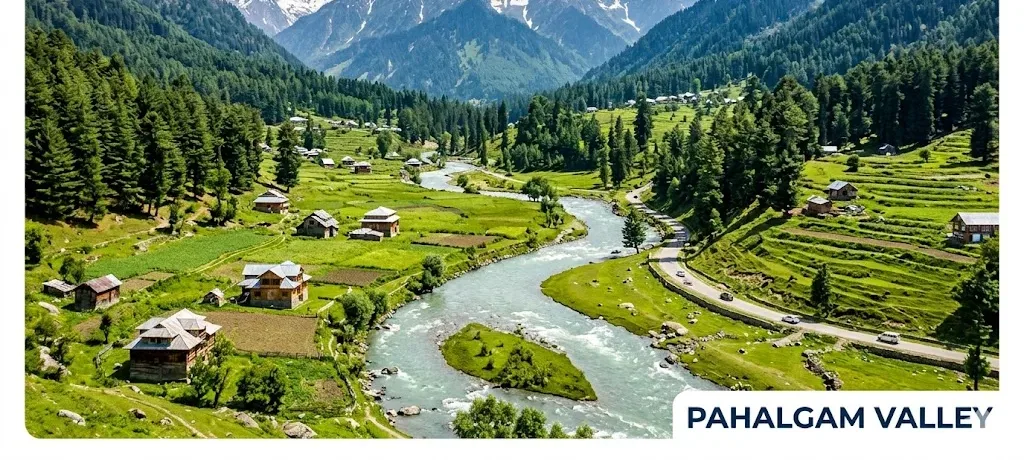

When the rest of India is sweating through 40-degree summers and drowning in monsoon rains, Kashmir is doing something entirely different. In July, the valley turns a deep, vivid green. The meadows of Gulmarg are carpeted with wildflowers. The Lidder River in Pahalgam runs swift and clear. The Dal Lake in Srinagar reflects cloud-streaked skies, and the snow on the high peaks catches the morning light.
This is exactly why July has become one of the most popular months for tourists to visit Kashmir. The Kashmir temperature in July stays comfortably pleasant in most parts of the valley — warm enough for sightseeing and outdoor activities during the day, and refreshingly cool by evening. The alpine mountain ranges act as a natural barrier against the heavy monsoon clouds that drench the plains of North India, keeping the valley largely dry and enjoyable through most of the month.
Whether you are a first-time visitor wondering whether July is a good month to travel, or someone looking for a destination-by-destination weather breakdown to plan your itinerary, this guide has everything you need.
Kashmir Weather in July: An Overview
July falls during the peak summer season in Kashmir, but “peak summer” here means something very different from what the rest of India experiences. The valley sits at an average elevation of around 1,600 metres above sea level, and many of the most visited destinations — Gulmarg, Pahalgam, Sonamarg — are considerably higher, which keeps temperatures moderate throughout the month.
The broader weather pattern in July looks like this:
- Daytime temperatures across the Kashmir Valley typically range from 20°C to 30°C, depending on the location.
- Nighttime temperatures drop noticeably, hovering around 10°C to 16°C in the valley and even lower at higher-altitude destinations.
- Rainfall is light and intermittent — not the heavy, continuous monsoon that hits other parts of India. Showers tend to occur in the evenings or at night, leaving mornings clear and sunny.
- Sunshine hours average around 5 to 8 hours per day in most parts of the valley.
- Humidity rises compared to the spring months, ranging between 60% and 90%, but the cool mountain air prevents it from feeling oppressive.
The key thing to understand is that weather in Kashmir in July is not uniform. It changes dramatically with altitude. Srinagar at 1,600 m will feel much warmer than Sonamarg at 2,740 m or the Apharwat Peak above Gulmarg at over 4,200 m.
Destination-Wise Temperature in Kashmir in July
This is the most important section for any traveller planning a trip. Here is a location-specific temperature breakdown to help you pack and plan correctly:
| Destination | Altitude | Day Temp (°C) | Night Temp (°C) | Weather Notes |
|---|---|---|---|---|
| Srinagar | ~1,600 m | 25°C – 32°C | 14°C – 18°C | Warm days, pleasant evenings, occasional rain |
| Gulmarg | ~2,650 m | 15°C – 22°C | 8°C – 12°C | Cool, lush meadows, wildflowers in bloom |
| Pahalgam | ~2,130 m | 18°C – 25°C | 10°C – 14°C | Refreshing, river views, light showers |
| Sonamarg | ~2,740 m | 15°C – 22°C | 8°C – 12°C | Cool to cold, glaciers accessible |
| Gurez Valley | ~2,400 m | 10°C – 22°C | 6°C – 10°C | Cooler, offbeat, very scenic |
| Doodhpathri | ~2,730 m | 12°C – 20°C | 8°C – 12°C | Cold streams, lush meadows |
| Peer Ki Gali | ~3,088 m | 5°C – 18°C | 2°C – 8°C | Snow patches possible, cold winds |
| Daksum | ~2,438 m | 12°C – 22°C | 8°C – 13°C | Dense forests, streams, cool and peaceful |
As this table shows, even within Kashmir, temperatures can vary by 10°C to 15°C between Srinagar and the high-altitude areas. Someone visiting Gulmarg or Sonamarg in a single T-shirt will be uncomfortable. Someone in Srinagar wearing a heavy jacket during the day will be overdressed. Plan your clothing based on every destination on your itinerary, not just a single temperature number.
Best Places to Visit in Kashmir in July
Srinagar
Srinagar is the natural starting point for any Kashmir trip, and July is a wonderful time to explore it. With daytime temperatures in the mid-to-high 20s, you can walk the old city lanes, visit Jama Masjid and Shah-e-Hamadan mosque, browse the handicraft markets, and spend an unhurried afternoon on the Dal Lake in a shikara.
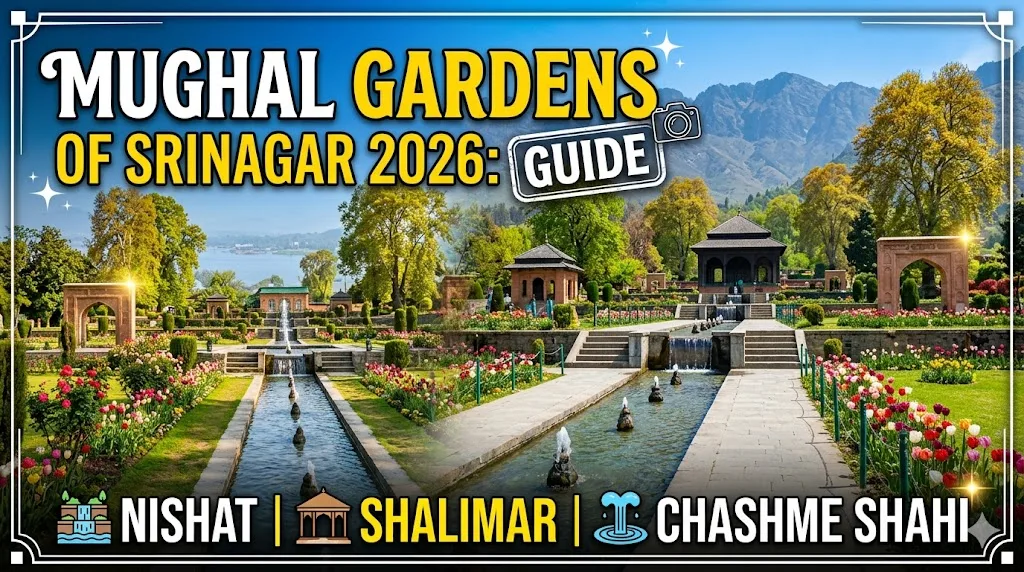
The Mughal Gardens — Shalimar Bagh, Nishat Bagh, and Chashme Shahi — are particularly beautiful in July when the surrounding hills are intensely green and the flower beds are in full colour. The Dal Lake itself is dotted with lotus blossoms, making a shikara ride in the early morning one of the most atmospheric experiences you can have in the city.
If you are staying on a houseboat, July evenings are especially pleasant — cool enough for a light sweater, with the sound of the lake and the distant Zabarwan hills as your backdrop.
Gulmarg
At 2,650 metres, Gulmarg is significantly cooler than Srinagar in July. The snow has mostly melted from the main meadow by this time, leaving behind wide stretches of green grass dotted with wildflowers — poppies, forget-me-nots, and daisies. The landscape is extraordinarily beautiful.
The Gulmarg Gondola continues to operate in July, taking you from the meadow up to the Apharwat Peak station. At that altitude, you are likely to encounter snow patches even in mid-summer. The views from the gondola — of the Pir Panjal range and on clear days even Nanga Parbat — are worth every rupee of the ticket price.
Since July is not the skiing season, Gulmarg is less crowded than during winter, and the peaceful meadow ambience is something that winter visitors never get to experience. Trekking, horse riding, and simply walking through the meadow are the main activities here during this month.
Pahalgam
Pahalgam in July is a tale of two worlds. On one hand, it is the gateway for the Amarnath Yatra pilgrimage, which runs through July and August — this means the main Pahalgam town and the road leading to it can get very busy during Yatra days. On the other hand, Pahalgam itself — particularly the side valleys of Aru and Betaab — is strikingly beautiful in July.
The Lidder River runs full and fast, fed by snowmelt from the higher reaches. The Aru Valley, about 11 km from Pahalgam, offers a quieter, greener version of the landscape with horses grazing on open meadows against a backdrop of pine forests and distant peaks. Betaab Valley, named after the Bollywood film shot here, is another must-see — lush, wide, and framed by dense forest on both sides.
Travel tip: If the Amarnath Yatra is in progress, start early from Srinagar to Pahalgam — by afternoon, the main route gets congested with Yatra vehicles. Reach by 9 AM for the best experience.
Sonamarg
The name Sonamarg means “meadow of gold” — and in July, it earns every syllable of that description. The meadow opens up to a wide, glacier-framed valley through which the Sindh River flows with considerable force. The Thajiwas Glacier, reachable on foot or by pony from the main meadow, still holds snow in July and offers one of the most accessible glacier experiences in the Kashmir Valley.
Sonamarg is also the base for some excellent treks — the Vishansar-Krishansar Lakes trek and the Naranag route are both accessible from here in July.
Doodhpathri
Doodhpathri — literally “valley of milk” — is a lesser-visited destination that rewards those willing to venture off the main tourist circuit. Located about 42 km from Srinagar in the Budgam district, it sits at nearly 2,730 metres and remains cool and green through July. Crystal-clear streams cut through the meadows, and the lack of commercial development gives the place a quiet, unhurried quality that Pahalgam and Gulmarg rarely offer in peak season.
Gurez Valley
For the experienced traveller looking for something genuinely offbeat, Gurez Valley is a revelation. Situated near the Line of Control and surrounded by the Habba Khatoon peak and the Kishanganga River, Gurez offers scenery that few other parts of Kashmir can match. The July temperature here is cool — daytime highs of around 18°C to 22°C — and the landscape is dramatically different from the main valley, with wooden houses, isolated villages, and an atmosphere of complete stillness.
Road access to Gurez has improved significantly in recent years, though the route via Razdan Pass involves some challenging mountain driving. Visitors need to carry an Inner Line Permit, which is obtained from the Deputy Commissioner’s office in Bandipora.
Things to Do in Kashmir in July
July opens up a full range of outdoor activities across the valley:
- Trekking: The Kashmir Great Lakes Trek — covering Vishansar, Krishansar, Gadsar, Satsar, and Gangabal lakes — is best done between July and September. The trails are clear, the wildflowers are in bloom, and the high-altitude lakes are accessible. Other popular routes include Tarsar-Marsar from Pahalgam and the Sonamarg-Naranag traverse.
- Shikara ride on Dal Lake: A must-do in any season, but especially evocative in July when lotus flowers bloom across the lake.
- Gondola ride in Gulmarg: The Gulmarg Gondola is one of the highest cable cars in the world. In July, the upper station offers a stark contrast to the green meadow below — snow patches, cold wind, and panoramic mountain views.
- Horse riding: Available at Pahalgam, Gulmarg, and Sonamarg. Ponies are the most common way to reach viewpoints not accessible by road.
- Fishing: The streams and rivers of Kashmir are home to brown and rainbow trout. July to October is prime angling season, with 61 designated fishing beats open across the valley.
- Visiting Mughal Gardens: Shalimar Bagh, Nishat Bagh, and Chashme Shahi are at their best during summer — well-maintained, green, and fragrant.
- Exploring Old Srinagar: The narrow lanes around Jama Masjid, the woodwork of Shah-e-Hamadan shrine, and the floating vegetable markets on Dal Lake’s backchannels are all worth several hours of unhurried exploration.
What to Pack for Kashmir in July
Packing for a July trip to Kashmir requires thinking in layers rather than just temperature. Here is a practical packing list:
| Category | What to Pack |
|---|---|
| Clothing | Light cotton tops and shirts for Srinagar; light woolens, fleece, or cardigan for Gulmarg/Sonamarg |
| Outerwear | A windproof jacket or light rain jacket — essential for higher altitudes and evening weather |
| Rain gear | Compact umbrella or poncho; July showers are light but can be sudden |
| Footwear | Comfortable walking shoes; trekking shoes if you plan any trails; sandals for Srinagar |
| Sun protection | Sunscreen (SPF 50+), sunglasses, and a cap — UV radiation is intense at altitude |
| Other essentials | Lip balm, moisturizer (dry mountain air), power bank, and personal medications |
Important: Do not rely on buying warm clothing in the valley. Bring your own layers, especially if you are visiting Gulmarg, Sonamarg, or Gurez.
Travel Tips for Visiting Kashmir in July
- Book accommodation in advance. July is peak season, and good houseboats and hotels in Srinagar, Pahalgam, and Gulmarg fill up quickly. Book at least 3–4 weeks ahead.
- Start early every day. Roads to popular destinations get crowded by mid-morning, especially during the Amarnath Yatra period when traffic on routes to Pahalgam and Sonamarg increases significantly.
- Check road conditions. Heavy rain at higher altitudes can occasionally cause road blockages or slippery conditions on mountain stretches. Confirm conditions before heading to Gurez or Sinthan Top.
- Carry cash. While Srinagar has good ATM coverage, smaller towns and high-altitude areas may not. Carry sufficient cash for your stay in remote locations.
- Respect local customs. Kashmir is a region with a distinct culture. Dress modestly when visiting religious sites, and be respectful of local customs and practices.
- Stay updated on Amarnath Yatra schedule. If the Yatra is ongoing during your travel dates, plan your Pahalgam and Sonamarg visits on non-Yatra traffic days or adjust your departure times accordingly.
Key Takeaways
- The Kashmir temperature in July ranges from 5°C to 32°C across different locations — Srinagar is warmest, while high-altitude destinations like Peer Ki Gali remain cold.
- July is peak tourist season with lush green landscapes, open trekking trails, and blooming wildflowers across all major destinations.
- Rainfall is light and mostly confined to evenings — unlike the heavy monsoon experienced in other parts of India.
- Snow patches remain at higher altitudes like Apharwat Peak above Gulmarg and Thajiwas Glacier in Sonamarg, even in mid-July.
- Packing in layers is essential — the temperature difference between Srinagar and Gulmarg on the same day can be 10°C or more.
- The Amarnath Yatra runs through July, which increases traffic on routes to Pahalgam and Sonamarg — plan accordingly.
Conclusion
July in Kashmir is not a compromise or a second-best option. It is, for many visitors, the best version of Kashmir there is. The valley is at its most intensely green. The rivers run fast and clear with snowmelt. The meadows at Gulmarg and Doodhpathri are blanketed with wildflowers. The sky over Gurez Valley holds the kind of blue that you only find at altitude, far from city lights and pollution.
The temperature in July is friendly to travellers — warm enough in Srinagar for light clothing and outdoor walks, cool enough in the highlands for long hikes without fatigue. The light monsoon presence keeps the air clean and the landscape fresh without disrupting travel plans.
If you have been waiting for the right time to visit Kashmir, July makes a very strong case. Plan your itinerary around the destination-wise temperatures covered in this guide, pack your layers and rain gear, book your stays early, and go.
Frequently Asked Questions
Q1. Is July a good time to visit Kashmir?
Yes. Pleasant temperatures, lush green landscapes, and open roads make July one of Kashmir’s best travel months.
Q2. Does it rain heavily in Kashmir in July?
No. Rainfall is light and mostly occurs in evenings. The Himalayas block heavy monsoon clouds, so days are largely clear.
Q3. Is there snow in Kashmir in July?
Not in the main valley. Snow patches remain only at high altitudes — Apharwat Peak (Gulmarg) and Thajiwas Glacier (Sonamarg).
Q4. What temperature should I expect in Gulmarg in July?
Daytime highs of 15°C–22°C and nights around 8°C–12°C. Carry a fleece or light jacket regardless of how warm Srinagar feels.
Q5. Does the Amarnath Yatra affect tourist travel in July?
Yes. Routes to Pahalgam and Sonamarg get congested during Yatra convoy hours. Start before 7 AM to avoid delays.
Official Resources
- Jammu & Kashmir Tourism Department: https://www.jktourism.jk.gov.in
- India Meteorological Department (IMD): https://www.imd.gov.in
- Amarnath Shrine Board (Yatra Schedule & Updates): https://www.shriamarnathjishrine.com
- J&K Traffic Police (Road Conditions): https://jktraffic.gov.in
- Gulmarg Gondola (SKIMS Cable Car): https://www.gulmargondola.com

Rahul Naik is a Jammu & Kashmir local who has spent years exploring the Kashmir Valley, Jammu region, and high-altitude areas of the Union Territory. He has personally visited every major destination covered on VisitJK — from Dal Lake houseboats to Gulmarg slopes to the remote villages of the Gurez Valley. VisitJK is built on that firsthand experience — honest, practical travel content written for visitors who want real information, not brochure language.