Kashmiri food is one of the most distinctive regional cuisines in India — and one of the least understood by visitors who have not actually eaten it in Kashmir. The version served in “Kashmiri restaurants” in Delhi or Mumbai bears only a passing resemblance to what people actually eat in the valley. If you are visiting Kashmir, eating properly is as important as visiting Gulmarg or Dal Lake.
This guide covers everything — the Wazwan feast, the everyday dishes, the street food, where to eat, and what to order.
What Is Wazwan
Wazwan is the ceremonial multi-course feast that forms the centrepiece of Kashmiri Muslim culinary tradition. It is served at weddings, major celebrations, and significant family gatherings. A traditional Wazwan can have 36 courses — though modern versions typically serve 15 to 20 dishes.
The word “Wazwan” comes from “waz” (cook) and “wan” (shop) in Kashmiri. A “Waza” is the master chef who prepares Wazwan — a specialist cook whose skills are passed down through generations, often within the same family. Cooking a proper Wazwan for a large wedding requires a team of Wazas working through the night before the feast.
Wazwan is served in a specific way: guests sit in groups of four, and a large copper vessel called a “traem” is placed in the centre. The dishes are arranged on the traem and the four guests share from it. This communal eating style is part of the experience.
The Key Wazwan Dishes
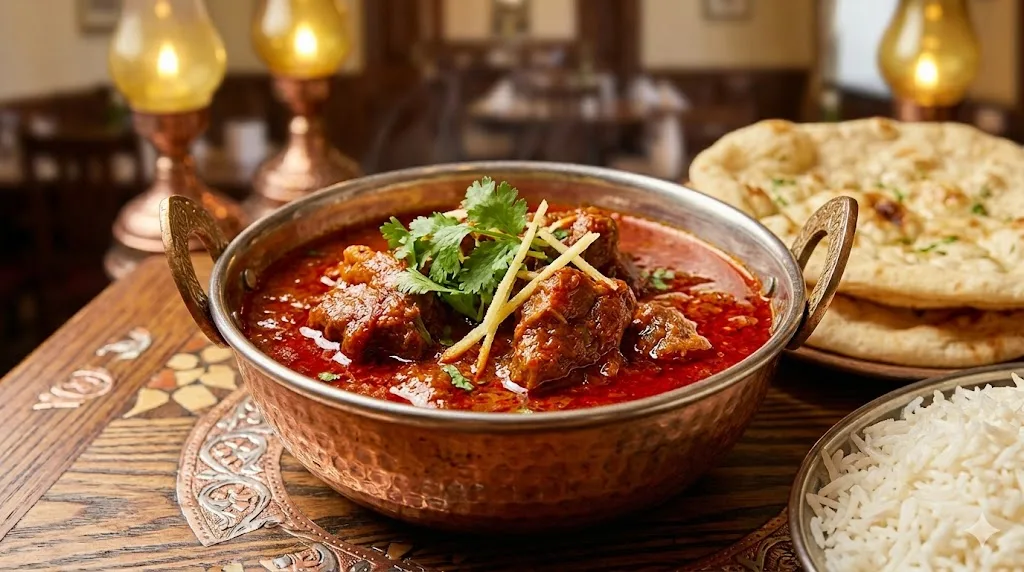
Rogan Josh: Slow-cooked lamb in a sauce coloured deep red by Kashmiri dried chillies (Kashmiri mirch) and infused with whole spices. The distinctive red colour does not mean it is very spicy — Kashmiri Rogan Josh is flavourful and aromatic rather than fiery. The meat is cooked until it falls off the bone. This is the dish most associated with Kashmir outside the valley — and rightly so.
Yakhni: Lamb cooked in a yogurt-based sauce with fennel, ginger, and whole spices. The sauce is pale, creamy, and subtle — the opposite of Rogan Josh in character. Yakhni is delicate and aromatic, the kind of dish that reveals its complexity slowly.
Dum Aloo: Baby potatoes cooked in a sauce of yogurt, dried ginger (sonth), and spices. Kashmiri Dum Aloo is notably different from the Punjab version — tangier, with the distinctive flavour of dried ginger and fennel. This is the main vegetarian dish in Wazwan.
Gushtaba: Large minced lamb meatballs cooked in a yogurt sauce. Gushtaba is traditionally the last meat dish served in Wazwan — its arrival signals that the feast is approaching its end. The meatballs are made by hand, pounding the meat until it is completely smooth — a labour-intensive process. The yogurt sauce is mild and slightly sweet.
Tabak Maaz: Ribs of lamb that are first slow-cooked in milk and spices until tender, then fried until the exterior is crisp. The contrast between the crisp fried exterior and the tender meat inside is what makes Tabak Maaz distinctive. It is one of the most popular Wazwan dishes.
Seekh Kabab: Minced lamb kababs cooked over charcoal. In Wazwan, these are served early in the feast as part of the opening courses.
Methi Maaz: Lamb cooked with fenugreek leaves. The slight bitterness of fenugreek balances the richness of the lamb.
Aab Gosht: Lamb cooked in milk with whole spices — one of the mildest and most delicate Wazwan dishes.
Marchwangan Korma: The spiciest dish in the Wazwan — lamb cooked with whole red chillies. This is the dish that actually delivers heat, unlike the relatively mild Rogan Josh.
Everyday Kashmiri Food
Beyond the ceremonial Wazwan, everyday Kashmiri cooking is simpler, more varied, and includes significant vegetable and bean dishes.
Haak: The most fundamental vegetable in Kashmiri cooking. Haak is a variety of collard greens — similar to kale — cooked simply with water, salt, a little oil, and whole dried chillies. It sounds plain but the quality of the greens and the simplicity of the preparation produce something deeply satisfying. Every Kashmiri household eats Haak regularly. It is served with rice.
Rajma: Kidney beans cooked in a tomato-based sauce with spices. Kashmiri Rajma uses a specific variety of small, dark red rajma grown in the valley — considered by many to be the best rajma in India. Rajma-rice is comfort food across Kashmir.
Nadroo (Lotus Stem): Lotus stem is a Kashmiri staple. It is prepared in multiple ways — Nadroo Yakhni (lotus stem in yogurt sauce), Nadroo Palak (with spinach), or simply fried. The texture is crunchy with a hollow interior — different from anything most visitors will have eaten before.
Chok Wangun (Tamarind Aubergine): Aubergine cooked in a tamarind-based sauce. Sweet and sour, this is one of the more distinctive vegetable dishes in Kashmiri cooking.
Monji Haak: Turnip cooked with greens — simple, earthy, typically eaten in winter.
Kashmiri Breads
Sheermal: A soft, slightly sweet flatbread made with milk and saffron, baked in a tandoor. Sheermal is eaten at breakfast or with tea — it is richer and more flavourful than ordinary roti.
Lavasa: A thin, crisp flatbread — similar to a large poppadom — baked on the walls of a tandoor. Eaten with tea or as an accompaniment to meals.
Bakarkhani: A thick, layered flatbread rich with ghee and sometimes flavoured with anise seeds. Dense and filling, traditionally eaten at breakfast.
Girda: A round, soft bread baked in a tandoor — the everyday bread of Kashmir, similar to a naan but slightly thicker and crispier on the base.
All these breads are best bought from a traditional baker — the kandur (baker) runs small neighbourhood bakeries called “kandur waan” across Srinagar and other towns. The bread comes out of the tandoor fresh throughout the day and is eaten warm. A Srinagar morning walk that includes stopping at a kandur waan for fresh Girda and a cup of kahwa is one of the city’s simple pleasures.
Kashmiri Drinks
Kahwa: Kashmiri green tea brewed with saffron, cinnamon, cardamom, and sometimes rose petals, served with crushed almonds or walnuts floating on top. Kahwa is served at every houseboat, in every home, and at many restaurants. It is warming, aromatic, and genuinely unlike any other tea you will have encountered. There is no milk in kahwa — do not add any.
Noon Chai (Sheer Chai / Pink Tea): Perhaps the most unexpected thing about Kashmiri food for visitors — a tea that is pink. Noon Chai is made from a specific variety of green tea (gunpowder tea) brewed with baking soda and salt, then mixed with milk. The baking soda turns the tea a striking pink-red colour. The taste is savoury — slightly salty, milky, with a mild tea flavour. It is an acquired taste for most visitors but worth trying at least once for the experience.
Sharbat-e-Gulab: Rose water sharbat — a cold drink made with rose syrup, water, and sometimes milk. Served at weddings and celebrations.
Street Food in Srinagar
Seekh Kabab: The most ubiquitous street food in Srinagar. Minced lamb kababs cooked over charcoal, served with Girda bread and sliced onions. The best seekh kabab stalls are in the old city lanes around Jama Masjid and near Lal Chowk. Eat standing at the stall for the full experience.
Tujji: Whole chicken or large chicken pieces marinated in spices and cooked on a rotating skewer over charcoal. Tujji stalls operate in the evenings in Srinagar. The chicken is basted with oil and spices as it cooks.
Mutton Roghan Josh rolls: Rogan Josh served with a local bread as a wrap — a street food adaptation of the formal dish.
Phirni: A creamy rice pudding set in small clay pots, flavoured with cardamom and saffron. Served chilled. Found at sweet shops and some street vendors.
Shufta: A Kashmiri sweet made with dry fruits — walnuts, almonds, coconut, and dried apricots cooked in ghee and sugar. Rich and intensely flavoured. Sold at sweet shops, particularly during Eid and celebrations.
Where to Eat in Srinagar
For Wazwan: A proper Wazwan is not typically available in regular restaurants — it is a feast served at weddings and celebrations. However, some restaurants in Srinagar serve “Wazwan-style” meals with multiple Kashmiri meat dishes in a single sitting. The restaurants along Residency Road and Boulevard Road offer these. Ask specifically for a Kashmiri set meal rather than ordering from a generic menu.
For everyday Kashmiri food: The best food in Srinagar is in the old city restaurants and local dhabas — not in the tourist-facing restaurants on Boulevard Road. The lanes around Jama Masjid, Nowhatta, and Maharaj Gunj have small restaurants serving Haak, Rajma, and simple Kashmiri dishes at local prices.
For street food: The evening bazaar near Lal Chowk and the old city lanes around the clock tower are where to find seekh kabab, Tujji, and fresh breads from the kandur waan.
For kahwa and bakery items: Any houseboat will serve you kahwa. For the best traditional bakery breads, find a neighbourhood kandur waan in the residential parts of Srinagar rather than the tourist area — the bread is fresher and cheaper.
Kashmiri Pandit Food — A Different Tradition
Kashmiri cuisine has two distinct streams — the Muslim Wazwan tradition described above, and the Kashmiri Pandit (Hindu) cooking tradition, which differs significantly.
Kashmiri Pandit cooking does not use onion or garlic (traditional Hindu cooking restrictions). It relies instead on asafoetida (hing) for depth of flavour. The spice profile is similar — fennel, dried ginger, cardamom — but the absence of onion and garlic gives the dishes a completely different character.
Kashmiri Pandit Rogan Josh uses no onion or garlic and has a slightly different flavour profile from the Muslim version. Kashmiri Pandit Dum Aloo is among the most celebrated dishes of this tradition.
With the significant migration of Kashmiri Pandits from the valley since the 1990s, authentic Kashmiri Pandit food is less easily found in Kashmir itself. Some restaurants in Jammu serve this style of cooking, and the diaspora community has spread it to Delhi and other cities.
Kashmiri Food Etiquette
At a Wazwan: If you are invited to a wedding or celebration where Wazwan is served, follow your host’s lead. The food is served communally from the traem. Start eating when others start. Do not refuse dishes — try everything. Washing hands before and after the meal is customary.
At a restaurant: Most Kashmiri restaurants serve in fairly standard fashion. Some traditional places bring all dishes at once rather than in courses — this is normal.
Dietary note: Almost all Wazwan dishes are non-vegetarian. Vegetarian visitors can eat well in Kashmir on Haak, Dum Aloo, Nadroo dishes, Rajma, and the bakery items — but should be aware that pure vegetarian options are more limited in traditional Kashmiri cuisine than in many other Indian regional cuisines.
What to Buy and Take Home
Saffron (Kesar): Kashmir produces some of the world’s finest saffron, grown in the fields around Pampore. Buy from a reputed spice shop — genuine Kashmiri saffron is expensive (₹300–₹500 per gram from a reliable seller). Anything very cheap is likely adulterated or from another origin. The colour, aroma, and the way it bleeds colour slowly when added to water are the tests.
Kahwa tea: Pre-mixed Kahwa blends are available at shops throughout Srinagar — a good souvenir that is easy to carry. Quality varies significantly — buy from a specialist tea or dry fruits shop rather than from a tourist handicraft store.
Walnuts and Dry Fruits: J&K produces exceptional walnuts, dried apricots, and almonds. Buy from the wholesale dry fruit markets rather than from tourist shops for significantly better prices.
Frequently Asked Questions — Kashmiri Food & Wazwan
Published by VisitJK — honest travel guides for Jammu & Kashmir. Last updated May 2026.

Rahul Naik is a Jammu & Kashmir local who has spent years exploring the Kashmir Valley, Jammu region, and high-altitude areas of the Union Territory. He has personally visited every major destination covered on VisitJK — from Dal Lake houseboats to Gulmarg slopes to the remote villages of the Gurez Valley. VisitJK is built on that firsthand experience — honest, practical travel content written for visitors who want real information, not brochure language.