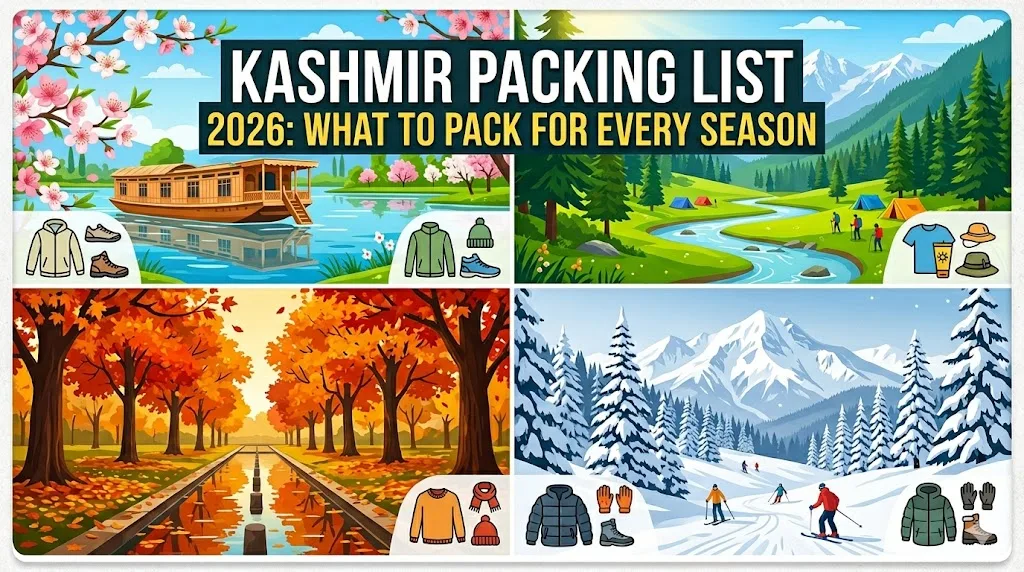
Packing for Kashmir is different from packing for most Indian destinations. The altitude, the rapid weather changes, and the cultural context all affect what you need. This guide covers exactly what to bring — organised by season and activity — so you do not overpack or arrive underprepared.
The Core Principle: Layer, Don’t Bulk
Kashmir’s weather changes rapidly — a clear warm morning in Srinagar can become a cold, windy afternoon at Gulmarg. The solution is layering, not packing heavy individual items. Three light layers worn together are warmer, more versatile, and lighter in your bag than one heavy jacket.
The three-layer system:
- Base layer: moisture-wicking thermal or regular clothing against your skin
- Mid layer: fleece or light down jacket for insulation
- Outer layer: windproof and water-resistant jacket or shell
Summer (May–August)
Clothing
- Light cotton or linen shirts and t-shirts (4–5 for a week)
- Light trousers or jeans (2–3 pairs) — avoid shorts for cultural sensitivity
- One pair of warm trousers for evenings at altitude
- A medium-weight fleece or sweatshirt — evenings at Gulmarg (2,650m) and Sonamarg (2,740m) are cold even in July
- A light windproof jacket — essential for the Gulmarg gondola even in summer
- Light gloves and a thin hat for Apharwat Peak (3,980m) — temperature drops to 5–10°C year-round
- Comfortable walking shoes — must be broken in before the trip
- One pair of sandals or slip-ons for the houseboat and town
Other Essentials
- Sunscreen (SPF 50+) — UV intensity increases significantly at altitude
- Sunglasses with UV protection
- Lip balm — the air at altitude is dry
- A small daypack for day trips
- Insect repellent (useful near water bodies including Dal Lake)
- Light rain jacket or packable poncho — summer monsoon brings occasional showers
- A small umbrella
Autumn (September–October)
Autumn is Kashmir’s most beautiful season — and requires slightly more preparation than summer.
Clothing
- Mix of light and medium-weight clothing for Srinagar (15–25°C daytime)
- Warm layers for evenings — temperatures drop to 5–10°C after sunset in October
- A proper warm jacket (not just a fleece) for Gulmarg and higher altitude locations
- Warm hat and gloves — essential by October
- Waterproof shoes or boots — dew and occasional rain make paths wet
- Scarf or neck warmer
Other Essentials
- Same sunscreen, sunglasses, and daypack as summer
- Hand warmers (available in Srinagar markets) for October visits to Apharwat
Winter (December–February)
Winter in Kashmir — specifically Gulmarg skiing — requires the most specialised packing of any season.
For Srinagar
- Heavy winter coat (rated to -10°C minimum)
- Thermal underlayers (top and bottom) — wool or synthetic, not cotton
- Warm sweaters (2–3)
- Heavy warm trousers
- Warm waterproof boots with grip soles
- Warm hat covering ears
- Gloves — waterproof outer gloves over wool inner gloves
- Scarf and neck gaiter
- Hand and feet warmers
Additional for Gulmarg Skiing
- Ski jacket and ski trousers (can be rented at Gulmarg if you do not own)
- Ski socks (padded, moisture-wicking — not regular socks)
- Ski goggles
- Balaclava for extreme cold days at Apharwat (-15 to -20°C)
- Ski gloves (different from regular winter gloves — waterproof and grip-capable)
- Sunscreen SPF 50+ — snow reflects UV intensely, sunburn on the slopes is severe
Spring (March–April)
Spring is transitional — warm in Srinagar, still cold at altitude.
Clothing
- Light to medium layers for Srinagar (10–20°C)
- Warm jacket for Gulmarg where snow is still significant
- Waterproof footwear — spring snowmelt makes paths muddy
- A light rain jacket — spring showers are common
- Warm hat and gloves for any altitude visit
For Religious and Cultural Sites
Kashmir has mosques, shrines, and temples. Pack appropriately:
- Modest clothing that covers shoulders and knees — this applies to all genders
- A scarf or dupatta for women (useful at shrines and mosques)
- Easy-to-remove footwear — you remove shoes at every shrine and temple
- Socks — always wear socks when visiting religious sites where footwear is removed
Medications and Health
- Personal prescription medications — sufficient for your entire trip plus extra
- Basic first aid: antiseptic, band-aids, pain reliever, anti-diarrhoeal
- Altitude medication: consult your doctor about Diamox (acetazolamide) if you are concerned about altitude sickness — most visitors to Srinagar (1,585m) do not need it, but trekkers going to 4,000m+ benefit from discussing it with a doctor
- Motion sickness medication if you are susceptible — the mountain roads to Gulmarg and Sonamarg involve significant curves
- Hand sanitiser
- Water purification tablets if trekking
Electronics
- Universal power adapter — J&K uses standard Indian sockets (Type D and C)
- Portable power bank — essential for day trips where charging is unavailable
- Camera with extra batteries — cold weather drains batteries fast at altitude
- Memory cards
- Waterproof bag or case for electronics — protection from rain and water spray on shikara rides
Documents
- Aadhar card or government-issued photo ID — required at most hotels and for entry to some sites
- Printed copies of hotel bookings and gondola tickets
- Emergency contacts written on paper (not just stored in phone)
- Travel insurance documents if applicable
What NOT to Pack
- Excessive formal clothing — Kashmir is casual for tourists
- High heels or dress shoes — useless on mountain terrain
- Too many heavy items — mountain roads and houseboat access require manageable luggage
- Alcohol in large quantities — most restaurants and houseboats do not serve alcohol; bringing large amounts is unnecessary and potentially problematic
What to Buy in Kashmir
Some items are better bought locally than packed:
- Kahwa tea and dry fruits: Available everywhere at good prices
- Pheran (traditional Kashmiri winter cloak): Warm and practical, sold in Srinagar markets — a good purchase for winter visitors
- Kangri (traditional firepot): A small clay pot with burning charcoal carried under a pheran for warmth — cultural and practical, sold at markets
- Warm socks and gloves: Available at Srinagar markets at low prices if you forget yours
Published by VisitJK — honest travel guides for Jammu & Kashmir. Last updated june 2026.

Rahul Naik is a Jammu & Kashmir local who has spent years exploring the Kashmir Valley, Jammu region, and high-altitude areas of the Union Territory. He has personally visited every major destination covered on VisitJK — from Dal Lake houseboats to Gulmarg slopes to the remote villages of the Gurez Valley. VisitJK is built on that firsthand experience — honest, practical travel content written for visitors who want real information, not brochure language.