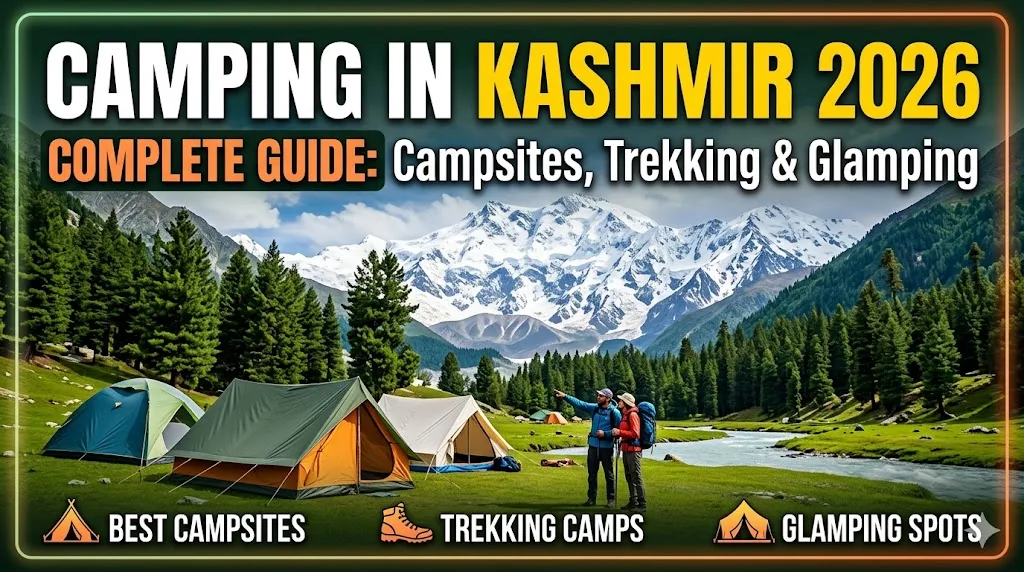
Camping in Kashmir is not roughing it — at least not the way most visitors experience it. The valley and its surrounding high-altitude terrain offer some of India’s most beautiful camping environments, and the established camping infrastructure ranges from basic tent pitching at a campsite to fully furnished luxury tents in a meadow with attached bathrooms and electricity.
This guide covers every type of camping in Kashmir — from organised campsites near the main tourist destinations to high-altitude trek camps to glamping options for those who want the outdoors without sacrificing comfort.
Why Camp in Kashmir
Access to landscapes: The best landscapes in Kashmir — the high-altitude meadows, the glacial lakes, the areas above the treeline — are only accessible by camping. The Kashmir Great Lakes trek camp at Vishansar Lake (3,710 metres) or a night at a meadow above Aru Valley gives you access to places that day visitors never reach.
The night sky: Kashmir’s mountain areas have some of the darkest skies in India. Away from Srinagar’s light pollution, the night sky at Sonamarg, Aru Valley, or any high-altitude camp is extraordinary — the Milky Way visible as a band across the sky.
The silence: A camping morning in a Kashmir meadow — the sound of a stream, birds, the wind through the grass, nothing else — is a specific quality of experience that no hotel can replicate.
Value: Well-run campsites in Kashmir offer good value compared to hotels, particularly in peak season when hotel prices are high.
Types of Camping in Kashmir
1. Glamping — Luxury Tented Camps
The most comfortable form of camping — fully furnished tents with real beds, attached bathrooms, electricity, and a dining tent with full meal service. Glamping camps operate in the meadows near major tourist destinations during summer (May–September).
Locations:
- Sonamarg meadow — several operators run luxury tent camps in the main meadow area
- Aru Valley (near Pahalgam) — camps in the wider grassland
- Yusmarg — camps in the flat meadow
- Doodhpathri — camps in the underrated meadow destination
What glamping includes:
- Furnished tent with proper beds and bedding
- Attached bathroom (some camps have attached, some have shared facilities)
- Electricity (usually limited hours in the evening from a generator)
- All meals (breakfast, lunch, dinner) served in a central dining tent
- Bonfire in the evening
- Basic activities — nature walks, bird watching, stargazing
Price range: ₹3,000–₹10,000 per person per night depending on location and quality of camp. Most glamping rates include all meals.
Booking: Through J&K Tourism, Srinagar-based travel agents, or increasingly through online platforms (MakeMyTrip, Thrillophilia, and similar adventure travel platforms).
Season: May to September only. Most glamping camps close in October before the snowfall begins.
2. Campsite Camping — Semi-Organised
Basic to mid-range campsites where you bring your own tent (or rent one from the campsite) and pay for a pitch. These offer more independence than glamping at lower cost.
Locations:
- Betaab Valley camping area (near Pahalgam)
- Sonamarg campsite
- Various Forest Department designated camping areas
What is included:
- Campsite pitch (flat ground, sometimes with basic toilet facilities)
- Sometimes: basic tent rental
- Sometimes: basic meal facilities nearby
Price range: ₹300–₹800 per pitch per night for the campsite. Tent rental (if needed) additional ₹500–₹1,500.
Best for: Travellers with their own camping equipment who want independence and lower cost.
3. Trek Camping — High Altitude
The most adventurous form of camping — pitching tents at high-altitude campsites along the major trekking routes. This requires either bringing your own tent and equipment or hiring a trekking operator who provides tents, sleeping bags, and food as part of the trek package.
Major trek camping routes in Kashmir:
Kashmir Great Lakes Trek (7 days from Aru Valley): This is widely considered India’s finest multi-day trek. The route passes through 7 glacial lakes above 3,700 metres, with tent camps at different lakes each night. The camping environments — on the shores of high-altitude lakes with peaks above and glaciers visible — are extraordinary.
Camp locations: Naranag/Aru base → Nichnai Pass → Vishansar Lake → Krishansar Lake → Gadsar Lake → Satsar Lakes → Gangabal Lake → Naranag descent.
Difficulty: Moderate to demanding. Requires reasonable physical fitness, ability to walk 15–20 kilometres per day with a backpack, and comfort with altitude (camps reach 4,200+ metres).
Kolahoi Glacier Trek (3–4 days from Aru Valley): A shorter trek to Kashmir Valley’s largest glacier. Camps at Lidderwat meadow (one of the most beautiful campgrounds in the valley) and at the base of the Kolahoi Glacier.
Difficulty: Moderate.
Tarsar Marsar Lake Trek (4–5 days from Aru Valley): Two beautiful alpine lakes accessible from Aru. Less busy than the Great Lakes trek, equally beautiful.
Naranag to Gangabal (2–3 days): A shorter route to Gangabal Lake — a large glacial lake beneath the Haramukh peak at 5,143 metres. One of the most scenic short treks in Kashmir.
Trek Camping — Organised vs Self-Organised
Organised Trek Packages
Trekking operators in Srinagar and Pahalgam offer fully organised trek camping packages that include:
- Guide and porters
- Tents, sleeping bags, and camping equipment
- All meals (cooked at camp)
- Permits where required
- Emergency equipment
Price range: ₹4,000–₹8,000 per person per day for organised packages depending on group size, route, and operator quality. The Kashmir Great Lakes Trek in a 7-day organised package typically costs ₹25,000–₹45,000 per person.
Recommended for: First-time trekkers in Kashmir, solo travellers, and those without camping experience.
Self-Organised Camping
Experienced trekkers can organise independently:
- Equipment: Bring your own tent, sleeping bag rated to -10°C minimum, cooking equipment
- Guide: A local guide is strongly recommended even for experienced trekkers — the routes are not uniformly well-marked and local knowledge of weather, snow conditions, and alternate routes is valuable
- Permits: No formal trekking permit required for most Kashmir routes for Indian citizens. Inform the local Forest Department beat office of your route and expected return
- Food: Carry all food from Aru Valley or Pahalgam — no shops on the high-altitude routes
Price (self-organised): Guide fee ₹1,500–₹2,500 per day + porter fee ₹1,000–₹1,500 per day (if using porters) + food cost
Essential Camping Equipment for Kashmir
Tent
A four-season tent or a minimum three-season tent with good waterproofing. Kashmir weather at altitude is unpredictable — rain, hail, and even snow are possible in any summer month. A flimsy tent is not suitable for the Great Lakes trek or other high-altitude routes.
Sleeping Bag
Rated to at least -10°C. High-altitude nights in Kashmir can drop to -5°C to -10°C even in July at 3,500+ metres. A sleeping bag that is too warm can be unzipped; one that is too cold is a genuine problem.
Clothing (for trek camping)
- Thermal base layers
- Warm mid-layer (fleece or light down jacket)
- Waterproof outer layer (jacket and trousers)
- Warm hat and gloves
- Waterproof boots with ankle support
- Trekking poles (strongly recommended for the descents)
Other Essentials
- Headlamp with spare batteries
- Water purification tablets or filter
- First aid kit including altitude medication (discuss Diamox with a doctor before the trip)
- High-energy snacks (nuts, energy bars, dried fruit)
- Sunscreen SPF 50+ (UV is intense at altitude)
- Sunglasses with UV protection
When to Camp in Kashmir
May–June: The best months for lower-altitude glamping and campsite camping. Trek routes may have snow on higher passes until June — check current conditions before starting any high-altitude trek.
July–August: Prime high-altitude trekking season. All routes accessible. Weather is relatively stable with occasional afternoon thunderstorms. The Great Lakes trek is at its best in this window.
September: Excellent camping season. Crowds thin after the summer peak. Weather is generally stable. The early autumn light on the mountains and lakes is exceptional.
October: The last month for high-altitude camping before snow closes the routes. October camping at altitude requires extra warm equipment. Gangabal and other high lakes may freeze in October.
November–April: High-altitude camping not recommended without mountaineering experience and equipment. Glamping camps and organised campsites are closed.
Finding Trekking Operators in Kashmir
Several reputed trekking operators are based in Srinagar and Pahalgam:
In Srinagar: The J&K Tourism office on Boulevard Road maintains a list of registered trekking operators. This is the most reliable way to find legitimate, accountable operators rather than depending on hotel referrals.
In Pahalgam: Pahalgam is the base for most major Kashmir treks. Local trekking guides and operators are available in the town. Ask for operators who are members of the Pahalgam Hoteliers and Tour Operators Association — membership provides basic accountability.
What to verify before booking:
- How many years has the operator been running this specific route?
- What emergency protocols do they have (evacuation plan, first aid)?
- What equipment do they provide vs what you need to bring?
- What are the group size limits? (Smaller groups mean more personalised guidance)
- Do they have a satellite phone or emergency communication device?
Official Information
- J&K Tourism (trek operators and campsite information): jktourism.jk.gov.in
- Amarnath Yatra (for camping along the Yatra route): shriamarnathjishrine.com
Published by VisitJK — honest travel guides for Jammu & Kashmir. Last updated June 2026.

Rahul Naik is a Jammu & Kashmir local who has spent years exploring the Kashmir Valley, Jammu region, and high-altitude areas of the Union Territory. He has personally visited every major destination covered on VisitJK — from Dal Lake houseboats to Gulmarg slopes to the remote villages of the Gurez Valley. VisitJK is built on that firsthand experience — honest, practical travel content written for visitors who want real information, not brochure language.