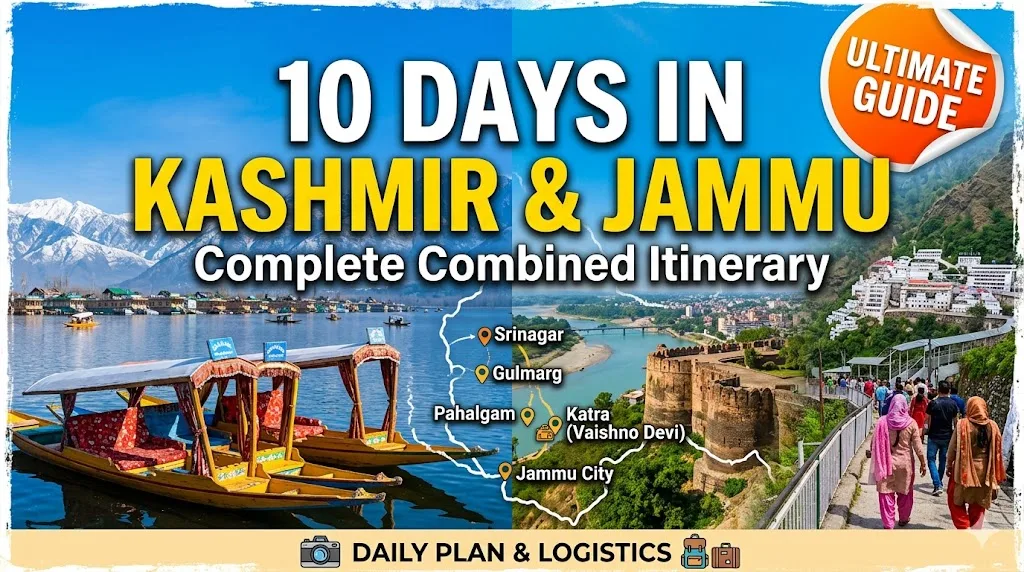
Ten days gives you something no shorter trip can — the full breadth of Jammu & Kashmir. Not just the Kashmir Valley highlights, but Jammu, Vaishno Devi, an offbeat destination, and enough time in each place to actually experience it rather than photograph it and leave.
This itinerary covers both divisions of J&K — starting in Jammu, moving through the Kashmir Valley, and returning from Srinagar. It includes one overnight outside Srinagar (in Pahalgam), one night in Gulmarg, and a full day at Sonamarg.
Before You Start
Flight strategy: Fly INTO Jammu (IXJ) and OUT OF Srinagar (SXR). This creates a natural one-way route through J&K rather than doubling back. Both airports have direct connections to Delhi.
Transport: Private cab with driver for the full 10 days. This is the only practical option for a trip covering both divisions. The driver becomes your guide for the full journey. Cost: ₹3,500–₹5,000 per day.
Book in advance:
- Vaishno Devi Yatra registration (jammuvaishnodevi.org)
- Dal Lake houseboat (4–6 weeks before in peak season)
- Pahalgam and Gulmarg hotels (3–4 weeks before)
- Gulmarg Gondola Phase 2 (3–5 days before)
Day 1 — Arrival in Jammu + City Sightseeing
Morning: Arrive at Jammu Airport or Jammu Tawi Railway Station. Transfer to hotel. Jammu sits at 327 metres — significantly lower and warmer than the Kashmir Valley. If arriving from a hot city in summer, Jammu will feel familiar in temperature.
Afternoon: Raghunath Temple complex in the city centre — one of the largest temple complexes in North India, built by Maharaja Gulab Singh in 1835. The carved architecture and the seven shrines within the complex make it worth 1.5–2 hours.
Late afternoon: Bahu Fort above the Tawi River — the fort houses the Bahu Mata temple and offers views over the city. The gardens below the fort are pleasant in the evening.
Evening: Dinner in Jammu. Try Rajma Chawal (the local variety of rajma is excellent) or Khatta Meat — the Dogra specialty of mutton in a tamarind-based sauce.
Overnight: Jammu hotel.
Day 2 — Vaishno Devi Yatra
An early start is essential for Vaishno Devi.
Pre-dawn (4:30 AM): Drive from Jammu to Katra (45 kilometres, approximately 1 hour). Katra is the base camp for the Vaishno Devi Yatra.
Morning (6 AM): Begin the trek from Katra to the Vaishno Devi cave shrine. The trek is approximately 13–14 kilometres one way through forested mountain terrain. The route passes through Ban Ganga, Charan Paduka, Adhkuwari, and Sanjichhat before reaching the main shrine.
The total trek — up and back — takes 8–10 hours for an average walker. Pony and palanquin services are available for those unable to walk the full distance.
Afternoon: Reach the shrine, take darshan, and begin the return. The Bhavan (the main shrine complex) has basic food facilities and rest areas.
Evening: Return to Katra. Rest at the hotel in Katra or drive back to Jammu (1 hour).
Overnight: Katra or Jammu hotel.
Day 3 — Jammu to Srinagar
Morning: The drive from Jammu to Srinagar covers approximately 260–290 kilometres and takes 7–9 hours depending on traffic and road conditions. Leave by 7 AM.
Highlights on the route:
- Chenani–Nashri Tunnel (9 km — one of India’s longest road tunnels, bypasses the old mountain section)
- Ramban gorge — dramatic narrow valley section
- Banihal Tunnel (8.5 km — passes through the Pir Panjal Range, marks the entry into the Kashmir Valley)
- The descent into the Kashmir Valley after the Banihal Tunnel is one of the most dramatic landscape transitions in India — from the bare brown mountains of the Jammu side to the sudden green of the Kashmir Valley
Afternoon: Arrive in Srinagar. Transfer to Dal Lake houseboat. Short rest and orientation shikara ride.
Evening: First dinner on the houseboat.
Overnight: Dal Lake houseboat.
Day 4 — Srinagar Sightseeing
Early morning: Dawn shikara ride on Dal Lake before breakfast — the lake at first light is the defining Srinagar experience.
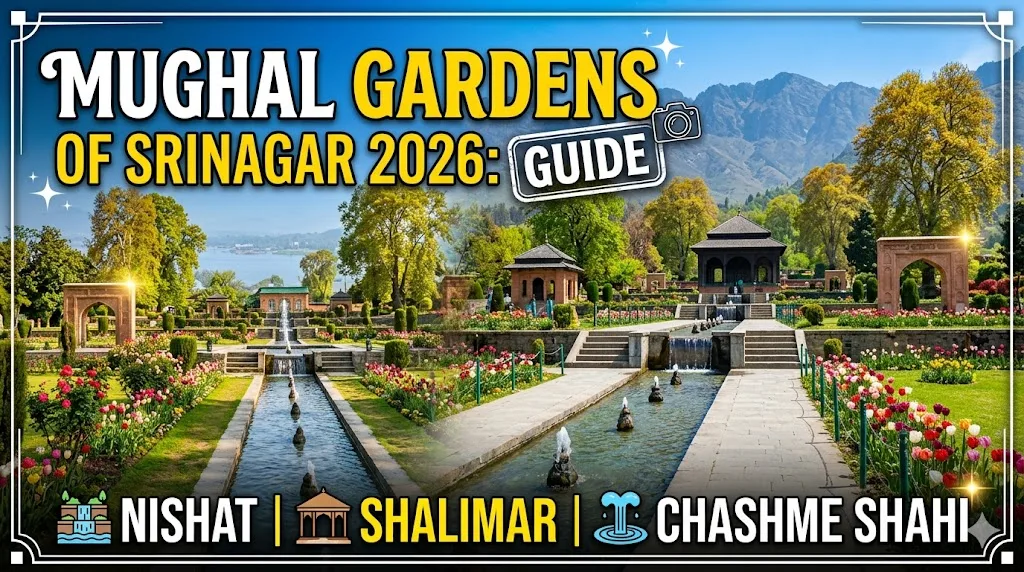
Morning: Mughal Gardens — Nishat Bagh and Shalimar Bagh. Allow 45 minutes each. Best in morning light before the crowds arrive.
Late morning: Shankaracharya Temple for the panoramic city view. Arrive before 11 AM for clearest visibility.
Afternoon: Old city exploration — Jama Masjid, Shah-e-Hamdan shrine, Nowhatta market area. The historical character of Srinagar is most visible in these lanes.
Late afternoon: Hazratbal Shrine on the western lake shore. The white marble setting on the lake is architecturally distinctive.
Evening: Lal Chowk area for a walk, then return to houseboat for dinner.
Overnight: Dal Lake houseboat.
Day 5 — Srinagar to Pahalgam
Morning (7 AM): Drive to Pahalgam (95 kilometres, 2.5 hours). Stop briefly at the Awantipora ruins — 9th-century Hindu temple remains visible from the roadside.
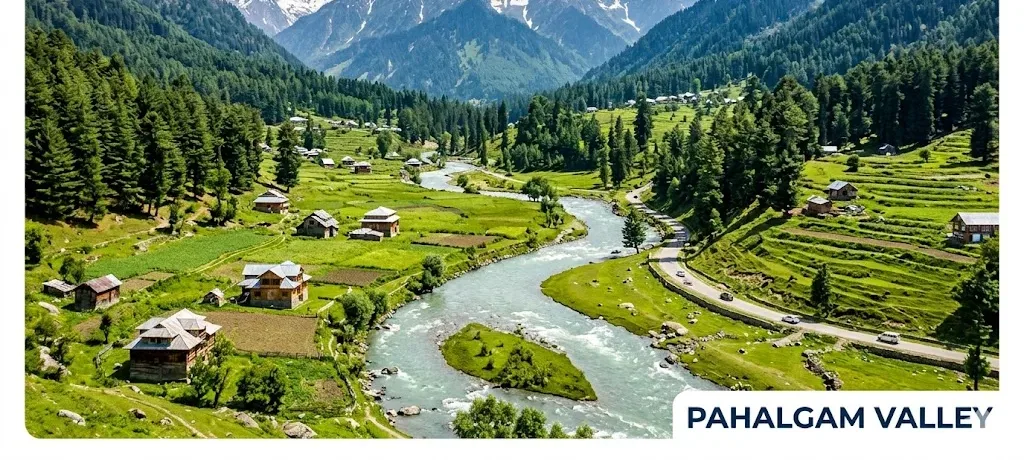
Late morning: Arrive in Pahalgam and continue directly to Betaab Valley. The meadow is most beautiful in the morning — arrive before the day-trippers from Srinagar.
Afternoon: Aru Valley — take the separate road to this quieter, wider grassland. Walk into the valley for 30–40 minutes.
Late afternoon: Return to Pahalgam town. Walk along the Lidder River.
Evening: Dinner in Pahalgam. If available, order fresh trout from the Lidder.
Overnight: Pahalgam hotel (river view room if available).
Day 6 — Pahalgam to Gulmarg
Early morning: Baisaran meadow before leaving Pahalgam — a 3-kilometre horse ride or walk above the town. Leave by 6:30 AM to reach Baisaran before crowds. Return by 9 AM.
Mid-morning: Drive from Pahalgam to Gulmarg via Srinagar (3.5–4 hours total). This is a transit day — no major stops needed.
Afternoon: Arrive in Gulmarg. Check in to hotel. Walk the meadow in the afternoon light. Visit Maharani Temple.
Evening: Dinner in Gulmarg. The temperature drops sharply after sunset — warm clothing essential.
Overnight: Gulmarg hotel (meadow view room).
Day 7 — Gulmarg Gondola + Khilanmarg
Early morning (8:45 AM): Be at the gondola base when it opens (9 AM). Take Phase 1 to Kongdori then Phase 2 to Apharwat Peak (if pre-booked). Spend 1.5–2 hours at the top before descending.
Midday: Lunch in Gulmarg. Rest if the altitude has been tiring.
Afternoon: Walk to Khilanmarg (6 kilometres from the main meadow through pine forest, 1.5–2 hours each way). The views of the Nanga Parbat range from Khilanmarg are exceptional. Only attempt if time and energy allow.
Alternatively: Simply spend the afternoon walking the meadow, sitting in the grass, and enjoying the landscape without an agenda. Some of the best Kashmir memories come from these unstructured hours.
Evening: Final dinner in Gulmarg.
Overnight: Gulmarg hotel.
Day 8 — Gulmarg to Sonamarg to Srinagar
Morning (8 AM): Drive from Gulmarg to Sonamarg via Srinagar (approximately 2.5–3 hours total). Arrive in Sonamarg by midday.
Afternoon: Walk or ride to Thajiwas Glacier (30–40 minutes each way on foot). Spend time at the glacier — snow activities if available, photography, or quiet sitting in the glacial bowl.
Walk the main Sonamarg meadow. The Sindh River runs along the edge — find a spot on the bank and spend 30 minutes doing nothing in particular.
Late afternoon: Drive back to Srinagar (2 hours from Sonamarg). This is a full day with significant driving — it covers two destinations efficiently.
Evening: Return to Dal Lake houseboat for the final nights.
Overnight: Dal Lake houseboat.
Day 9 — Srinagar Free Day + Shopping
Use Day 9 as a flexible day in Srinagar — for anything not yet done and for the shopping that requires unhurried time.
Morning options:
- Tulip Garden (late March–April only — if timing matches)
- Hari Parbat Fort above the old city (views and history)
- Return to any Mughal Garden for a slower, more detailed visit
- The Dal Lake floating vegetable market at dawn (5:30–6:30 AM) — the wholesale market of vegetable farmers is one of the most authentic cultural experiences available
Afternoon — Shopping: Srinagar shopping requires time to do properly. The key areas:
- Pashmina and textiles: The showrooms and shops in the Lal Chowk area and along Residency Road. Take time — ask to see multiple options, understand what you are buying, do not rush.
- Dry fruits and saffron: The wholesale dry fruit market area has the best prices. Buy from shops, not from vendors who approach you on the street.
- Papier-mâché and handicrafts: The old city lanes around Jama Masjid have artisan workshops where you can buy directly.
- Kahwa tea: Specialist tea shops in the market area sell proper kahwa blends. Avoid the overpriced tourist versions.
Evening: Final dinner on the houseboat. Last kahwa on the deck.
Overnight: Dal Lake houseboat.
Day 10 — Final Morning + Departure
Early morning: Final Dal Lake shikara at dawn. This is non-negotiable — the last morning on the lake, the first light on the water, the mountains reflecting in the stillness. 45 minutes. ₹300–₹400.
Mid-morning: Transfer to Srinagar Airport for your onward flight. Allow 30–40 minutes from Dal Lake.
Budget Estimate — 10 Days (Per Person)
| Item | Budget | Mid-Range |
|---|---|---|
| Accommodation (9 nights) | ₹10,000 – ₹18,000 | ₹30,000 – ₹60,000 |
| Private cab (10 days) | ₹35,000 – ₹50,000 | ₹50,000 – ₹65,000 |
| Gulmarg Gondola | ₹1,900 | ₹1,900 |
| Vaishno Devi trek/pony | ₹0 – ₹1,500 | ₹1,500 – ₹3,000 |
| Meals (10 days) | ₹6,000 – ₹10,000 | ₹15,000 – ₹25,000 |
| Entry fees and activities | ₹1,500 – ₹2,500 | ₹2,500 – ₹5,000 |
| Shikara rides | ₹1,500 – ₹2,500 | ₹2,500 – ₹4,000 |
| Shopping | Variable | Variable |
| Total (excluding flights) | ₹56,000 – ₹85,000 | ₹1,03,000 – ₹1,64,000 |
Cab is the largest cost — shared between 2–4 people it drops significantly per person.
Published by VisitJK — honest travel guides for Jammu & Kashmir. Last updated june 2026.

Rahul Naik is a Jammu & Kashmir local who has spent years exploring the Kashmir Valley, Jammu region, and high-altitude areas of the Union Territory. He has personally visited every major destination covered on VisitJK — from Dal Lake houseboats to Gulmarg slopes to the remote villages of the Gurez Valley. VisitJK is built on that firsthand experience — honest, practical travel content written for visitors who want real information, not brochure language.