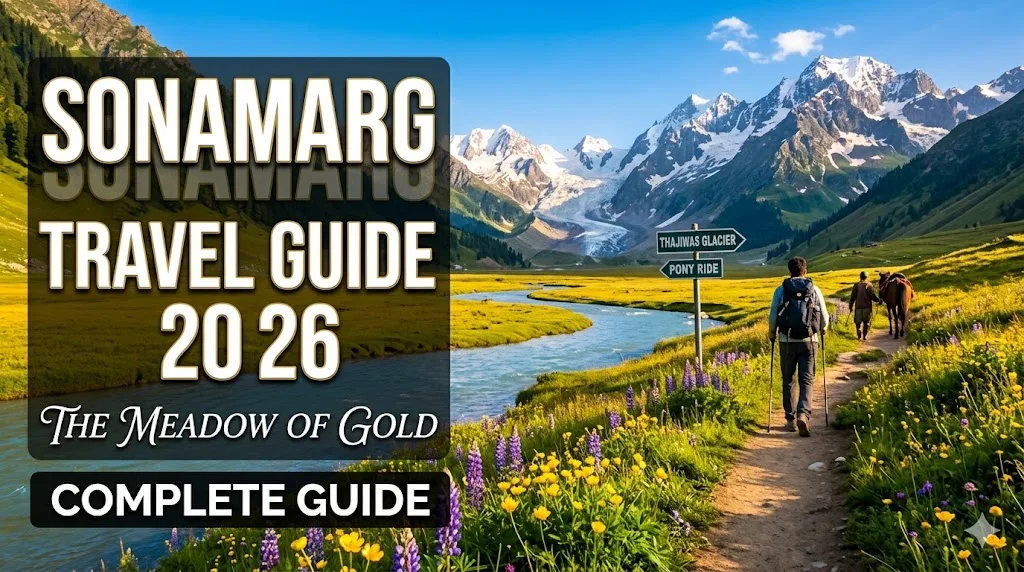
Sonamarg sits at the edge of the Kashmir Valley — the last major destination before the Zoji La pass and the dramatic landscape transition into Ladakh. At 2,740 metres altitude in the Ganderbal district, it offers something none of the other major Kashmir destinations quite match: the feeling of being at the boundary between two worlds, with the green valley behind you and the high-altitude alpine terrain ahead.
The name Sonamarg translates as “Meadow of Gold” — a reference to the golden hue of the wildflowers and dried grass in autumn. In summer the meadow is intensely green. In winter, after snowfall, it becomes white. The name captures the colour of the brief transitional window in between.
Where Is Sonamarg
Sonamarg is located in the Ganderbal district of Jammu & Kashmir, approximately 80 kilometres from Srinagar on the Srinagar–Leh National Highway (NH1). The drive from Srinagar follows the Sindh River valley — one of the most scenic drives in the Kashmir Valley — before the road rises toward Sonamarg and the landscape becomes progressively more alpine.
The Z-Morh tunnel, inaugurated in 2024, now keeps Sonamarg accessible through winter — previously the destination was cut off from November to May when the road became impassable. This has fundamentally changed Sonamarg’s character, making it a year-round destination for the first time.
How to Reach Sonamarg
From Srinagar: The drive from Srinagar to Sonamarg takes approximately 2 to 2.5 hours covering 80 kilometres. The road follows the Sindh River for most of the journey — stop at the Kangan area (approximately 50 kilometres from Srinagar) where the river widens and the valley opens for good views and photographs.
Private taxis from Srinagar cost approximately ₹2,000–₹2,500 one way. Shared jeep taxis from Dalgate area in Srinagar cost ₹150–₹200 per seat and depart in the morning.
Via Z-Morh Tunnel (winter access): The Z-Morh tunnel is a 6.4-kilometre all-weather tunnel that bypasses the previously snow-blocked section of road before Sonamarg. The tunnel has made Sonamarg accessible in winter — previously impossible. Toll applies for vehicles using the tunnel.
From Leh: Sonamarg is 165 kilometres from Leh via the Zoji La pass. The Zoji La is open from May to November — closed in winter even with the Z-Morh tunnel on the Kashmir side. Travellers doing the Srinagar–Leh highway in either direction pass through Sonamarg.
What to See and Do in Sonamarg
Thajiwas Glacier
The main attraction for most visitors. The glacier is located approximately 2 kilometres from the main Sonamarg meadow — accessible by foot (30–40 minute walk each way) or by horseback (15–20 minutes).
The walk to Thajiwas passes through a narrow gorge with a stream running through it, then opens dramatically into a wide bowl surrounded by peaks on three sides, with the glacier visible ahead. Even in July and August when all other snow in the valley has melted, Thajiwas holds significant ice and snow — a striking sight in the middle of summer.
Snow activities — sledging, snowball fights, walking on snow — are available at Thajiwas throughout spring and summer. In winter, the glacier and surrounding area are buried under several metres of snow and are accessible only with proper winter equipment.
Pony charges to Thajiwas: ₹400–₹600 return (negotiate before mounting). Walking is free and takes approximately 35–40 minutes each way on a clear path.
Sonamarg Meadow
The main meadow stretches for several kilometres above the river, enclosed by forested slopes and open toward the peaks. Walking across the meadow — away from the road and the pony operators — gives you the quality of landscape that Sonamarg is known for. The Sindh River runs along the lower edge of the meadow, fast and clear.
Vishansar and Krishansar Lakes
Two high-altitude glacial lakes accessible from Sonamarg by a 2–3 day trek. Vishansar Lake sits at approximately 3,710 metres and Krishansar at 3,801 metres — both surrounded by dramatic peaks and glacial terrain. The trek passes through high-altitude meadows and alongside rivers fed by snowmelt.
This is a serious trek requiring a guide, camping equipment, and reasonable physical fitness. Not suitable for casual visitors without preparation.
Nichnai Pass Trek
A one-day trek from Sonamarg to Nichnai Pass at approximately 4,100 metres. The trail climbs steeply from the meadow through alpine terrain to the pass, with views over both the Kashmir side and the Ladakh-facing slopes. Requires a guide and early start.
Baltal — Amarnath Yatra Base Camp
20 kilometres from Sonamarg toward the Zoji La, Baltal is one of the two base camps for the annual Amarnath Yatra pilgrimage. During the Yatra season (June–August), Baltal is crowded with pilgrims and support infrastructure. Outside this period, it is a quiet spot with views of the upper Sindh valley and the peaks surrounding the Zoji La.
The Drive to Zoji La
The Zoji La pass sits at 3,538 metres — 15 kilometres beyond Sonamarg on the Leh highway. Even if you are not continuing to Ladakh, driving to the Zoji La and back from Sonamarg takes about 1 hour and gives you the experience of the pass itself — the dramatic landscape transition from the green Kashmir side to the brown, treeless Ladakh side is visible at the pass.
Note: The Zoji La road is one-way on alternating schedules to manage traffic. Check the current schedule before attempting to drive it.
The Sindh River Drive — Srinagar to Sonamarg
The 80-kilometre drive from Srinagar to Sonamarg along the Sindh River valley is one of Kashmir’s finest drives and deserves attention beyond just being transit to a destination.
Key stops along the way:
Kangan (50 km from Srinagar): The Sindh River widens here and the valley opens. There is a bridge at Kangan from which the river is particularly photogenic — clear water over rounded stones with mountains visible upstream.
Wangath (60 km from Srinagar): A small village on the river. The Naranag archaeological site — ruins of ancient Hindu temples dating from the 8th century AD — is a 6-kilometre walk from Wangath. Worth the detour for history and archaeology enthusiasts.
Gagangir (65 km from Srinagar): The last village before Sonamarg. Good views of the river valley from the road.
Where to Stay in Sonamarg
Tent accommodation: The traditional Sonamarg accommodation experience is staying in a tourist tent in the meadow. Government-run and private tent complexes offer furnished tents with attached or shared facilities. Prices range from ₹1,500–₹4,000 per night depending on quality and season. The experience of sleeping in the meadow with the peaks visible from your tent door is the defining Sonamarg overnight experience.
Hotels in Sonamarg town: A small number of hotels in Sonamarg town offer standard room accommodation from ₹1,500–₹5,000 per night. Less atmospheric than the tents but more comfortable in cold or rainy weather.
Day trip from Srinagar: Most visitors do Sonamarg as a day trip — leave Srinagar at 7 AM, spend 5–6 hours in Sonamarg, return by evening. This works but misses the early morning quality of the meadow before day-trippers arrive. An overnight stay significantly improves the experience.
Booking in peak season: Tent accommodation and hotels book up quickly from May–August. Book 3–4 weeks in advance for this period.
Practical Tips
Altitude: Sonamarg is at 2,740 metres — Thajiwas Glacier and the surrounding trek routes go significantly higher. Drink plenty of water and move slowly if you are coming directly from a lower altitude.
Weather: Sonamarg weather changes rapidly. Clear mornings can become overcast by afternoon. Carry a warm jacket and rain protection regardless of the season — even in July, the temperature drops quickly when cloud comes in.
Crowding: Sonamarg is significantly less crowded than Gulmarg and Pahalgam on weekdays. Weekend visits, particularly in June and July, see heavy day-tripper traffic from Srinagar. Arriving early and staying overnight gives you the meadow largely to yourself in the morning.
Pony operators: As at all major Kashmir destinations, pony operators at Sonamarg can be persistent. If you want to walk to Thajiwas rather than ride, be clear and firm. The path is well-marked and you do not need a guide for this route.
Food: Sonamarg has several dhabas and small restaurants in the town area serving basic food. Quality is variable. Carrying snacks and water from Srinagar is advisable for a day trip. Tent complexes and hotels provide meals for overnight guests.
Best Time to Visit Sonamarg
| Season | Condition | Experience |
|---|---|---|
| November–April | Snow, Z-Morh tunnel access | Winter landscape, very quiet, limited facilities |
| May | Road fully opens, snow at Thajiwas | Fresh snow, green beginning, early season |
| June–July | Full green meadow, glacier visible | Peak season, most facilities open |
| August | Green, lighter crowds than June–July | Good balance of weather and crowds |
| September–October | Autumn colours, clear skies | Best photography season, trekking |
| October end | First snowfall on peaks | Dramatic landscape transition |
Frequently Asked Questions About Sonamarg
Published by VisitJK — honest travel guides for Jammu & Kashmir. Last updated June 2026.

Rahul Naik is a Jammu & Kashmir local who has spent years exploring the Kashmir Valley, Jammu region, and high-altitude areas of the Union Territory. He has personally visited every major destination covered on VisitJK — from Dal Lake houseboats to Gulmarg slopes to the remote villages of the Gurez Valley. VisitJK is built on that firsthand experience — honest, practical travel content written for visitors who want real information, not brochure language.