There’s a particular kind of quiet that settles over you somewhere around the third kilometre of the Vaishno Devi trek — the chatter of fellow pilgrims fades into rhythm, the mountain air gets thinner and sweeter, and the chants of “Jai Mata Di” echo off the hillside from groups you can’t even see yet. If you’re reading this, you’re probably trying to figure out how to plan that climb without the confusion that trips up most first-time yatris. This guide walks you through it the way a friend who’s done the trek a dozen times would — not a list of bullet points copied from a tourism brochure.
Mata Vaishno Devi’s shrine sits in a cave at an altitude of roughly 5,200 feet in the Trikuta Hills, above the base town of Katra in Jammu district. It’s one of the most visited pilgrimage sites in India, drawing lakhs of devotees every month, and unlike many Himalayan treks, it’s built for people of every fitness level — from twenty-somethings racing up in three hours to grandparents being carried in a palki. The infrastructure is genuinely impressive once you understand how it works, which is exactly what this guide is for.
Getting to Katra: Your Base Camp for the Yatra
Katra is the gateway town for the yatra, and almost every pilgrim’s journey starts here regardless of which mode of transport they choose to climb with.
By Train: Shri Mata Vaishno Devi Katra Railway Station is directly connected to major Indian cities including Delhi, Mumbai, and Chennai, and it’s the single most convenient way to arrive. The Vande Bharat Express running between Katra and Srinagar has also made it far easier to combine a Vaishno Devi yatra with a Kashmir Valley trip on the same itinerary — something increasing numbers of travellers are doing now that the route is fully operational.
By Road: Katra is about 45 km from Jammu city, roughly a 1.5-hour drive on a well-maintained highway. Taxis and shared sumos run frequently from Jammu’s bus stand and railway station, and most Katra hotels can also arrange a pickup if you let them know your arrival time in advance.
By Air: The nearest airport is Jammu Airport, with regular flights from Delhi, Mumbai, and several other metros. From the airport, it’s the same 45 km onward journey to Katra by road.
The Yatra Permit (RFID Card): Don’t Skip This Step
This is the part that trips up almost every first-timer. You cannot simply walk up to the trek’s starting gate and begin climbing — every pilgrim needs a Yatra Permit, also called an RFID Access Control card, before starting the trek. This isn’t bureaucratic red tape for its own sake; it’s how the Shrine Board manages crowd flow, tracks pilgrims in case of emergencies, and ensures the Bhawan (the main shrine complex) doesn’t get dangerously overcrowded during peak season.
You can register online in advance through the official Shri Mata Vaishno Devi Shrine Board portal, or collect your permit in person at the registration counters near Katra bus stand once you arrive. The online route is strongly recommended during peak travel months — Navratri season especially — since on-the-spot registration queues can eat up hours you’d rather spend on the trail. The permit is free of charge, and you’ll need a valid photo ID for every member of your group at the time of registration.
One detail that catches people off guard: the permit has a validity window, and you must begin your trek within that window. If your travel plans shift by a day, it’s worth re-checking your slot rather than assuming the old permit still works.
How Will You Climb? The Three Real Options
This is where the yatra becomes genuinely flexible, and where most of your planning decisions should focus.
1. The Traditional Trek (Track Route)
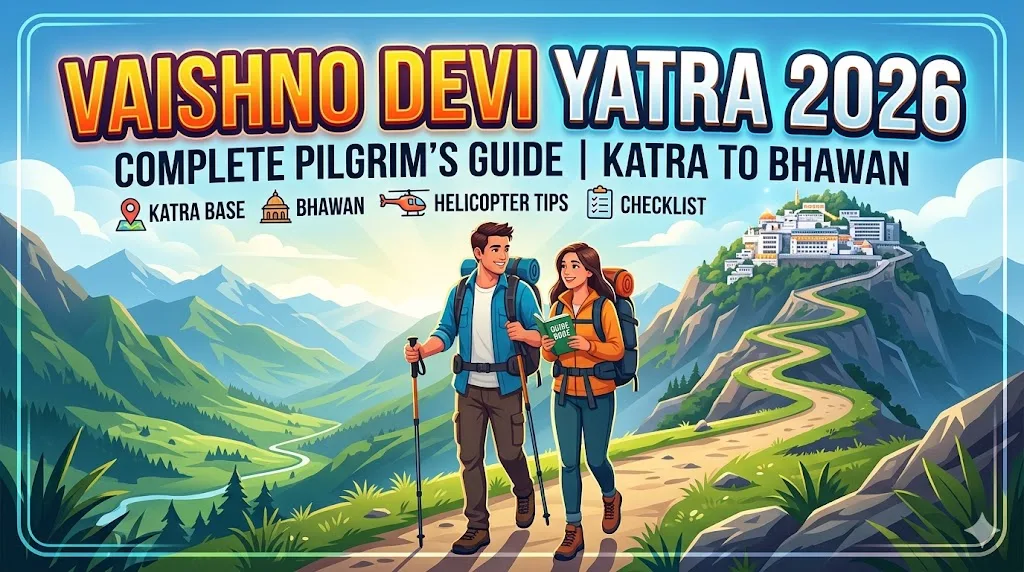
The classic route from Katra to Bhawan is approximately 13 kilometres, mostly paved and well-lit, with tea stalls, langars (community food stalls), and resting points dotted along the way every couple of kilometres. Most healthy adults complete it in 5-7 hours at a comfortable pace; fitter trekkers often do it in 3-4. The route is genuinely beautiful — pine forests, valley views, and a steady stream of fellow pilgrims that makes the climb feel communal rather than lonely, even if you’re doing it solo.
2. Helicopter Service
For those short on time or with elderly family members and small children in tow, helicopter services operate from Katra to Sanjichhat, cutting the remaining walk down to roughly 2.5 km instead of the full 13. Tickets need to be booked in advance — usually online through the official Shrine Board helicopter booking system — since seats fill up fast, particularly on weekends and during festival periods. Weather in the hills can be unpredictable, so always build a buffer day into your plan in case flights get delayed due to fog or wind.
3. Pony, Palki, and Battery Car
If walking the full distance isn’t realistic for someone in your group, ponies and palkis (palanquins carried by porters) are available at fixed points along the trek for hire. Battery-operated vehicles also cover part of the route closer to Katra, useful for the initial stretch if you want to conserve energy for the steeper sections ahead. Rates vary by season and distance, and it’s worth negotiating and confirming the price before setting off rather than mid-route.
Best Time to Undertake the Vaishno Devi Yatra
The shrine remains open year-round, which is part of what makes it different from many Himalayan pilgrimages that shut down for winter. That said, the experience shifts noticeably by season:
- March to June: Pleasant weather, ideal trekking conditions, and a good time before the summer holiday crowds peak.
- July to September: Monsoon season — the trail can get slippery, and landslide-related route closures are occasionally reported. Carry rain gear if you travel during this window.
- October to November: Arguably the best stretch of the year — crisp air, clear skies, and comfortable trekking temperatures.
- Navratri (twice a year, Chaitra and Sharad Navratri): The busiest period by far, with footfall multiplying several times over. Book accommodation and helicopter tickets well in advance if you’re travelling during these dates.
- December to February: Cold, occasionally snowy higher up, but the trek remains open and the crowds thin out considerably — a quieter, more contemplative yatra for those who don’t mind the chill.
Where to Stay: Katra Accommodation Basics
Katra has accommodation across every budget — from the Shrine Board’s own dormitory-style facilities (Niharika, Saraswati Dham) that are economical and clean, to private hotels ranging from simple guesthouses to more upscale options near the bus stand. There are also rest houses along the trek route itself at Adhkuwari (the halfway point) and Sanjichhat, useful if you’d rather split the climb across two days instead of doing it in one push. Booking ahead during Navratri and major holiday weekends isn’t optional — last-minute arrivals during peak season often find Katra fully booked out.
What to Pack for the Climb
Comfortable, broken-in walking shoes matter more than almost anything else on this list — this is not the trek to test out brand-new footwear on. Beyond that:
- A light jacket or shawl, even in summer, since temperatures drop noticeably as you climb
- A reusable water bottle (refill points are available along the route)
- A small backpack rather than a large suitcase — you’ll want your hands free
- Rain protection if travelling between July and September
- Basic first-aid items — blister plasters in particular are worth their weight
- A power bank, since phone signal and battery both take a hit on the mountain
At the Bhawan: Darshan and What to Expect
Once you reach the Bhawan, the darshan queue system is organised but can still involve a wait, especially during peak hours and festival periods. Many pilgrims choose to time their climb so they arrive at the shrine either very early morning or late at night, when queues tend to move faster. The cave shrine itself houses the three natural rock formations, or pindis, representing the goddess in her three forms — Maha Kali, Maha Lakshmi, and Maha Saraswati.
Most pilgrims also make the additional climb (or take the cable car, where available) to the Bhairon Temple, located roughly 6 km beyond the Bhawan. Local belief holds that the yatra is considered complete only after this visit, and the trail there offers some of the best panoramic views of the Trikuta range.
A Few Honest Tips From Experienced Yatris
Start your trek as early as possible — leaving Katra before sunrise means cooler temperatures, lighter crowds, and a real chance to watch the hills wake up around you. Pace yourself rather than racing; the langars along the route aren’t just convenient, they’re part of the experience, and stopping for a cup of tea with strangers headed the same way is half the charm of doing this on foot. And carry cash in small denominations — while UPI is increasingly accepted, smaller vendors along the trek often still prefer it.
Frequently Asked Questions
Q1. Is the Vaishno Devi yatra permit free?
Yes, the RFID-based yatra permit is issued free of charge by the Shrine Board, either online in advance or at the registration counters in Katra.
Q2. How long does the trek from Katra to Bhawan take?
The 13 km route typically takes 5-7 hours at a comfortable walking pace, though fit trekkers often complete it in 3-4 hours.
Q3. Can elderly people or small children do the Vaishno Devi yatra?
Yes. Pony, palki, and helicopter services make the yatra accessible to elderly pilgrims and families with young children who may not be able to complete the full trek on foot.
Q4. What is the helicopter route for Vaishno Devi?
The helicopter service flies from Katra to Sanjichhat, after which pilgrims walk the remaining roughly 2.5 km to reach the Bhawan.
Q5. Is Vaishno Devi open throughout the year?
Yes, the shrine remains open year-round, though monsoon months can bring occasional route disruptions and winter brings colder, sometimes snowy conditions higher up the trail.
Q6. Should I visit the Bhairon Temple too?
Most pilgrims do, as local tradition holds the yatra is considered complete only after visiting Bhairon Temple, located about 6 km beyond the main Bhawan shrine.

Rahul Naik is a Jammu & Kashmir local who has spent years exploring the Kashmir Valley, Jammu region, and high-altitude areas of the Union Territory. He has personally visited every major destination covered on VisitJK — from Dal Lake houseboats to Gulmarg slopes to the remote villages of the Gurez Valley. VisitJK is built on that firsthand experience — honest, practical travel content written for visitors who want real information, not brochure language.