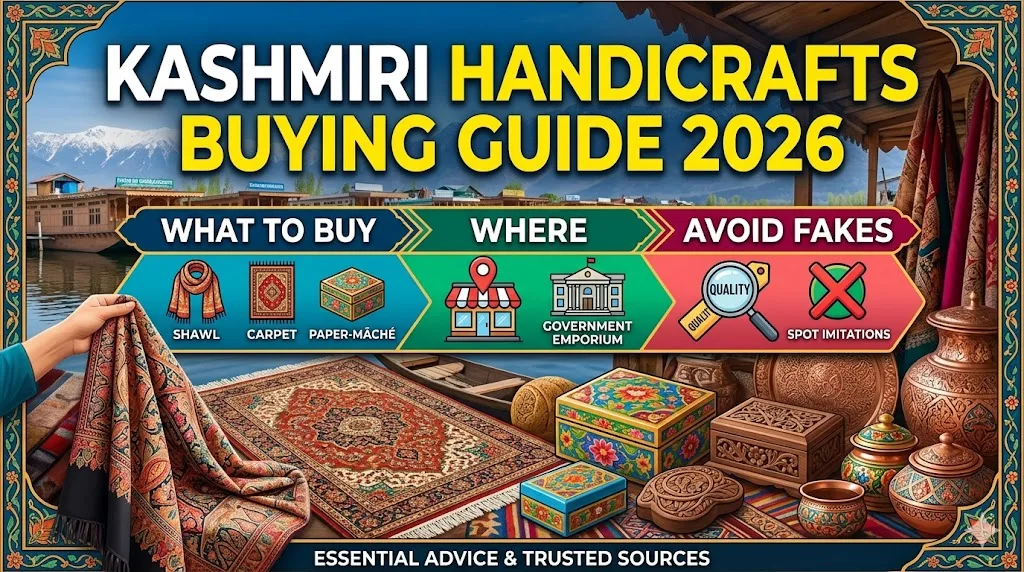
Kashmir produces some of the finest handcrafted goods in the world — pashmina shawls, hand-knotted carpets, papier-mâché, walnut woodwork, and embroidered textiles that take weeks or months to make. It also produces a large quantity of machine-made, imported, or adulterated goods sold to tourists under the same names at a fraction of the real price.
Knowing the difference is the most important thing you can learn before shopping in Kashmir.
The Six Main Kashmiri Crafts
1. Pashmina
Pashmina is made from the fine undercoat of the Changthangi goat — a breed native to the high-altitude plateaus of Ladakh. The fibre is extraordinarily fine (12–16 microns in diameter, compared to 20+ microns for regular wool) and produces fabric that is exceptionally soft, light, and warm.
How to identify genuine pashmina:
- Touch test: Real pashmina feels incredibly soft — softer than any wool you have handled. If it feels slightly scratchy or rough, it is not genuine pashmina.
- Burn test (ask the seller): A genuine pashmina fibre burns like human hair — it smells of burning hair and the ash crumbles. Synthetic fibres melt and smell of plastic.
- Price: Genuine hand-woven pashmina shawls cost ₹3,000–₹50,000+ depending on quality and weave. Anything sold as “pashmina” for ₹500–₹1,500 is not genuine — it is wool, viscose, acrylic, or a blend.
- GI tag: Genuine Kashmiri Pashmina has a Geographical Indication (GI) tag. Look for the GI certification mark or ask for it.
Types of pashmina:
- Plain pashmina: Solid colour, no embroidery. The quality of the weave is what you pay for.
- Sozni embroidered pashmina: Hand-embroidered with intricate floral patterns using fine silk thread. The embroidery on both sides looks almost identical — a sign of the highest skill.
- Kani shawl: Woven on a special loom using kani sticks (small shuttles) that create a distinctive geometric or floral pattern in the weave itself. A single kani shawl can take 3–6 months to complete. Prices range from ₹15,000 to several lakhs.
Where to buy: Established pashmina showrooms in Srinagar — particularly those registered with the Kashmir Government Arts Emporium (look for the government emporium on Boulevard Road) or the Craft Development Institute (CDI). These guarantee authenticity. Avoid buying from vendors who approach you on the street or from shops that cannot provide any authenticity documentation.
2. Kashmiri Carpets
Hand-knotted Kashmiri carpets are among the finest rugs produced anywhere in the world. The tradition uses silk or wool yarn knotted by hand onto a cotton warp — a single carpet can take months to complete depending on its size and the density of knotting.
Quality indicators:
- Knots per square inch (KPSI): Higher KPSI means finer, more detailed work and higher quality. Entry-level carpets have 100–200 KPSI. Premium carpets have 400–600+ KPSI.
- Material: Silk on silk (finest, most expensive), wool on cotton (most common, durable), silk on cotton (between the two). Pure silk carpets have an iridescent quality — the colour appears to change as you view it from different angles.
- Design: Traditional Kashmiri designs include floral patterns (especially Mughal floral), hunting scenes, tree of life, and medallion designs. The precision and detail of the design execution indicates quality.
- The back of the carpet: Turn it over. The pattern should be visible clearly on the back, with tight, even knots. Loose or irregular knots indicate lower quality.
Price range: Small prayer-sized rugs (2×3 feet) start from ₹5,000–₹15,000 for wool. Silk carpets in any meaningful size start from ₹20,000 and go to several lakhs. Be sceptical of any carpet described as “pure silk” priced under ₹15,000.
Where to buy: Established carpet shops in Srinagar with showrooms that have been operating for multiple years. The Craft Development Institute (CDI) provides quality certification. Avoid buying carpets from taxi drivers who take you to “their friend’s” shop — the commission structure inflates prices significantly.
3. Papier-Mâché
Kashmiri papier-mâché objects — boxes, bowls, vases, ornaments, decorative plates — are made from layered paper pulp shaped into forms, dried, and then painted by hand with intricate floral and geometric designs in bright colours with gold highlights.
Quality indicators:
- Smoothness of the base: Higher quality pieces have an even, smooth surface. Bumpy or rough surfaces indicate inferior base preparation.
- Detail of painting: Look at the finest details — the thin lines, the precision of the floral patterns. Fine work has clean, consistent lines. Rushed work has blurred edges and inconsistent pattern.
- Lacquer finish: A good finish has even, clear lacquer that enhances the colours without yellowing.
Price range: Small boxes start from ₹200–₹500 for basic pieces. Quality decorative boxes cost ₹1,000–₹5,000. Large decorative vases and bowls can go ₹5,000–₹20,000+.
Where to buy: The old city lanes around Jama Masjid in Srinagar have artisan workshops where papier-mâché is made and sold directly. Buying from a workshop is more interesting than buying from a tourist shop — you can see the production process and the prices are often better.
4. Walnut Wood Carving
Kashmiri walnut trees produce a hard, fine-grained wood ideal for carving. Walnut woodwork ranges from small decorative items (bowls, jewellery boxes, picture frames) to large furniture (dining tables, beds, almirahs) with intricate carved arabesque and floral patterns.
Quality indicators:
- Depth of carving: High-quality walnut carving has deep, three-dimensional relief — the patterns stand out significantly from the surface. Shallow, flat carving indicates lower quality.
- Consistency: The pattern should be consistent and symmetrical. Inconsistencies in the carving pattern indicate rushed work.
- Wood colour and grain: Genuine Kashmiri walnut has a distinctive warm brown colour with visible grain. Very dark or very light wood may be a different species.
Price range: Small decorative bowls from ₹500–₹2,000. Jewellery boxes ₹1,500–₹8,000. Furniture pieces (tables, chairs) ₹15,000–₹1,00,000+.
Where to buy: Handicraft shops in Srinagar and along Boulevard Road. For larger furniture pieces, the workshops in the South Kashmir area (particularly Shopian and Anantnag districts) are the production centres — prices are lower there than in tourist-facing Srinagar shops.
5. Kashmiri Embroidery
Two main embroidery styles:
Sozni embroidery: Extremely fine needle embroidery on pashmina, silk, or fine wool. Intricate floral patterns worked with fine silk thread. Both sides of the fabric look almost identical — the highest level of skill.
Chain stitch (Zalakdozi): Bolder, more textured embroidery using a hook to create looped chain stitches. Common on rugs, wall hangings, cushion covers, and garment panels. More accessible price point than sozni.
Price range: Sozni-embroidered pashmina stoles start from ₹3,000–₹8,000. Heavily embroidered full shawls cost ₹8,000–₹30,000+. Chain stitch cushion covers ₹500–₹2,000 each.
6. Saffron
Pampore, 25 kilometres from Srinagar, produces some of the world’s finest saffron. Genuine Kashmiri saffron — called “Mongra” or “Lacha” grade — is deeply red, intensely aromatic, and releases colour slowly when added to water.
How to identify genuine Kashmiri saffron:
- Colour: Deep red threads, slightly darker at the tips. The threads should be long and intact.
- Aroma: Intense, distinctive honey-floral smell. Fake saffron has a weaker or chemical smell.
- Colour release: Place a few threads in warm water. Genuine saffron releases colour slowly over 10–15 minutes. Fake saffron or dyed materials release colour immediately.
- Price: Genuine Kashmiri saffron costs ₹300–₹500 per gram from a reputable dealer. Anything significantly cheaper is suspect.
Where to buy: Buy saffron from established spice shops or dry fruit merchants in Srinagar markets — not from street vendors or from anyone who approaches you unsolicited. The dry fruit market area near Lal Chowk has reliable dealers.
General Shopping Tips
Government emporiums are your benchmark: The J&K Government Arts Emporium on Boulevard Road sells certified authentic Kashmiri crafts at fixed prices. Visit here first to understand what genuine products look and feel like and what fair prices are. Then you can shop elsewhere with informed judgment.
Bargain — but reasonably: Bargaining is normal and expected in Kashmiri handicraft shops. A counter-offer of 60–70% of the first quoted price is reasonable. Be aware that genuinely handmade crafts have a floor price below which the artisan cannot go without losing money.
Avoid commission-based referrals: Taxi drivers, shikara men, and hotel staff who offer to take you to “the best shop” are almost always receiving commission from that shop. This commission is added to your price. Shop independently.
Take time: Rushing a handicraft purchase is the most common mistake. Sit down, have the tea that is offered, look at multiple options, ask questions about the making process. The best purchases come from taking 30–45 minutes with a seller rather than 5 minutes.
Carry cash: Most handicraft shops accept cards but cash gives you better negotiating leverage. ATMs are available on Boulevard Road.
What to Avoid
- “Pashmina” shawls priced under ₹1,500
- Carpets described as “pure silk” priced under ₹15,000
- Saffron sold in large quantities for very low prices by street vendors
- Any shop reached via a taxi driver or shikara man who insisted on taking you there
- Purchasing large items (carpets, furniture) without verifying the seller’s reputation and shipping reliability
Frequently Asked Questions — Shopping in Kashmir
Published by VisitJK — honest travel guides for Jammu & Kashmir. Last updated June 2026

Rahul Naik is a Jammu & Kashmir local who has spent years exploring the Kashmir Valley, Jammu region, and high-altitude areas of the Union Territory. He has personally visited every major destination covered on VisitJK — from Dal Lake houseboats to Gulmarg slopes to the remote villages of the Gurez Valley. VisitJK is built on that firsthand experience — honest, practical travel content written for visitors who want real information, not brochure language.