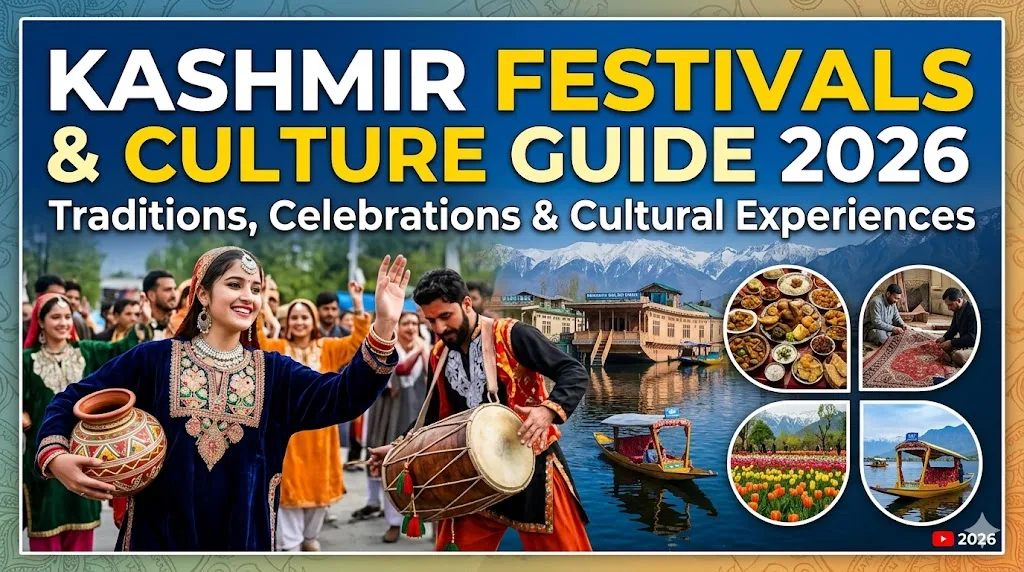
Kashmir’s cultural life is shaped by its geography, its history, and the meeting of multiple traditions over centuries. The valley has been home to Hindu, Buddhist, Muslim, and Sikh communities across different periods — and the cultural residue of each is still visible in the festivals, arts, architecture, and everyday life of J&K.
This guide covers the major festivals of both the Kashmir Valley and the Jammu region, the traditional arts and crafts that define the culture, and the cultural experiences that go beyond sightseeing into genuine engagement with the place.
Understanding J&K’s Cultural Diversity
Jammu & Kashmir is culturally not one place — it is several. The Kashmir Valley has a predominantly Muslim population with deep Sufi traditions and a cultural identity shaped by the Persian-influenced court culture of the Mughal and pre-Mughal periods. The Jammu region is predominantly Hindu with a Dogra cultural identity distinct from both the Kashmir Valley and from the plains of Punjab. Ladakh has a Buddhist majority with Tibetan cultural influences.
This diversity means that festivals, food, music, art, and everyday customs differ significantly between regions — a visitor who only sees Srinagar has seen one face of a much more complex cultural landscape.
Major Festivals of Kashmir Valley
Eid ul-Fitr and Eid ul-Adha
The two Eids are the most significant celebrations in the Kashmir Valley. Eid ul-Fitr marks the end of Ramadan — a month of fasting — and Eid ul-Adha commemorates Ibrahim’s willingness to sacrifice his son as an act of obedience to God.
On Eid mornings, the Hazratbal Shrine and the Jama Masjid in Srinagar fill with tens of thousands of worshippers for the Eid prayer. The atmosphere in Srinagar on Eid morning — the crowds, the traditional dress, the festive mood — is unlike anything else in the city’s calendar.
Bakeries and sweet shops prepare special items for Eid — sheermal, bakarkhani, shufta, and other traditional sweets. Families visit each other, children receive gifts (Eidi), and the old city markets are particularly lively in the days before Eid.
For visitors: Eid is an excellent time to experience Kashmiri culture at its most festive. Dress modestly and be respectful at religious sites. Many restaurants and shops close on Eid day itself but open the following days.
Milad-un-Nabi
The Prophet Muhammad’s (PBUH) birthday is celebrated across the Kashmir Valley with processions, prayers, and gatherings at shrines and mosques. The Hazratbal Shrine is the focal point — the sacred relic (a hair of the Prophet) is displayed publicly on this occasion, drawing massive crowds.
Shivratri — Herath
Herath is the Kashmiri Pandit name for Maha Shivratri — the festival dedicated to Lord Shiva. Even with the significant migration of Kashmiri Pandits from the valley since the 1990s, Herath remains an important cultural marker for the community both in Kashmir and in the diaspora. The festival involves prayers, the preparation of traditional foods, and the worship of earthen pots representing Lord Shiva.
Tulip Festival — Srinagar (March–April)
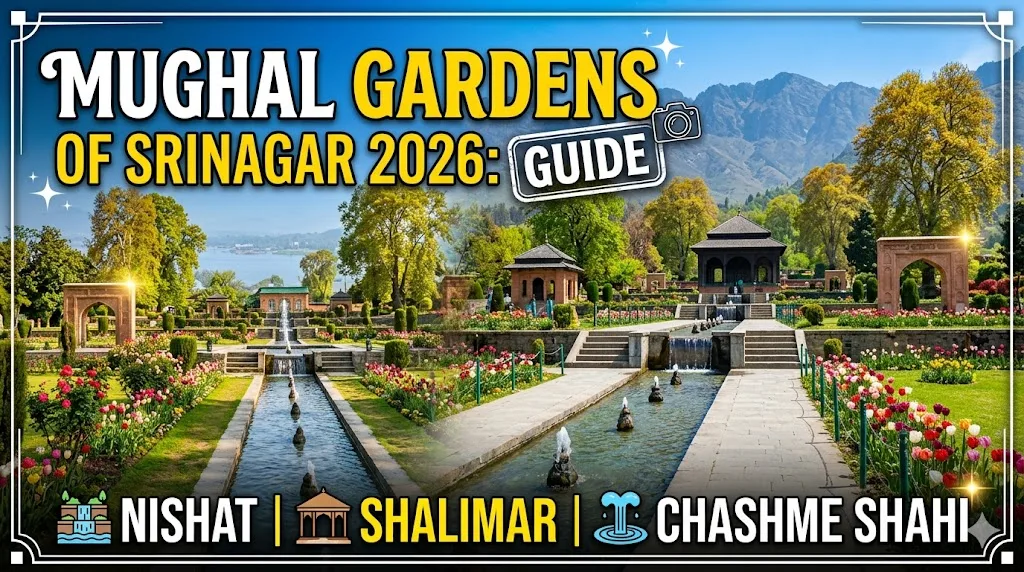
The annual Tulip Festival is organized by J&K Tourism to coincide with the peak bloom of the Tulip Garden at Nishat Bagh. The festival typically runs for 2–3 weeks in late March to mid-April. Cultural programs, handicraft exhibitions, and food stalls accompany the garden visit. It is the most visitor-friendly festival in the Kashmir calendar — well-organized and genuinely spectacular during the tulip bloom.
Baisakhi
Celebrated by the Sikh community in J&K — particularly significant in Jammu where the Sikh population is concentrated. The Gurudwara Sahib in Jammu and other Sikh shrines host celebrations. Baisakhi also marks the Punjabi new year and is observed with music, dance, and community gatherings.
Major Festivals of Jammu Region
Navratri
Navratri — the nine-night festival dedicated to the goddess Durga — is the most important festival in the Jammu calendar. It occurs twice annually (March/April and September/October). The Vaishno Devi shrine at Katra sees its highest visitor numbers during Navratri — millions of pilgrims make the trek during this period.
In Jammu city, the streets are decorated, temples host continuous religious programs, and the atmosphere is celebratory for the full nine days. The Raghunath Temple complex in the city centre is a focal point for worship.
Lohri
The harvest festival marking the end of winter, Lohri is celebrated enthusiastically in Jammu and the Hindu-majority areas of J&K. Bonfires are lit in the evening, families and communities gather around the fire, and the traditional foods — rewri, peanuts, popcorn, and til — are distributed. Music and bhangra dancing accompany the celebration.
Ram Navami
The birth anniversary of Lord Rama is celebrated at the Raghunath Temple in Jammu — one of the largest temples dedicated to Rama in North India. The complex hosts continuous religious programs and attracts large numbers of devotees.
Dogra Festival
An annual cultural festival celebrating Dogra heritage — music, dance, handicrafts, and cuisine from the Jammu region. The festival showcases the cultural traditions that distinguish the Dogra community from the Kashmir Valley and from the Punjab plains.
Traditional Arts and Crafts of J&K
Pashmina Weaving
Pashmina is Kashmir’s most famous craft — a fine wool fabric woven from the undercoat of the Changthangi goat, traditionally raised in the high-altitude pastures of Ladakh. Genuine pashmina is extraordinarily soft, warm, and expensive — a single shawl requires the wool of three to five goats and takes weeks to weave by hand.
The weaving tradition is concentrated in the Kashmir Valley, particularly in Srinagar and the surrounding towns. The kani shawl — woven with a distinctive pattern using kani sticks (a type of small shuttle) — is the most technically complex form. A single kani shawl can take months to complete.
How to identify genuine pashmina: Real pashmina is soft to the touch, warm (significantly warmer than wool of the same weight), and expensive. Anything sold as “pashmina” for a few hundred rupees is not genuine — it is wool, acrylic, or a blend. Genuine pashmina shawls cost ₹3,000–₹50,000+ depending on quality and weave.
Carpet Weaving
Kashmir hand-knotted carpets are among the finest rugs made anywhere in the world. The tradition uses silk or wool yarn, hand-knotted onto a cotton warp. The density of knotting (knots per square inch) determines quality — high-quality carpets have 400–600 knots per square inch.
The designs are Persian-influenced — floral patterns, medallion designs, and hunting scene carpets are the most recognized styles. The weaving is done on large horizontal looms by weavers who work from memory or from a paper pattern called a “naqsha.”
Major carpet weaving centres are in Srinagar, Sopore, and parts of South Kashmir.
Papier-Mâché
Kashmiri papier-mâché objects — boxes, bowls, vases, ornaments — are made from layers of paper pulp pressed into shape, dried, and then painted by hand with intricate floral and geometric designs. The painting is the skilled element — traditional Kashmiri papier-mâché painting uses fine brushes to apply detailed patterns in bright colours with gold highlights.
The craft originated from Persian influence during the Mughal period. Today it is concentrated among artisan families in Srinagar’s old city.
Walnut Wood Carving
Kashmir’s walnut trees produce a hard, fine-grained wood ideal for carving. Walnut woodwork — furniture, decorative panels, bowls, and ornamental objects — is carved with intricate floral and arabesque patterns that mirror the designs of Kashmiri textiles.
The craft is visible throughout Srinagar — in the carved woodwork of houseboats, in the panels of old buildings, and in the furniture displayed in craft shops. Major production centres are in Srinagar and the South Kashmir districts.
Sozni Embroidery
A delicate needle embroidery tradition in which intricate floral patterns are worked onto pashmina, silk, or fine wool using extremely fine needles and silk thread. The sozni design is typically worked on both sides of the fabric simultaneously — the front and back of a finished piece look almost identical, indicating the highest level of skill.
Chain Stitch Embroidery (Zalakdozi)
A different embroidery technique from sozni — chain stitch embroidery uses a hook (similar to a crochet hook) to create looped chain stitches. The resulting texture is bolder and more raised than sozni work. Rugs, hangings, cushion covers, and garment panels are the most common products.
Music and Performing Arts
Sufiana Kalam
The classical music of Kashmir — a tradition of Sufi devotional music performed on traditional instruments including the santoor (hammered dulcimer), the saz-e-Kashmir (a long-necked lute), and the tabla. Sufiana Kalam performances typically take place in the context of religious gatherings at shrines — the music is devotional in character, intended to bring the listener into a state of spiritual contemplation.
The tradition is maintained by a small number of master musicians and their students. Opportunities to hear authentic Sufiana Kalam are limited for casual visitors — it is not performed as tourist entertainment but as part of living religious practice.
Chakri
A lighter folk music tradition of the Jammu region — songs accompanied by the rubab (a lute), the dugdugi (a small drum), and the flute. Chakri music celebrates everyday life, love, and the seasons. It is more accessible than Sufiana Kalam and performed at weddings and celebrations.
Bhand Pather
A traditional form of satirical street theatre from the Kashmir Valley. Bhand (comedians) perform plays that combine music, dance, and comedy to comment on social and political issues. The tradition dates back several centuries. Performances are relatively rare now but do occur at some cultural festivals.
Rouf
A traditional group dance performed by women in the Kashmir Valley — particularly during Eid celebrations and weddings. Women form two lines facing each other and perform synchronized footwork and hand movements while singing traditional songs. The dance is joyful and communal in character.
Cultural Experiences for Visitors
Visit a working craft workshop: Several craftsmen in Srinagar’s old city work in open workshops where visitors can watch the processes of papier-mâché painting, carpet knotting, and pashmina weaving. This is more interesting and authentic than any museum display of the finished products.
The floating vegetable market on Dal Lake: The wholesale vegetable market on Dal Lake operates in the early morning — vegetable farmers from the floating gardens row their produce to a central market point where buyers gather in shikaras. Visiting this market at dawn (5:30–6:30 AM) is one of the most authentic cultural experiences available to visitors in Srinagar.
Old city exploration: The lanes around Jama Masjid, Nowhatta, and Maharaj Gunj in Srinagar preserve the traditional architecture and commercial life of the old city — kanduran (bakeries), small mosques, traditional shops, and residential lanes with carved wooden balconies. Walking here is engaging in a way that the tourist-facing Boulevard Road is not.
Attend Friday prayers at Jama Masjid: The congregational mosque in Srinagar’s old city fills on Fridays for the main weekly prayer. Non-Muslim visitors are welcome to observe respectfully from outside or from designated areas. The sight of thousands of worshippers filling the courtyard is significant in scale.
Published by VisitJK — honest travel guides for Jammu & Kashmir. Last updated June 2026.
Frequently Asked Questions — Kashmir Festivals & Culture

Rahul Naik is a Jammu & Kashmir local who has spent years exploring the Kashmir Valley, Jammu region, and high-altitude areas of the Union Territory. He has personally visited every major destination covered on VisitJK — from Dal Lake houseboats to Gulmarg slopes to the remote villages of the Gurez Valley. VisitJK is built on that firsthand experience — honest, practical travel content written for visitors who want real information, not brochure language.