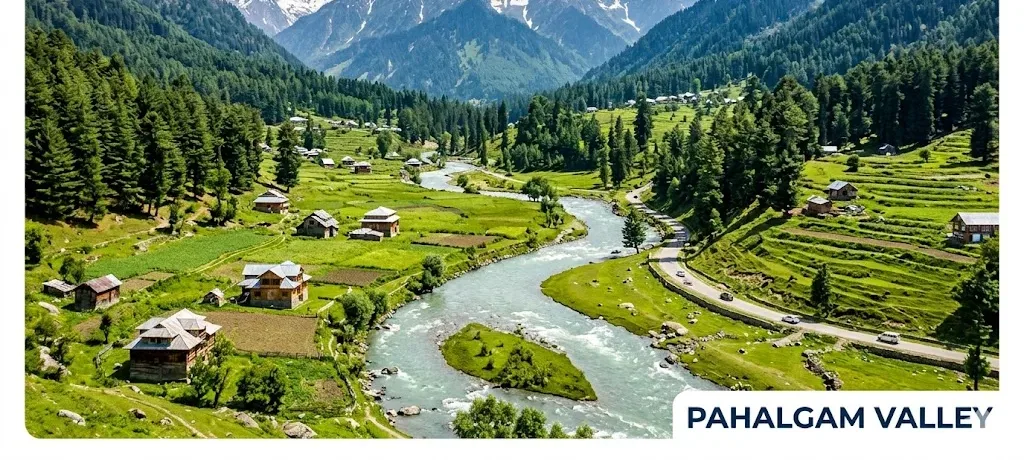
Nestled at an altitude of roughly 2,130 metres above sea level in Anantnag district, Pahalgam is one of Kashmir’s most beloved hill destinations. Cradled by pine forests, snow-dusted peaks, and the gently flowing Lidder River, this small town — often called the “Valley of Shepherds” — sits just about 95 kilometres from Srinagar and offers travellers a genuinely different experience depending on which month they choose to visit.
Unlike most plains destinations in India, Pahalgam experiences four sharply distinct seasons, and its weather can swing from a pleasant 25°C in summer to well below freezing in the depth of winter. Because the right clothing and the right month can completely change your trip, this guide walks you through Pahalgam’s climate season by season, so you can plan a visit that matches exactly what you’re hoping to experience.
Why Pahalgam’s Weather Behaves Differently
Pahalgam’s climate is shaped almost entirely by its elevation. Sitting more than two kilometres above sea level and surrounded by the Pir Panjal range, the town stays noticeably cooler than Srinagar or Jammu throughout the year, even in peak summer. The same altitude that keeps Pahalgam pleasantly cool in June also makes it bitterly cold and snow-bound between December and February. Rainfall is fairly well distributed across the year too, with the wettest spell typically arriving in July, which means travellers should always keep a light raincoat or umbrella handy regardless of the season they’re visiting in.
Pahalgam Weather Season by Season
Spring (March to May)
Spring is when Pahalgam slowly wakes up from winter. Snow at lower elevations begins to melt, wildflowers start blooming across the meadows, and the valley turns a fresh shade of green. Daytime temperatures generally hover between 7°C and 18°C, while evenings remain noticeably cooler, so a light jacket or woollen layer is still necessary after sunset.
This is an excellent window for photographers and nature lovers, as the higher reaches around Aru Valley and Baisaran still carry leftover snow while the lower meadows are blooming — giving you the rare combination of snow and spring colour in the same frame. Roads are generally open by this time, though early March can still see occasional closures after fresh snowfall.
Summer (June to August)
Summer is Pahalgam’s busiest and most popular season, and for good reason. Daytime temperatures typically range from 11°C to around 25–26°C, with cool evenings that rarely feel uncomfortable. This is the most comfortable time of year for sightseeing, river rafting on the Lidder, horse riding to Baisaran, and short treks to Betaab Valley and Aru Valley.
Mid-June onward also marks the start of the monsoon influence, with moderate rainfall continuing through July and August. July is typically the wettest month of the year, so afternoon showers are common, though they rarely last long enough to spoil a full day’s plans. This season also coincides with the annual Amarnath Yatra, which passes through Pahalgam’s base camps at Chandanwari, drawing large numbers of pilgrims and adding to the summer rush. If you’re visiting purely for leisure during July–August, expect hotels and travel routes to be considerably busier than usual.
Autumn (September to November)
Autumn is often called Pahalgam’s most underrated season, and many seasoned travellers consider it the best-kept secret of Kashmir tourism. As the monsoon clouds clear out, temperatures settle into a comfortable 8°C to 20°C range during the day, with crisp, cool nights. The valley’s chinar trees turn a striking gold and copper, giving the entire landscape a warm, painterly quality that’s especially loved by photographers.
Crowds thin out considerably after September, making this an ideal time for travellers who want to enjoy Pahalgam’s scenery without the peak-season rush. October tends to be the driest month of the year here, which means clearer skies and more reliable outdoor plans. By late November, temperatures begin dropping sharply as winter approaches, and the first snowfall of the season can arrive any time from late November onward.
Winter (December to February)
Winter transforms Pahalgam into a genuine snow-globe destination. Daytime temperatures can fall to single digits or below, while night-time temperatures regularly drop below freezing, sometimes touching -5°C to -8°C or lower during particularly cold spells. Heavy snowfall is common through December, January, and February, blanketing the pine forests, the golf course, and the surrounding meadows in thick white snow.
This is the season for travellers chasing a true winter wonderland experience — sledging, short skiing stretches, snowball fights, and cosy evenings with hot Kashmiri kahwa by a bonfire. It’s worth noting that some higher-altitude attractions and roads may be temporarily closed after heavy snowfall, so it’s wise to check local road conditions before heading out for day trips, and to always carry warm layers, waterproof boots, and basic winter gear.
Month-Wise Pahalgam Temperature at a Glance
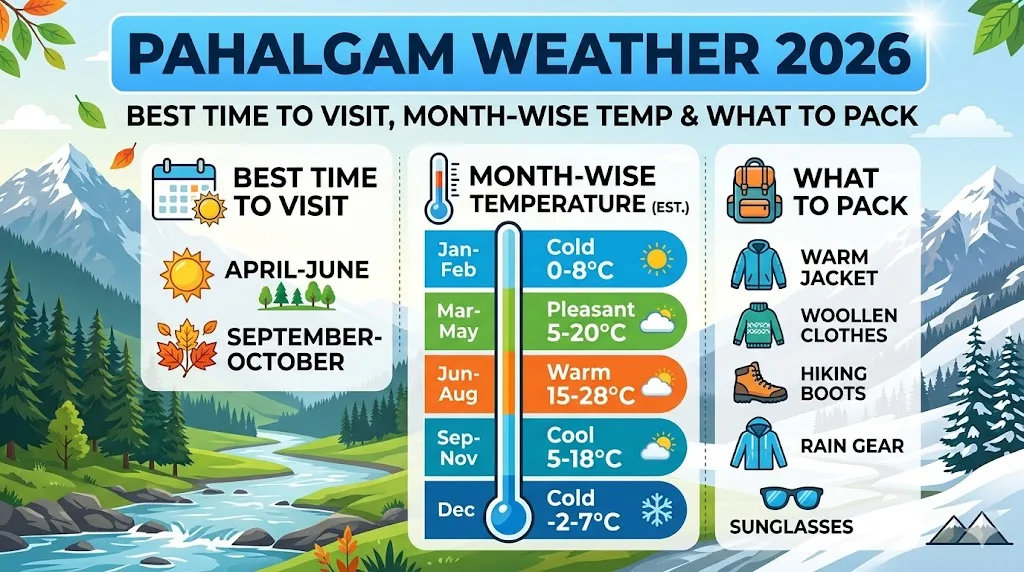
| Month | Approx. Day Temp | Approx. Night Temp | Weather Highlights |
|---|---|---|---|
| January | 0°C to 5°C | Below 0°C, often -5°C or lower | Heavy snow, peak winter |
| February | 2°C to 8°C | Below freezing | Snow-covered landscape |
| March | 5°C to 14°C | Cold, near freezing | Snow melting begins |
| April | 10°C to 18°C | Cool | Spring blooms, pleasant |
| May | 12°C to 22°C | Mild | Comfortable sightseeing weather |
| June | 14°C to 25°C | Mild | Peak summer, sunniest month |
| July | 16°C to 26°C | Mild, humid | Wettest month, Amarnath Yatra |
| August | 15°C to 24°C | Mild, humid | Continued monsoon showers |
| September | 12°C to 21°C | Cool | Monsoon clears, golden light |
| October | 8°C to 18°C | Cool | Driest month, clear skies |
| November | 4°C to 12°C | Cold | First snow possible |
| December | 0°C to 8°C | Sub-zero | Snowfall begins in earnest |
Note: These are general seasonal averages based on long-term climate patterns. Actual conditions can vary year to year, so it’s always a good idea to check a real-time forecast a few days before you travel.
Best Time to Visit Pahalgam Based on What You Want
- For pleasant sightseeing and family trips: April to June offers the most comfortable, crowd-manageable weather.
- For trekking and outdoor adventure: March to early November gives you the widest window, with summer being the most reliable for longer treks.
- For the Amarnath Yatra: Plan around July and August, but book accommodation well in advance.
- For snow and winter sports: December to February is unbeatable for a genuine snowfall experience.
- For photography and fewer crowds: September and October offer golden autumn light with significantly thinner tourist traffic.
- For honeymoons and quiet getaways: Late September to November combines mild weather, stunning colours, and a calmer atmosphere than peak summer.
What to Pack for Pahalgam, Season by Season
Spring (March–May): Light woollens, a windproof jacket, comfortable walking shoes, and a light umbrella for occasional showers.
Summer (June–August): Light cottons for the day, one warm layer for evenings, a raincoat or umbrella for monsoon showers, and sunscreen, since UV exposure is higher at altitude.
Autumn (September–November): Medium-weight woollens, a warm jacket for early mornings and evenings, and sturdy shoes for walking on cooler, sometimes damp trails.
Winter (December–February): Heavy thermal wear, an insulated waterproof jacket, gloves, woollen caps, and waterproof snow boots with good grip. Carrying an extra pair of dry socks is a small but genuinely useful tip for winter travellers.
A Few Practical Weather Tips
- Check road conditions before day trips, especially in winter and early spring, since the Srinagar–Pahalgam route and nearby attractions can occasionally see temporary closures after heavy snow.
- Layering works better than one heavy garment, since temperature swings between morning, afternoon, and night can be significant even in the same season.
- Carry a basic rain cover for your luggage and camera gear if you’re travelling between June and September.
- Altitude can make sun exposure feel stronger than expected, so sunscreen and sunglasses are worth packing even in cooler months.
- Book accommodation early during the Amarnath Yatra period and major holiday weekends, as availability tightens quickly during these peak windows.
Frequently Asked Questions
Q1. What is the best month to visit Pahalgam? There isn’t a single “best” month — it depends on what you want. April to June is ideal for comfortable sightseeing, September to October is best for pleasant weather with fewer crowds, and December to February is perfect for snow lovers.
Q2. Does it snow in Pahalgam? Yes, Pahalgam receives substantial snowfall, particularly between December and February. Light snow can also occur in late November and early March depending on the year.
Q3. Is Pahalgam colder than Srinagar? Generally, yes. Because Pahalgam sits at a higher altitude than Srinagar, it tends to be a few degrees cooler throughout the year, especially noticeable during winter nights.
Q4. Can Pahalgam be visited during the monsoon? Yes, though July and August see moderate rainfall. The rain is usually not heavy enough to disrupt an entire trip, but it’s wise to keep flexible plans and rain gear handy.
Q5. What should I wear in Pahalgam in winter? Thermal innerwear, a heavy insulated jacket, woollen gloves and caps, and waterproof snow boots are essential, as night temperatures frequently fall below freezing.
Q6. Is Pahalgam suitable for a trip with elderly family members or young children? Spring and early summer (April–June) tend to be the most comfortable for travellers who prefer milder temperatures and easier road conditions, while winter trips may require extra precautions due to snow and cold.
Final Thoughts
Pahalgam’s biggest charm lies in just how different it feels from one season to the next — the same valley can be a blooming green meadow in May, a misty monsoon retreat in July, a golden autumn postcard in October, or a silent snow-covered wonderland in January. Once you know what each season actually feels like on the ground, choosing the right time to visit becomes far easier. Whichever month you pick, packing in layers and keeping an eye on the local forecast a few days before departure will help you make the most of your time in this Kashmir valley.
Planning more of your Kashmir itinerary? Explore our other Kashmir travel guides for the best time to visit Gulmarg, Sonmarg, and Srinagar.

Rahul Naik is a Jammu & Kashmir local who has spent years exploring the Kashmir Valley, Jammu region, and high-altitude areas of the Union Territory. He has personally visited every major destination covered on VisitJK — from Dal Lake houseboats to Gulmarg slopes to the remote villages of the Gurez Valley. VisitJK is built on that firsthand experience — honest, practical travel content written for visitors who want real information, not brochure language.