
Somewhere above 12,000 feet, when the air has gone thin and your legs are arguing with the rest of you, the Amarnath Yatra stops being a checklist item and becomes something closer to an endurance ritual shared with thousands of strangers heading toward the same cave. It’s unlike Vaishno Devi in almost every way — shorter season, far higher altitude, genuinely demanding terrain — and that’s exactly why people who plan for it properly come back talking about it for years, while people who don’t tend to turn back from Sheshnag with regret.
This guide is written for the person who’s serious about going, not just curious about it. We’ll walk through both route options honestly, including which one actually suits you, what the registration process really involves, and the preparation most people skip until it’s too late.
What and Where Is the Amarnath Cave Shrine?
The Amarnath Cave sits at roughly 3,888 metres (about 12,756 feet) in the Himalayas, within Anantnag district of Kashmir. Inside, an ice stalagmite forms naturally each year and is worshipped as a representation of Lord Shiva — its size waxes and wanes with the lunar cycle, which is part of what draws so many pilgrims to time their visit around specific dates. The yatra itself runs only during a fixed window each year, typically between late June/early July and August, aligned with Shravan month and closing around Raksha Bandhan — unlike Vaishno Devi, this is not a year-round pilgrimage, so timing your trip correctly matters far more here.
Registration: The Step You Cannot Skip or Fake
Unlike many other pilgrimages, the Amarnath Yatra requires mandatory advance registration, and it is enforced strictly — you will not be allowed onto either route without your permit and the accompanying compulsory health certificate. Registration is managed by the Shri Amarnathji Shrine Board (SASB), and applications open months ahead of the yatra dates, usually around April.
Two things are checked at registration, and both matter equally:
- The Compulsory Health Certificate (CHC): issued by an authorised doctor or hospital, confirming you are medically fit for high-altitude trekking. This isn’t a formality — the altitude and physical demand of the trek have real consequences for people with underlying heart, lung, or blood pressure conditions, and the Shrine Board takes this seriously for good reason.
- Route and date allocation: You’ll be assigned a specific date and route slot at the time of registration. Showing up on a different date than your permit specifies can create real complications, so this isn’t something to treat loosely.
Registration can be done both online through the official SASB portal and offline through designated bank branches in several cities. Given how quickly slots fill for the more popular dates — weekends and the early days of the yatra especially — registering as early as the window opens gives you meaningfully more flexibility in choosing your preferred dates.
Pahalgam Route vs Baltal Route: Which Should You Choose?
This is the single biggest decision in planning your yatra, and the honest answer is: it depends on your fitness, time, and how you want the experience to feel.
The Pahalgam Route (Traditional, Longer)
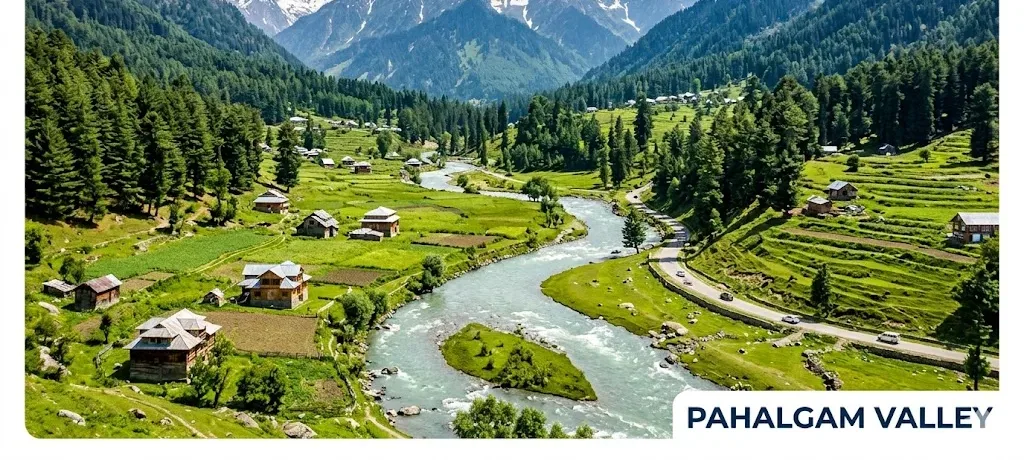
This is the older, traditional route, roughly 36-48 km depending on how it’s measured, typically covered over 3-5 days with overnight halts at Chandanwari, Sheshnag, and Panchtarni before reaching the cave. It’s gentler on the body day-to-day since the climb is spread out, and the scenery along the way — especially the alpine lake at Sheshnag — is genuinely spectacular. Ponies and palkis are available throughout for those who need them.
Choose this route if: you have more days available, want a fuller pilgrimage experience rather than a rushed dash, or prefer a gentler day-to-day gradient even if the total journey is longer.
The Baltal Route (Shorter, Steeper)
The Baltal route is dramatically shorter — about 14-16 km one way — and can technically be completed in a single, very long day, which is why many pilgrims with limited leave from work choose it. The catch is that it’s significantly steeper and more physically demanding in a compressed timeframe, with less opportunity to acclimatise gradually compared to the multi-day Pahalgam route.
Choose this route if: you’re short on time, are confident in your fitness level, and would rather push through a hard single day than spread the climb over multiple days.
A helicopter service also operates from both Baltal and Pahalgam (Chandanwari), cutting the walking distance dramatically for those unable to manage the full trek — a popular option for older pilgrims or anyone managing time constraints.
Fitness and Health: Where Most People Underprepare
This is the part of yatra planning that genuinely deserves more attention than it usually gets. The altitude alone — well above 12,000 feet for sustained stretches — puts real strain on the body, and altitude sickness is a legitimate risk regardless of how fit you are in everyday life at sea level.
- Start preparing weeks, not days, in advance. Brisk walking, stair climbing, and light cardio for several weeks before the yatra make a measurable difference to how your body handles the climb.
- Acclimatise once you arrive. Spending a day or two in Pahalgam or the base areas before starting the trek gives your body time to adjust to altitude before the real climb begins.
- Take the health certificate seriously. If you have any history of heart conditions, high blood pressure, asthma, or similar concerns, get a thorough check-up — and an honest conversation with your doctor — well before deciding which route to register for.
- Watch for early symptoms. Headache, nausea, breathlessness beyond normal exertion, and dizziness can all signal altitude sickness. Langars and medical camps are stationed along both routes specifically to help pilgrims who run into trouble, and using them early is far better than pushing through.
What to Pack: A Realistic List
- Sturdy, broken-in trekking shoes with good ankle support — not casual sneakers
- Layered warm clothing — temperatures swing sharply between day and night at altitude, even in July and August
- A waterproof jacket, since sudden weather changes are common in the higher reaches
- A walking stick or trekking pole, genuinely useful on the steeper, loose-gravel stretches
- A headlamp or torch if you plan an early-morning or night-time stretch of the climb
- Basic medication, including something for altitude-related headaches and nausea, after consulting your doctor
- A copy of your registration permit and health certificate, kept somewhere easily accessible — not buried at the bottom of your bag
Where to Stay Before You Start
Pahalgam and Baltal both serve as base points with a mix of tents, guesthouses, and hotels at varying price points, and Srinagar itself works well as a staging point if you want a comfortable night before heading to your chosen base camp. During peak yatra weeks, accommodation in both Pahalgam and Baltal fills up fast, so booking ahead — rather than arriving and hoping — is the difference between a calm start to your trek and a stressful scramble the night before.
Security and Logistics on the Ground
Given the scale and sensitivity of the yatra, security arrangements along both routes are extensive, with checkpoints, registration counters, and medical camps at regular intervals. This is generally reassuring rather than restrictive — it means help is genuinely close by if you need it at almost any point along the trek. Mobile network connectivity can be patchy in the higher stretches, so informing family of your expected schedule before you start the climb each day is a sensible habit.
Honest Tips From Pilgrims Who’ve Done It More Than Once
Start each day’s stretch of the trek as early as possible — mornings are calmer, cooler, and the trail is far less crowded than by midday. Pace yourself deliberately rather than matching the speed of fitter pilgrims around you; this isn’t a race, and altitude punishes overexertion quickly. And don’t underestimate the emotional weight of the final approach to the cave — even seasoned trekkers describe being caught off guard by how the last stretch feels after days of anticipation.
Frequently Asked Questions
Q1. Is registration compulsory for the Amarnath Yatra?
Yes. Every pilgrim must register in advance through the Shri Amarnathji Shrine Board, along with a Compulsory Health Certificate confirming fitness for high-altitude trekking.
Q2. Which is easier — the Pahalgam or Baltal route?
The Baltal route is shorter (14-16 km) but steeper and more physically demanding in a single push, while the Pahalgam route is longer (36-48 km) but spread across multiple gentler days with overnight halts.
Q3. When does the Amarnath Yatra usually take place?
The yatra runs for a fixed window each year, typically from late June or early July through August, aligned with the Shravan month, and does not operate year-round.
Q4. Is helicopter service available for the Amarnath Yatra?
Yes, helicopter services operate from both Baltal and Pahalgam (via Chandanwari), significantly reducing the walking distance for pilgrims who cannot complete the full trek.
Q5. What health conditions should disqualify someone from attempting the yatra?
Serious heart conditions, uncontrolled high blood pressure, and significant respiratory issues are commonly flagged during the mandatory health check, since high-altitude exertion can seriously aggravate these conditions. A doctor’s honest assessment before registering is essential.
Q6. Can elderly pilgrims do the Amarnath Yatra?
Elderly pilgrims do attempt the yatra, often using ponies, palkis, or helicopter services, but a thorough medical check and realistic self-assessment of fitness are strongly advised given the altitude and terrain involved.

Rahul Naik is a Jammu & Kashmir local who has spent years exploring the Kashmir Valley, Jammu region, and high-altitude areas of the Union Territory. He has personally visited every major destination covered on VisitJK — from Dal Lake houseboats to Gulmarg slopes to the remote villages of the Gurez Valley. VisitJK is built on that firsthand experience — honest, practical travel content written for visitors who want real information, not brochure language.