Kashmir is one of the most photographed landscapes in India — and with good reason. The combination of high mountains, reflective lakes, meadows, traditional architecture, and a culture that is visually distinctive creates opportunities that are difficult to find anywhere else in the subcontinent.
But great Kashmir photography does not happen by accident. The difference between a memorable image and a generic tourist snapshot is almost entirely about timing, position, and knowing where to be. This guide covers the best photography locations in Kashmir, the right time of day and year for each, and what to look for beyond the obvious.
General Photography Principles for Kashmir
Golden hour is everything. Kashmir’s landscapes respond dramatically to early morning and late afternoon light. The hour after sunrise and the hour before sunset give you warm, directional light that adds depth and drama to mountain views, lake reflections, and architectural subjects. The harsh midday light that flattens everything is when most tourists are shooting.
Arrive before the crowds. Every major location in Kashmir is significantly more photogenic — and significantly more peaceful — before 9 AM. Betaab Valley at 7 AM is a completely different experience from Betaab Valley at 11 AM. The light is better, the people in your frame are local rather than tourist groups, and the atmosphere is calmer.
Weather creates the best shots. The Kashmir photographs that stand out — mist rising from Dal Lake, snow-capped peaks emerging from cloud above a meadow, the valley visible between rain showers — all happen because of weather conditions that most tourists try to avoid. Carry rain protection for your camera and stay out when the weather is interesting.
Look for layers. Kashmir’s landscape has natural depth — foreground interest (water, flowers, a wooden boat), mid-ground (trees, buildings, grazing animals), and background (peaks). Composing with all three layers creates images with more visual weight than simple mountain shots.
Best Photography Locations
Dal Lake — Srinagar
Morning reflections (5:30 AM – 8:00 AM): Dal Lake in the early morning is one of the most beautiful photography subjects in India. Before the wind picks up and the shikara traffic begins, the surface is completely still — a perfect mirror of the sky, the mountains, and the houseboats. The floating vegetable gardens photographed in this light, with mist rising from the water and the mountains pink in the sunrise, produce the kind of images that define Kashmir in the popular imagination.
Position: Hire a shikara for ₹400–₹600 and ask the boatman to take you to the centre of the lake before sunrise. The Boulevard Road embankment also works for wider shots but the in-lake position gives better perspective.
Shikara traffic (7:30 AM – 9:00 AM): As the morning progresses, the vegetable market shikaras begin their routes — dozens of small wooden boats loaded with vegetables, flowers, and goods moving across the lake. This is one of the most interesting periods for documentary photography — the commerce and daily life of the lake community. A telephoto lens (200mm or more) lets you compress the perspective and isolate individual boats and figures against the mountain background.
Sunset from the Boulevard (6:00 PM – 7:30 PM): The Boulevard Road embankment facing west offers good sunset photography when conditions are clear — the sky colours reflect in the lake, and the silhouettes of houseboats and shikaras create strong graphic shapes against the coloured water.
Nishat Bagh — Mughal Gardens
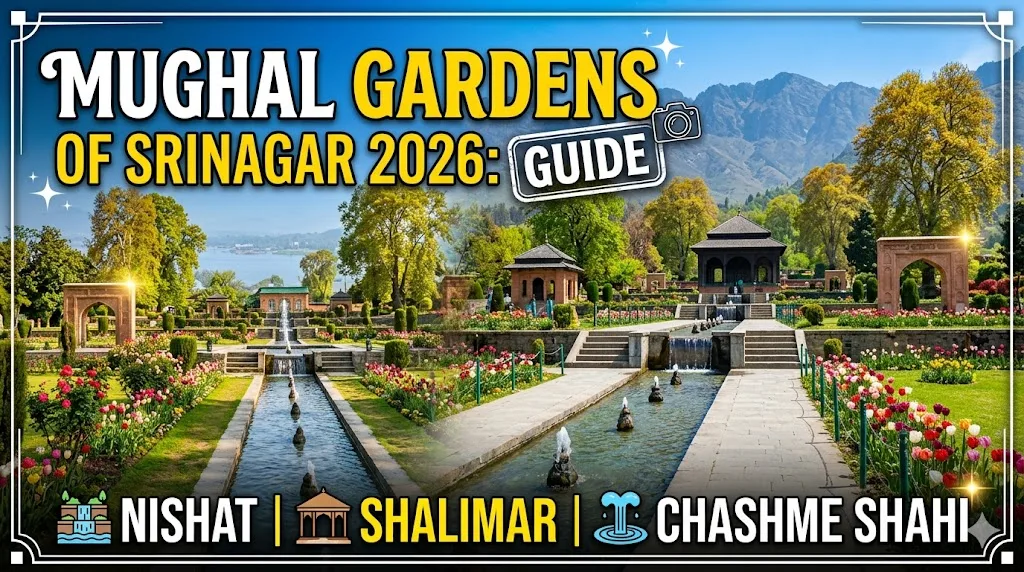
Early morning (7:00 AM – 9:00 AM in summer): The Mughal Gardens open early and are virtually empty until 9 AM. Nishat Bagh — the largest of the three — with its terraced layout descending toward Dal Lake is the best composition. The formal geometry of the garden paths and flower beds with Dal Lake visible at the bottom and the Zabarwan mountains behind the garden creates a layered image that is difficult to replicate anywhere else.
Spring (late March – April): The Tulip Garden on the slopes of Zabarwan mountain — adjacent to Nishat Bagh — is in full bloom from late March to mid April. Over 1.5 million tulips across dozens of varieties create a landscape of extraordinary colour. Best photographed from the upper slopes of the garden looking down toward Dal Lake, with the tulip rows as foreground and the lake and mountains in the background.
Gulmarg
Apharwat Peak (Phase 2 Gondola): The views from Apharwat at approximately 3,980 metres are the most dramatic mountain photography in J&K that is accessible without serious trekking. On a clear morning, Nanga Parbat is visible on the northwest horizon — a massive, isolated peak rising above everything else. The glacier fields and rocky terrain of the upper slopes, combined with the distant peaks, create landscape photographs at a scale that is difficult to find without mountaineering.
Best condition: Clear mornings before 11 AM. Cloud builds up through the afternoon and often obscures the views by early afternoon.
The meadow at golden hour: The Gulmarg meadow photographed at dawn — the first light catching the surrounding peaks while the meadow is still in shade — creates a dramatic contrast between the lit peaks and the dark, textured foreground grass. Few visitors see this because most arrive mid-morning.
Skiing and winter action (December–February): Gulmarg in ski season offers action photography opportunities — skiers on the Kongdori slopes against a backdrop of mountains. The blue-white colour palette of deep winter (blue sky, white snow, dark pine trees) is distinctive and immediately readable as Kashmir.
Pahalgam
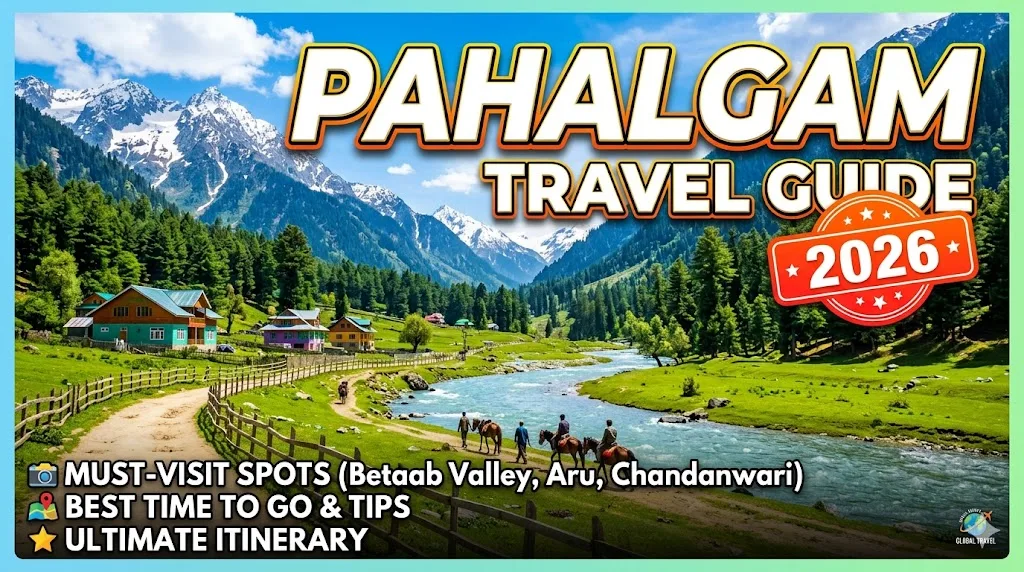
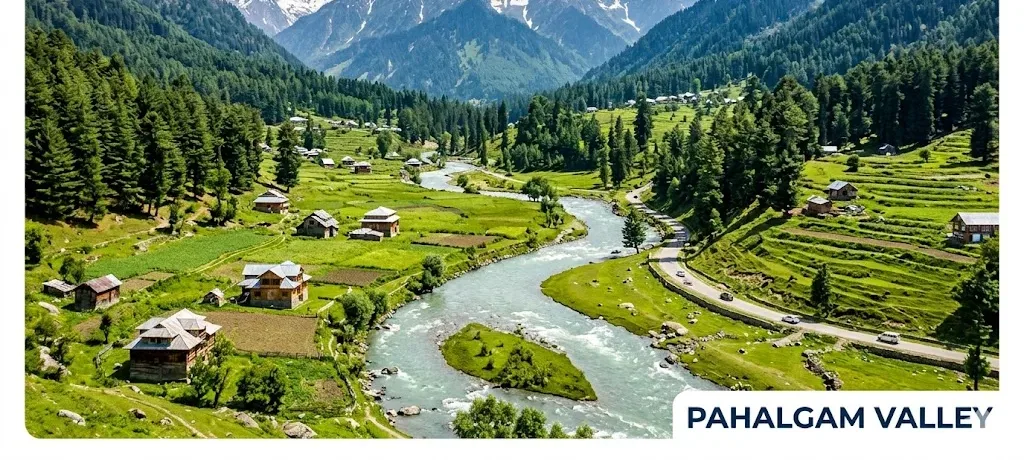
Betaab Valley — early morning: Betaab Valley before 8 AM has the quality that photographs best — the wide flat meadow in soft morning light, the Lidder River catching the sky, and the forest walls on both sides creating natural framing. The combination of water, open meadow, and forest gives you multiple foreground options within a single location.
Aru Valley — landscape and people: Aru Valley is quieter and less visited than Betaab, which makes it better for people photography. The Gujjar and Bakarwal communities who use the pastures around Aru with their herds of horses and cattle provide subjects that are authentic to the place — not posed or performed for tourism. Ask permission before photographing people directly; many are comfortable with it, especially if approached respectfully.
The Lidder River — long exposure: The fast-flowing Lidder River through Pahalgam town is excellent for long-exposure photography — a slow shutter speed (1/4 to 2 seconds) with a neutral density filter smooths the water into silky white while keeping the surrounding rocks and trees sharp. The best sections of the river for this are downstream from the main market area where the banks are accessible.
Sonamarg
Thajiwas Glacier: The walk to Thajiwas Glacier (2 kilometres from the main meadow) passes through a narrow gorge that opens dramatically into a wide bowl. The glacier itself — blue-white ice flowing down between rock walls — is a strong photographic subject. The combination of the ice, rock, and the clear stream flowing from the glacier’s base gives you foreground, midground, and background in one frame.
The drive from Srinagar — Sindh River valley: The 80-kilometre drive from Srinagar to Sonamarg along the Sindh River valley passes through some of Kashmir’s most beautiful driving landscape — the river runs alongside the road, poplar trees line the fields, and the mountains close in progressively as you approach Sonamarg. Stop frequently on this drive for landscape photography, particularly at the bridges over the Sindh where the river is wide and the mountains are reflected in the pools.
Pampore — Saffron Fields
Mid-October to early November: The saffron fields around Pampore (25 kilometres from Srinagar) bloom for a brief window of 2–3 weeks in autumn. The purple flowers appear across flat, open fields at dawn and close by mid-morning — they are open for photography only in the early morning light. The visual contrast between the purple flowers, the brown soil, the workers in traditional dress harvesting the threads, and the mountains visible in the distance creates images that are uniquely Kashmiri.
Best timing: Arrive at the fields by 6:30–7:00 AM during the bloom window. The flowers close rapidly as the temperature rises. Ask locally about the current bloom status — the exact dates vary year to year.
Wular Lake — Bandipora
October–November for migratory birds: Wular Lake in autumn is one of the better wildlife photography locations in J&K. Migratory waterfowl — bar-headed geese, pochards, teals, and others — arrive on the lake in large numbers from Central Asia. Early morning on the lake with a telephoto lens (300mm minimum) offers opportunities for bird photography that are difficult to find elsewhere in the region.
The working lake: Beyond birds, Wular is a working lake — fishing communities operate traditional wooden boats across its surface, and the scale of the lake (one of Asia’s largest freshwater lakes) gives wide-angle landscape shots a quality of vastness that Dal Lake, smaller and more enclosed, cannot replicate.
Seasonal Photography Guide
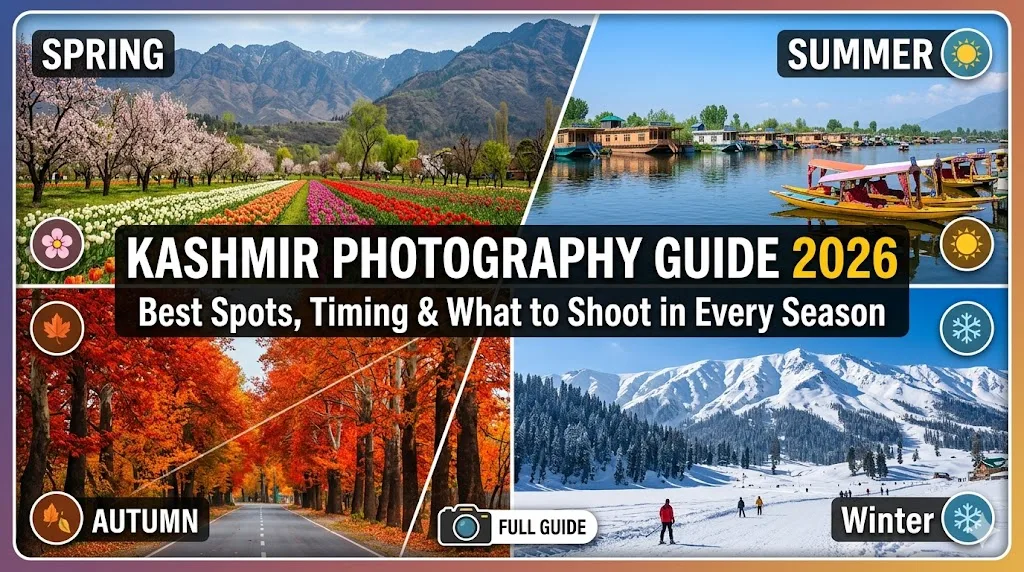
Spring (March–May)
What to shoot: Tulip Garden in April — the single best seasonal photography event in Kashmir. Almond blossoms in March. Chinar trees emerging green. Snow still on the high peaks. The combination of spring flowers, green valley, and white peaks is distinctly Kashmiri.
Light quality: Spring light in Kashmir is clear and crisp. Less haze than summer.
Summer (June–August)
What to shoot: Green meadows at Gulmarg, Pahalgam, and Sonamarg. The Lidder River at high flow for long exposures. Dal Lake shikara traffic and floating market. Light monsoon rains create dramatic cloud formations above the peaks.
Light quality: Slightly more haze in summer than spring or autumn. Early mornings are clearest.
Autumn (September–November)
What to shoot: Chinar trees turning gold, red, and orange — particularly in Srinagar’s Mughal Gardens and the old city. Saffron fields at Pampore in October. The first snow appearing on the peaks above golden-coloured valley. Wular Lake birds.
Light quality: Autumn light in Kashmir is the most dramatic of any season — warm, directional, with excellent clarity. September and October are the best months for landscape photography overall.
Winter (December–February)
What to shoot: Dal Lake partially frozen in cold winters. Snow-covered Srinagar — the houseboats, the Mughal Gardens, the old city under snow. Gulmarg skiing action. Apharwat Peak in winter conditions.
Light quality: Winter light is low-angle and warm even at midday. The blue-white of snow and the warm light create strong colour contrast.
Equipment Recommendations for Kashmir
Wide angle lens (14–24mm or 16–35mm): Essential for landscape photography. The scale of the mountains and valleys needs wide coverage to be represented accurately.
Telephoto lens (70–200mm or 100–400mm): For compressing mountain perspectives, isolating wildlife on Wular Lake, and photographing people at a respectful distance.
Neutral density filters: For long-exposure water photography on the Lidder River and Dal Lake.
Weather protection: Camera and lens weather sealing is useful for Kashmir’s variable conditions. If your equipment is not weather-sealed, carry a rain cover.
Extra batteries: Cold temperatures at Gulmarg and Apharwat drain batteries rapidly. Carry at least one spare, kept warm in a jacket pocket.
Sturdy tripod: Essential for golden hour landscape work and long exposures.
Ethics of Photography in Kashmir
Ask before photographing people. Kashmir has a predominantly Muslim population with significant Dogra and Sikh communities in Jammu. Many people, particularly women, prefer not to be photographed. A simple gesture asking permission — indicated by pointing to your camera and then to the person — is understood and respected. Accept a refusal graciously.
Religious sites: Photography is allowed at most shrines and temples but confirm locally before shooting inside sacred spaces. The Hazratbal Shrine in Srinagar and the Jama Masjid have specific photography rules — follow posted signs.
Military and security installations: Do not photograph military checkpoints, personnel, vehicles, or installations. This applies across J&K and is strictly enforced.
Children: Exercise particular care and sensitivity when photographing children. Always have parental awareness and consent.
Published by VisitJK — honest travel guides for Jammu & Kashmir. Last updated June 2026.

Rahul Naik is a Jammu & Kashmir local who has spent years exploring the Kashmir Valley, Jammu region, and high-altitude areas of the Union Territory. He has personally visited every major destination covered on VisitJK — from Dal Lake houseboats to Gulmarg slopes to the remote villages of the Gurez Valley. VisitJK is built on that firsthand experience — honest, practical travel content written for visitors who want real information, not brochure language.