Kashmir is one of those rare places that genuinely lives up to its reputation. The mountains are as dramatic as the photographs suggest. The lakes are as still and reflective as you imagined. The valleys in summer are so intensely green they look almost unreal. And in winter, when snow covers everything from the houseboats on Dal Lake to the apple orchards of Sopore, the landscape becomes something else entirely.
This guide covers the best places to visit in Kashmir — not just the famous names, but what each destination actually offers, when to go, and what most travel articles do not tell you.
1. Srinagar — The Heart of Kashmir
No trip to Kashmir starts anywhere other than Srinagar. The summer capital of J&K is where most visitors fly in, and it is where the valley reveals itself most fully — through the chaos of the old city bazaars, the calm of the Mughal gardens, and the extraordinary experience of life on Dal Lake.
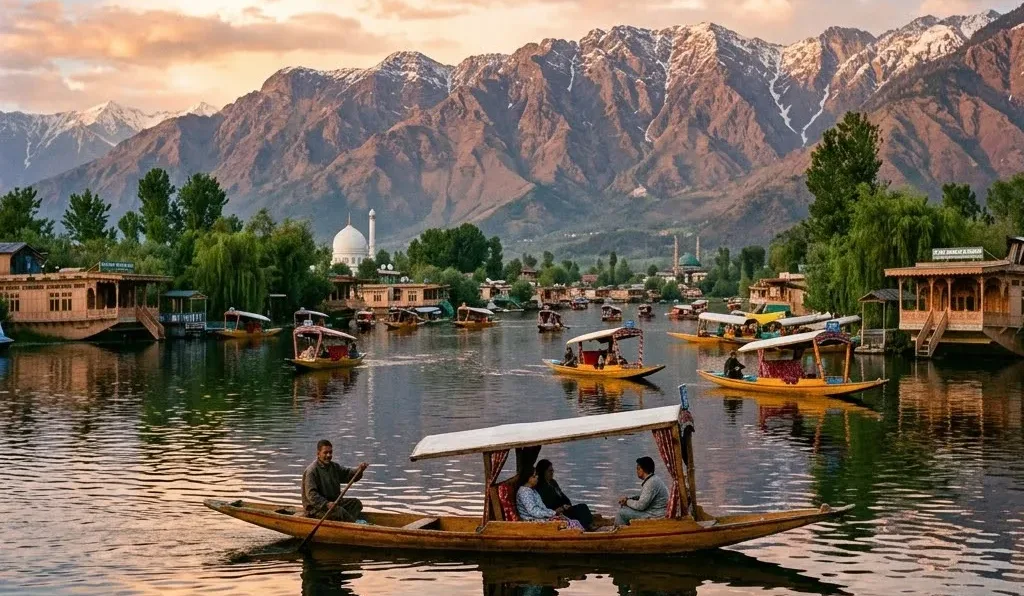
Dal Lake is the centrepiece of Srinagar. A shikara ride at dawn — before the tourist boats multiply and the lake fills with noise — is one of the most peaceful experiences Kashmir offers. The floating vegetable gardens, the vendors rowing their boats between houseboats, the mountains visible on every side — it is worth waking up early for.
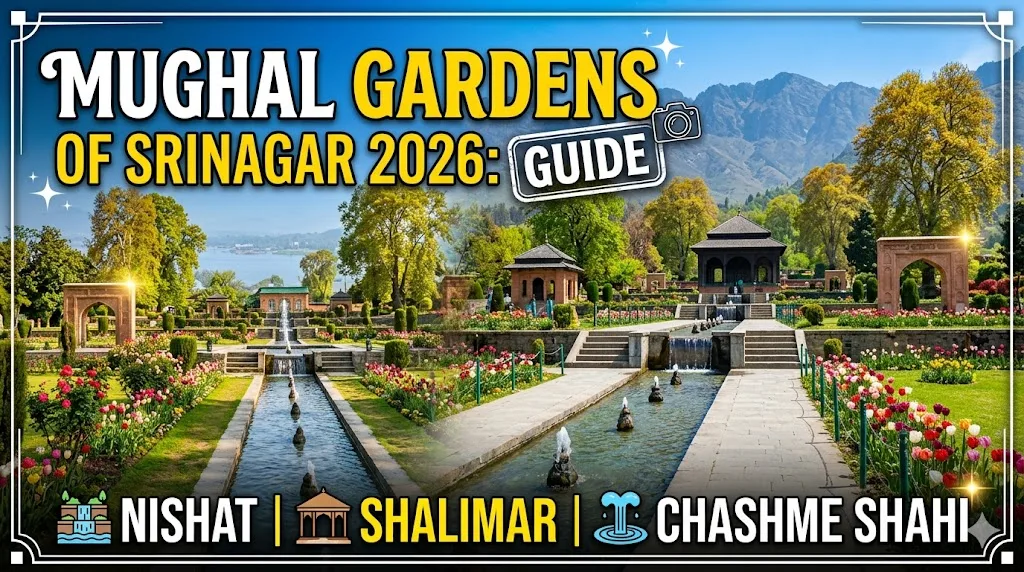
The Mughal Gardens — Shalimar Bagh, Nishat Bagh, and Chashme Shahi — are formal Persian-style gardens built by Mughal emperors in the 17th century. Nishat Bagh, with its twelve terraces descending toward Dal Lake, is the largest and most impressive. Visit in spring (April–May) when the chinar trees are bright green and the flowers are at their peak.
Lal Chowk and the old city — the commercial heart of Srinagar — is where you buy pashmina, dry fruits, and Kashmiri handicrafts at actual market prices rather than hotel prices. The old city lanes around Jama Masjid and Shah-e-Hamdan shrine are worth wandering through for an hour or two.
Shankaracharya Temple, perched on a hill above the city, offers the best panoramic view of Srinagar — Dal Lake, the city, the mountains on all sides. The climb takes about 20 minutes. Go in the evening for the best light.
Best time: April to October for pleasant weather. November to March for snowfall and a quieter, more atmospheric city.
2. Gulmarg — Meadows, Mountains & Asia’s Highest Cable Car
Gulmarg sits at approximately 2,650 metres altitude in the Baramulla district, about 50 kilometres from Srinagar. In winter it becomes one of Asia’s best skiing destinations. In summer it transforms into a vast open meadow surrounded by snow-capped peaks — one of the most visually striking landscapes in India.
The Gulmarg Gondola is the reason most visitors come. It is one of the highest cable cars in the world, running in two phases — first to Kongdori (Phase 1, around 3,050 metres) and then to Apharwat Peak (Phase 2, around 3,980 metres). The views from Apharwat in clear weather are extraordinary — a 360-degree panorama of the Himalayan range including Nanga Parbat on clear days.
In winter (December–March): Gulmarg receives heavy snowfall and becomes the primary ski destination in India. The ski resort offers slopes for beginners and intermediate skiers, and backcountry skiing for experienced riders. Snow activities — snowboarding, snow trekking, sledging — are all available.
In summer (May–September): The meadows are covered in wildflowers, and the temperature is cool even in peak summer. Horse riding through the meadows, trekking to Alpather Lake (a glacial lake that remains frozen until June), and simply walking in the open landscape are the main draws.
Practical note: Gulmarg can get very crowded on weekends and during peak season (June–August). Book gondola tickets online in advance to avoid long queues. Early morning rides (first gondola of the day) offer the clearest visibility and shortest waits.
Best time: December–February for skiing and snow. May–September for meadows and trekking.
3. Pahalgam — The Valley of Shepherds
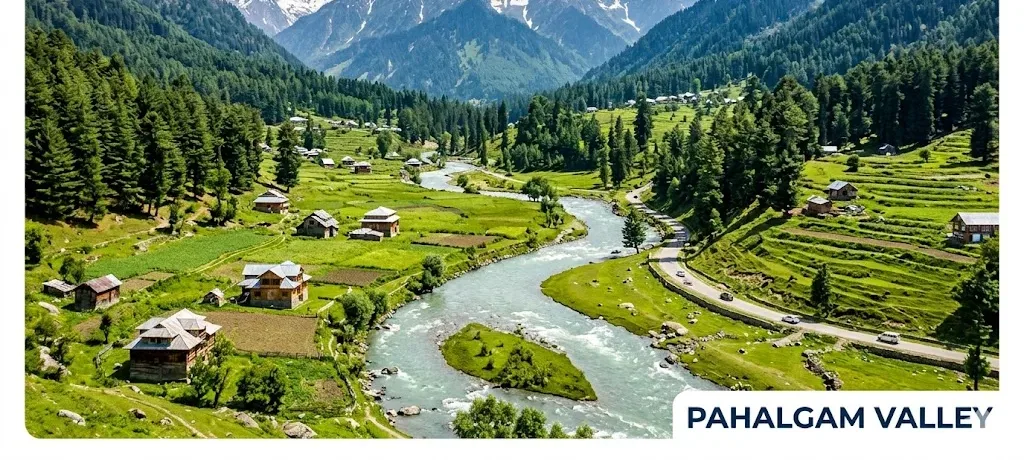
Pahalgam is located in the Anantnag district, about 95 kilometres from Srinagar, at an altitude of around 2,130 metres. It sits at the confluence of the Lidder River and the Sheshnag stream, surrounded by pine forests and open meadows.
Where Gulmarg is about the mountain spectacle, Pahalgam is about the river valley. The Lidder River running through the town is fast and clean — the sound of it is the constant background to everything in Pahalgam. The surrounding forests are dense pine and fir, giving the area a different character from the open meadows elsewhere in Kashmir.
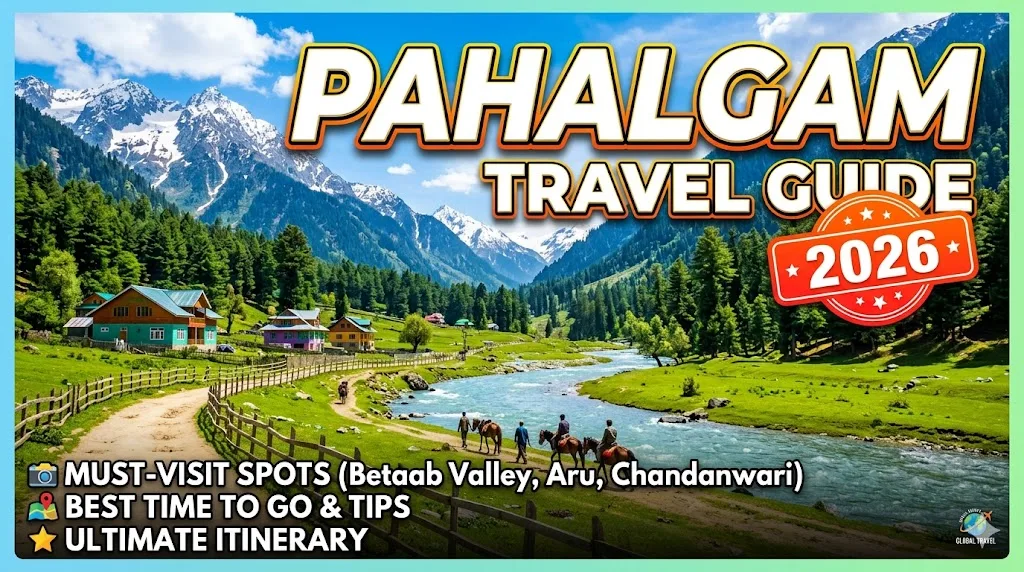
Betaab Valley, named after the Bollywood film shot here, is a short drive from Pahalgam town — a wide meadow enclosed by forested mountains with the Lidder River running through it. It is genuinely beautiful and best visited early morning before the day trippers arrive.
Aru Valley is 12 kilometres from Pahalgam — quieter and less visited than Betaab, with wide grasslands and the starting point for several serious treks including the Kolahoi Glacier trek and the Kashmir Great Lakes trek (one of India’s best multi-day treks).
Chandanwari is the starting point of the Amarnath Yatra and also a destination for snow activities in late spring when other areas have already melted.
The Lidder River offers white-water rafting from April to June when water levels are high. Several operators in Pahalgam town offer rafting packages for different stretches of the river.
Practical note: Pahalgam town itself is heavily commercialised. The actual beauty is in the valleys around it — Betaab, Aru, and beyond. Staying overnight gives you access to these places in the early morning before the day crowds arrive from Srinagar.
Best time: April to June for river and valley experience. July–August for lush green landscapes. December–February for snow.
4. Sonamarg — The Meadow of Gold
Sonamarg — meaning “Meadow of Gold” in Kashmiri — sits at 2,740 metres altitude in the Ganderbal district, about 80 kilometres from Srinagar on the road toward Ladakh. The name comes from the golden hue of the meadows in autumn when the wildflowers have dried and the grass turns yellow-gold before the first snow.
Sonamarg is the last major destination in the Kashmir Valley before the Zoji La pass, beyond which lies Ladakh. This geographical position gives it a character slightly different from other Kashmir destinations — it feels like the edge of the valley, with the landscape becoming more stark and alpine.
Thajiwas Glacier is a 2-kilometre walk (or horse ride) from the main meadow. Even in summer, this glacier holds significant ice and snow. The walk to it goes through a narrow gorge and opens into a wide bowl surrounded by peaks. Sledging and snow activities are available here even in June and July when the rest of Kashmir has no snow.
The drive to Sonamarg from Srinagar along the Sindh River is itself one of Kashmir’s most scenic drives — the river runs alongside the road for most of the journey, and the valley opens and closes as you drive through small villages and forested sections.
Vishansar and Krishansar Lakes are accessible from Sonamarg for trekkers — a 2–3 day trek through some of Kashmir’s most beautiful high-altitude terrain.
Practical note: Sonamarg closes in winter (November to April) when the Zoji La pass becomes impassable. The road is usually open from May. The new Z-Morh tunnel has improved connectivity and in recent years has kept Sonamarg accessible longer into the winter season.
Best time: May to October. July–September for the fullest green meadows.
5. Yusmarg — Kashmir’s Most Underrated Meadow
Most tourists skip Yusmarg entirely in favour of Gulmarg. This is a mistake — and also the reason Yusmarg is worth visiting. Located about 47 kilometres from Srinagar in the Budgam district, Yusmarg is a wide, flat meadow at 2,400 metres surrounded by forests of pine and fir, with the Doodh Ganga (Milk River) flowing through it.
There is no gondola, no ski resort, no crowded tourist infrastructure. What there is: a wide meadow, clean air, horses for hire, forest walks, and the kind of quiet that is difficult to find in Gulmarg or Pahalgam during peak season.
The meadow itself is large enough to walk across in all directions without feeling enclosed. The surrounding forest is accessible on foot and the Doodh Ganga river provides a pleasant walk downstream.
Best time: April to October. This is a summer and spring destination — it does not have the ski infrastructure that makes Gulmarg worthwhile in winter.
6. Wular Lake — Asia’s Largest Freshwater Lake
Wular Lake in Bandipora district is one of the largest freshwater lakes in Asia — and almost no tourist visits it. This is partly because it lacks the postcard beauty of Dal Lake and partly because it is not marketed aggressively. But for travellers who want to see the real ecological and economic life of the Kashmir Valley, Wular is extraordinary.
The lake supports thousands of fishing families who live in villages along its shores and fish the waters daily. The wetlands around it are a stopover for migratory birds on the Central Asian Flyway — birdwatchers will find Wular in October and November (when migratory species arrive) genuinely remarkable.
The lake surface changes dramatically across seasons — shrinking and expanding, changing colour from deep blue to grey to green depending on weather and light. Boat rides on Wular have a completely different character from Dal Lake — quieter, wilder, and more remote.
Best time: October–November for birdwatching. May–September for general visit.
7. Doodhpathri — The Valley of Milk
Doodhpathri in Budgam district is another underrated destination — a high-altitude meadow at around 2,730 metres that sees a fraction of the visitors that go to Gulmarg despite being comparable in beauty. The name means “Valley of Milk” — the streams running through it are reportedly so clean they appear white.
The meadow is wide and open, surrounded by forests, and accessible from Srinagar in about 2–3 hours. The absence of a cable car or ski resort means it attracts visitors who come specifically for the landscape rather than an activity — which gives it a noticeably calmer atmosphere.
Best time: May to September.
Planning Your Kashmir Trip — Practical Notes
How to reach Srinagar: Srinagar International Airport has direct flights from Delhi, Mumbai, Bangalore, Hyderabad, and other major cities. The Jammu–Srinagar National Highway (NH44) connects by road — the drive from Jammu takes approximately 7–9 hours depending on traffic and road conditions.
How long to spend: Minimum 5 days to cover Srinagar, Gulmarg, and Pahalgam. 7–8 days allows you to add Sonamarg and spend more time in each place. 10+ days if you want to include offbeat destinations.
Permits: Most destinations in this guide require no permit for Indian citizens. Some high-altitude trekking routes and areas near the Line of Control require a No Objection Certificate (NOC) from the District Magistrate’s office. Check requirements for specific treks before travelling.
Safety: Kashmir’s major tourist destinations are safe for visitors. Follow current travel advisories, stay updated on local news, and travel with a reputed local guide or tour operator for remote areas and treks.
Published by VisitJK — honest travel guides for Jammu & Kashmir. Last updated May 2026.

Rahul Naik is a Jammu & Kashmir local who has spent years exploring the Kashmir Valley, Jammu region, and high-altitude areas of the Union Territory. He has personally visited every major destination covered on VisitJK — from Dal Lake houseboats to Gulmarg slopes to the remote villages of the Gurez Valley. VisitJK is built on that firsthand experience — honest, practical travel content written for visitors who want real information, not brochure language.