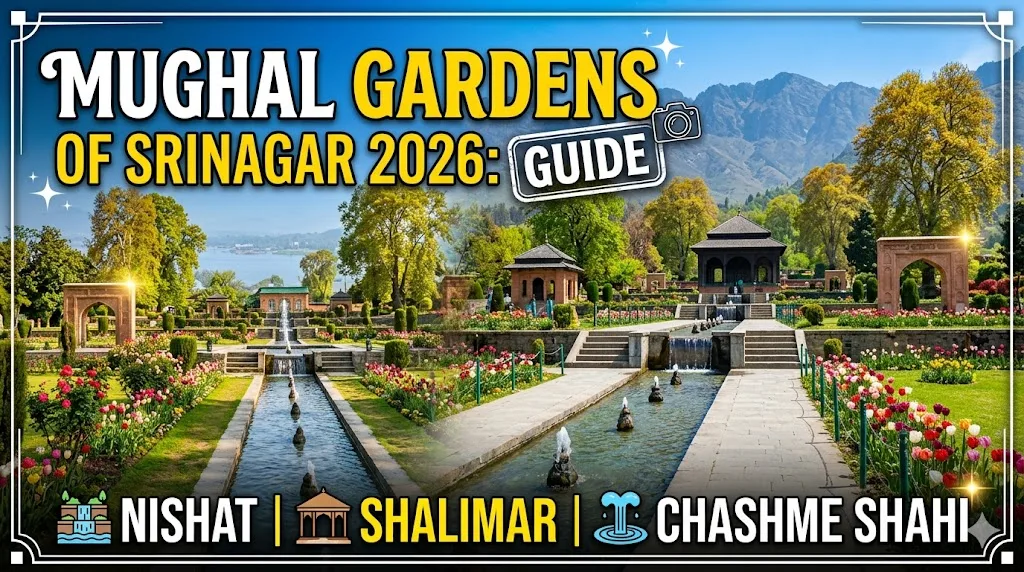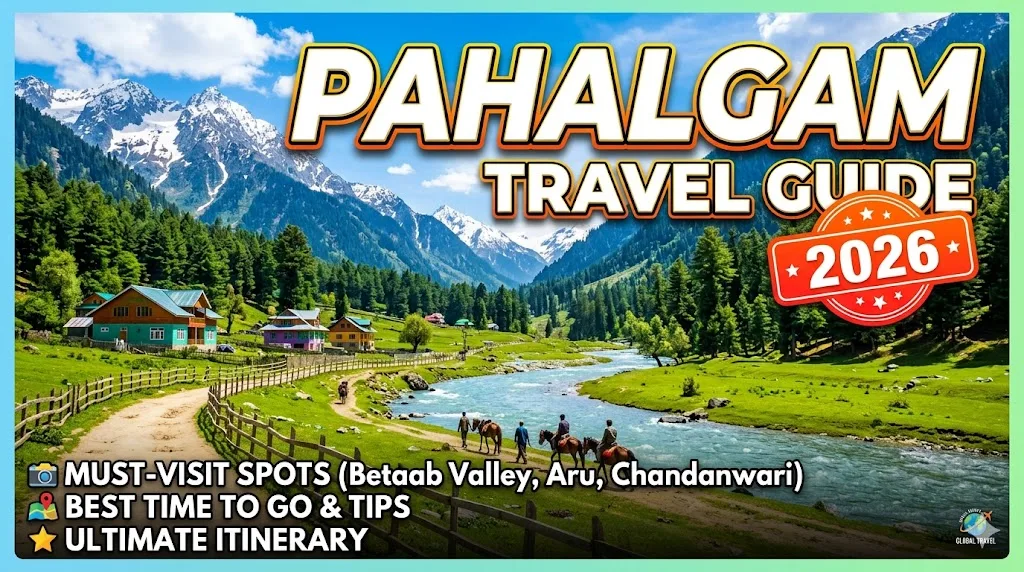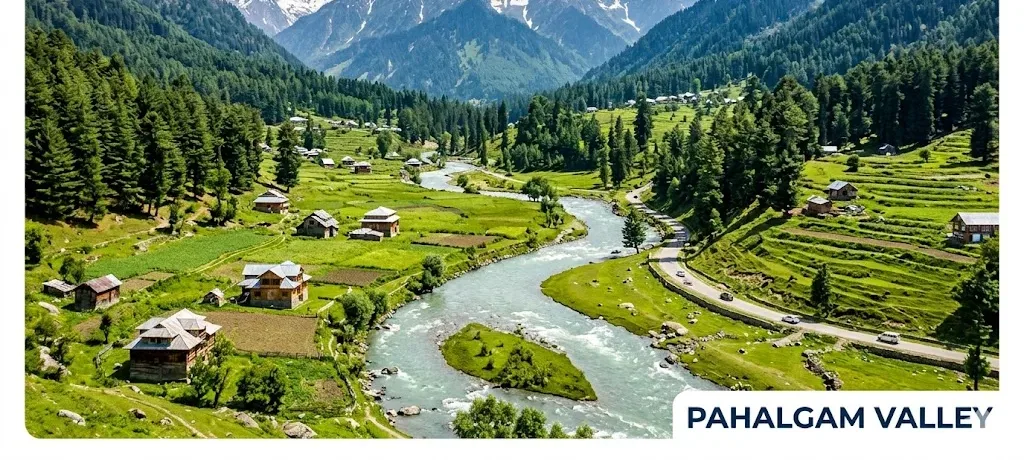
Most people who visit Kashmir leave having seen the same places — Dal Lake, Gulmarg’s ski slopes, Pahalgam’s pine forests, Sonmarg’s glaciers. These are beautiful, and they deserve their reputation. But there is another Kashmir, one that sits further north, closer to the mountains, closer to the border, and further from any tourist infrastructure worth calling by that name.
Gurez Valley is that Kashmir.
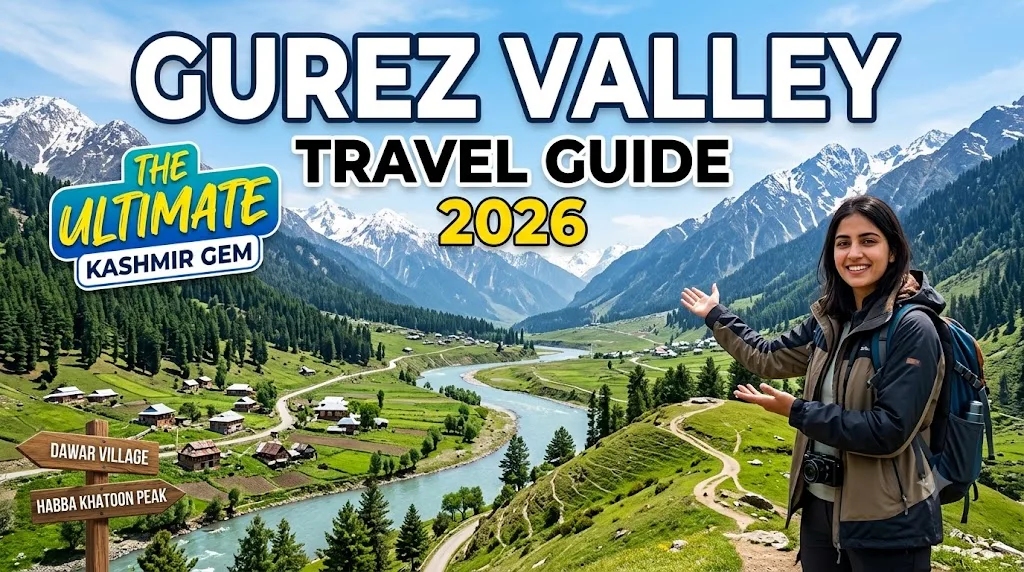
It sits quietly in the Bandipora district, cupped by the high Himalayas, watered by the Kishanganga River, and watched over by a pyramid-shaped peak that locals named after a poetess who wandered these same hills centuries ago. For decades, Gurez was off-limits to most visitors due to its proximity to the Line of Control. The restrictions have eased considerably, and while the valley is no longer a secret, it still has the unhurried, uncrowded quality of a place that hasn’t yet been arranged for tourism.
This guide covers everything you need to plan a proper Gurez trip in 2026 — from the road to the permits, the places to visit, where to sleep, and the small practical details that the valley will not remind you about once you arrive.
Where Exactly Is Gurez Valley
Gurez lies in the northern part of Bandipora district, in the Himalayas above the Kashmir Valley. It sits at roughly 2,400 metres above sea level — high enough that the air feels different, the light falls differently, and temperatures drop sharply after sunset even in midsummer.
The Kishanganga River runs through the valley from east to west, fed by glaciers and seasonal snowmelt from the surrounding ridges. At certain points along the river, you can see wire fencing along the banks. That fence marks the Line of Control. The same river that flows through Gurez continues on the other side under a different name — the Neelum — into Pakistan-administered territory. Standing at the riverbank and seeing this geography in person gives you a sense of the subcontinent’s political history that no map ever quite manages.
The main town in the valley is Dawar, which serves as the administrative centre, the commercial hub, and the base for most visitors. Beyond Dawar, the valley extends further into Tulail, a cluster of smaller villages that most casual tourists never reach but which arguably contains some of Gurez’s most striking scenery.
Best Time to Visit
The road to Gurez crosses Razdan Pass at approximately 3,300 metres, and this single geographical fact determines everything about when the valley is accessible. Heavy winter snowfall closes the pass completely, typically from mid-November through April. Attempting to reach Gurez outside the open season is not just difficult — it is simply not possible by road for most of the winter.
| Season | Months | Conditions |
|---|---|---|
| Opening Season | May–June | Road reopens; snow still on the peaks; meadows turning green; cool and quiet |
| Peak Summer | July–August | Full bloom; warmest temperatures; most visitors; best for families |
| Autumn | September–October | Golden meadows; crystal skies; far fewer crowds; best for photography |
| Winter | November–April | Road closed; valley cut off; helicopter service only in emergencies |
Among these windows, September stands apart. The summer crowds have thinned, the meadows have turned amber and gold, the skies are reliably clear, and the entire valley has a stillness to it that July simply cannot offer. If your travel dates are flexible, September is the month to aim for.
May and June are excellent for those who want to see the valley emerging from winter — snow still dusting the higher ridges, wildflowers pushing through meadow grass, and almost no other tourists around. July and August bring the most comfortable temperatures for trekking and camping but also the highest visitor numbers relative to Gurez’s limited accommodation capacity.
How to Reach Gurez Valley
The Route
The road from Srinagar to Dawar covers roughly 125 kilometres and takes between six and eight hours depending on road conditions, the season, and how many times you stop — which will be often, because the drive is genuinely extraordinary.
The journey breaks into three distinct sections:
Srinagar to Bandipora: About 55 kilometres of mostly flat, well-maintained highway that runs alongside Wular Lake — one of the largest freshwater lakes in Asia. This section is comfortable and takes around 90 minutes. Do everything you need to do here: fill your fuel tank completely, withdraw cash, buy any supplies you’ve forgotten, and eat a proper meal.
Bandipora to Razdan Pass: The road begins climbing steeply after Bandipora, narrowing as it gains altitude through dense forest and exposed switchbacks. The pass itself offers panoramic views in both directions — the Kashmir Valley spread out behind you and the Gurez basin opening ahead. Even experienced Himalayan travellers tend to pause here.
Razdan Pass to Dawar: A winding descent alongside the Kishanganga gorge, with stretches of rough road, occasional rockfall debris, and sharp bends that demand attention. The river appears far below before gradually rising to meet the road as you descend into the valley proper. The first clear view of Dawar and Habba Khatoon Peak from this descent is one of the finest arrival moments in Kashmir.
Transport Options
| Mode | Approximate Cost | Notes |
|---|---|---|
| Private SUV taxi from Srinagar | ₹4,500–₹7,000 one way | Most practical; book a day in advance |
| Shared Sumo (Bandipora → Dawar) | ₹300–₹500 per seat | Budget option; departs early morning |
| State bus (Srinagar → Bandipora) | ₹80–₹120 | Then shared Sumo onward; slowest overall |
| Self-drive SUV | Petrol + tolls | Fill tank in Bandipora; SUV strongly preferred |
| Motorcycle | Rental from Srinagar | Popular with adventure riders; manageable in good weather |
Shared Sumos from Bandipora to Dawar typically depart in the early morning and return from Dawar to Bandipora in the early afternoon. Timing matters — miss the morning departure and your options become significantly more limited.
If you plan to self-drive, choose an SUV over a hatchback or sedan. The road beyond Bandipora, particularly the descent from Razdan Pass and the stretches toward Tulail, rewards ground clearance and four-wheel traction.
The most important fuel rule in all of Gurez travel: There is no reliable petrol station in the valley. Fill completely in Bandipora. This is not a suggestion to keep in mind — it is a firm requirement.
Permits and Entry Requirements
Indian Nationals
No special permit is required to enter Gurez Valley as an Indian citizen. What you must carry, at all times, is an original government-issued photo ID — Aadhaar Card or Voter ID card are the most commonly accepted. Photocopies are generally not sufficient at Army check posts.
You will pass through multiple checkpoints on the journey from Srinagar to Dawar. Keep your ID accessible throughout the drive rather than packed away. The process at each checkpoint is routine and usually takes only a few minutes. The Army personnel manning these posts are accustomed to tourist traffic and are straightforward to deal with, provided your documents are in order.
For villages deeper in the valley — particularly Chakwali, Chorwan, and areas close to the Line of Control — separate permissions are required from local police or Army authorities in Bandipora. If you plan to visit these areas, arrange permissions before heading up from Bandipora, not from Dawar.
Foreign Nationals
As of 2026, foreign tourists are generally not permitted to enter Gurez Valley due to its proximity to the Line of Control. This rule has been subject to occasional review and partial relaxation, so foreign nationals should verify current guidelines directly with the Deputy Commissioner’s office in Bandipora or the J&K Tourism Department before making any travel plans to Gurez.
Photography Restrictions
This applies to everyone regardless of nationality: do not photograph military installations, checkpoints, bridges, or any structure near the Line of Control fence. Follow all guidance from Army personnel, and do not attempt to fly drones anywhere in or around the valley. Drone equipment is strictly prohibited beyond the first checkpoint.
Mobile Connectivity and Cash
These two points genuinely matter and are regularly underestimated by first-time visitors.
SIM Cards: Prepaid mobile SIM cards do not function in Jammu and Kashmir, including Gurez. This applies whether you’re on Jio, Airtel, Vi, or any other operator. Only postpaid connections work. If your current plan is prepaid, you need to either convert to postpaid or borrow a postpaid SIM before entering the valley. Postpaid Jio and Airtel both work in Dawar, though connectivity weakens significantly in the villages beyond. BSNL postpaid is available but more intermittent. In the event that all else fails, a PCO booth in Dawar still operates for local calls.
Cash: There is one ATM in Gurez, run by J&K Bank in Dawar. It runs out of cash regularly, is occasionally out of service, and should never be your primary plan. Withdraw everything you’ll need — accommodation, food, pony rides, fishing permits, shopping — from Srinagar or Bandipora before you set off. Card payments are essentially unavailable in the valley.
Places to Visit
Dawar
The valley’s main town is also its most comfortable base. Dawar is a small, unhurried settlement with a market, a handful of guesthouses, and the JKTDC log huts that most visitors use as their anchor. Walking through the market in the evening, with the Habba Khatoon Peak catching the last light above the rooftops, costs nothing and requires no planning. It is one of those simple, quiet moments that makes you glad you came.
Habba Khatoon Peak
The most iconic landmark in Gurez is the pyramid-shaped mountain that dominates the skyline above Dawar. It was named after Habba Khatoon, a 16th-century Kashmiri poetess and singer who is said to have wandered these mountains searching for her husband, the Sultan Yusuf Shah Chak, after he was captured by the Mughal Emperor Akbar. The mountain’s profile is genuinely distinctive — a near-perfect triangle rising over the river. It is most dramatic at sunrise and at dusk, when the rock takes on a deep amber tone before the valley shadows swallow it.
Tulail Valley
Roughly 40 kilometres beyond Dawar, Tulail is a string of villages strung along the Kishanganga where the valley narrows and the mountains close in more tightly. The drive alone is worth making — the river runs close to the road through stretches of birch and pine, and the villages here have an older, more rural character than Dawar. Tulail is famous for its freshwater trout, and the fisheries here produce some of the finest brown trout in Kashmir. If you plan to fish, a permit from the J&K Fisheries Department is required and can be arranged through local operators in Bandipora before your trip.
Razdan Pass
Most visitors treat Razdan Pass purely as a transit point, which is understandable given how eager everyone is to reach the valley. But the pass rewards a short stop. At around 3,300 metres, the air is noticeably thinner and colder, wildflowers grow right up to the edge of the snowfields in early summer, and the views in both directions are genuinely spectacular. On the return journey especially, when the pressure of arrival has lifted, it is worth pausing at the top.
The Kishanganga River and the LoC Fence
At several points along the valley road, wire fencing appears at the riverbank. This is the Line of Control. The river that runs past your feet in Gurez continues beyond that fence into Pakistan-administered territory, where it is called the Neelum. There’s nothing dramatic to see — just fencing, a river, and mountains continuing on the other side. But the experience of standing at that boundary and grasping the geography in person is different from understanding it on a map. It is one of the genuinely unique things about Gurez that no other Kashmir destination offers.
Chak Nallah
A natural curiosity that local guides point out along the valley — a section of the Kishanganga where the river disappears underground and resurfaces further downstream. The locals have their own name and lore for this phenomenon, which adds to the slightly otherworldly quality the valley already carries.
Things to Do in Gurez
- Trout fishing along the Kishanganga and in Tulail’s famous fisheries — one of the finest freshwater fishing experiences in northern India
- River rafting on the Kishanganga — white water sections suitable for beginners with a guide, with more demanding stretches for experienced rafters
- Camping by the river — the night skies above Gurez are extraordinary; with zero light pollution and absolute silence, the stars are visible in a way that genuinely surprises people from cities
- Village walks through Sheikhpura, Badugam, and other settlements where traditional Dard-Shina wooden architecture has been maintained for generations
- Photography — sunrise and sunset over Habba Khatoon Peak, long river valley shots from the Razdan descent, and the distinctive wooden village homes all offer material that is genuinely different from anything found in mainstream Kashmir
- Trekking — trails connect the valley to surrounding ridges and meadows, including routes toward Patalwan Lake and higher alpine pastures; local guides are advisable for any multi-day route
The Dard-Shina People
Gurez has been home to the Dard-Shina community for centuries, and they remain one of the valley’s most compelling reasons to visit. The Shina language — distinct from Kashmiri, Urdu, or any other regional language — is the mother tongue here. Most people in Dawar also speak Urdu and some Hindi, which makes basic communication straightforward for most Indian visitors, but the villages beyond Dawar are more linguistically closed.
The traditional architecture of Dard-Shina homes — multi-storey wooden structures with intricately carved facades, built to withstand heavy snowfall and biting cold — is distinctive and increasingly rare as concrete construction replaces it. If you can arrange a homestay with a local family, even for one night, the cultural dimension of the trip transforms entirely.
Where to Stay
| Accommodation | Type | Best For |
|---|---|---|
| JKTDC Log Huts, Dawar | Government wooden cottages, clean rooms, hot water | First-time visitors, families |
| Local homestays | Stay with Dard-Shina families, home-cooked meals | Cultural experience, solo travellers |
| Private guesthouses (Dawar) | Basic to mid-range, limited options | Budget-conscious couples and groups |
| Riverside camping | Tent camping on the Kishanganga bank | Trekkers, adventure travellers |
Accommodation in Gurez is limited and books up during July and August. Book in advance for the peak months — there is no such thing as easily finding a room in Dawar on the day of arrival in high season.
Practical Tips Before You Go
- Leave Srinagar by 7 AM. The mountain section should be driven in daylight, and the last stretch from Razdan Pass to Dawar takes longer than it looks on a map.
- Carry all medications and a basic first-aid kit. The nearest proper medical facility is in Bandipora. Assume you cannot buy anything pharmaceutical in the valley.
- Download offline maps before leaving Srinagar. Save your route, accommodation address, emergency contacts, and the Bandipora DC office number offline. Do not rely on finding a signal to navigate.
- Dress in layers regardless of the season. Even in late July, the pass is cold and windy. Mornings and evenings in the valley drop sharply after sunset.
- Inform someone of your detailed itinerary — where you’re staying, when you plan to return — before heading up.
- Respect the community and the military presence. Gurez is not a curated tourist destination. Ask before photographing local people, follow all checkpoint instructions without argument, and leave no waste anywhere in the valley.
- Build in an extra day. Landslides, sudden weather changes, and road closures can delay the return journey. A buffer day avoids what might otherwise become a very stressful situation.
Recommended Duration
| Trip Length | What You Can Cover |
|---|---|
| 2 nights / 3 days | Dawar, Habba Khatoon views, Kishanganga walk, local market |
| 3 nights / 4 days | Above + Tulail Valley, Chak Nallah, fishing or rafting |
| 4–5 nights | Full valley exploration including trekking, camping, deeper village visits |
A single day trip from Srinagar is technically possible but genuinely unsatisfying — you spend most of your waking hours in the car and barely scratch the valley’s surface. Two nights is the minimum that makes the journey feel worthwhile. Three is better.
Key Takeaways
- Gurez Valley is open to Indian nationals without any special permit; carry original Aadhaar or Voter ID at all times
- The valley is accessible only from May to October; winter road closure at Razdan Pass is complete and not negotiable
- September is the finest month to visit — golden meadows, clear skies, and far fewer tourists than July
- Fill your fuel tank completely in Bandipora; there is no reliable petrol station in the valley
- Only postpaid SIM cards work in J&K; prepaid connections stop functioning on entry
- Withdraw all cash in Srinagar or Bandipora; the single ATM in Dawar is unreliable
- Drones are strictly prohibited beyond the first checkpoint
- Foreign nationals should verify current entry rules before planning any Gurez trip
Conclusion
Gurez Valley asks something of the traveller that most popular Kashmir destinations do not — a willingness to be uncomfortable, to plan carefully, to drive a long and demanding road, and to arrive somewhere that has not been smoothed out and polished for visitors. In return, it gives something that is increasingly rare in Indian tourism: a place that still feels genuinely remote, genuinely itself, and genuinely worth the effort.
The Kishanganga runs through it regardless of who is watching. The Habba Khatoon Peak catches the light at dawn whether or not a single tourist is there to see it. Go when the road is open, carry your documents, leave your drone in Srinagar, and give Gurez at least three days. It will use them well.
Frequently Asked Questions
1. Do Indian citizens need any permit to enter Gurez Valley?
No special permit is required. You only need to carry an original government-issued photo ID — Aadhaar Card or Voter ID — which will be checked at Army checkpoints on the route.
2. What is the best time of year to visit Gurez?
May through October covers the full accessible season. September is generally considered the finest month, offering golden autumn meadows, clear skies, and significantly fewer crowds than the peak summer months.
3. How long does the drive from Srinagar to Gurez take?
Between six and eight hours, covering roughly 125 kilometres via Bandipora and Razdan Pass. The distance is deceptive — the mountain road after Bandipora is slow, winding, and demands careful driving.
4. Can I use my prepaid mobile SIM in Gurez?
No. Prepaid SIM cards do not work anywhere in Jammu and Kashmir. Only postpaid connections from operators like Jio, Airtel, or BSNL function in the valley.
5. Is Gurez Valley safe for solo and family travellers?
Yes, the valley is considered safe for all visitors. The significant Army presence throughout the area actually contributes to security. Standard precautions apply — carry ID, follow checkpoint rules, inform someone of your itinerary, and avoid any restricted areas near the Line of Control.
Official Resources
- Jammu and Kashmir Tourism Department — tourism.jk.gov.in
- Jammu and Kashmir Tourism Development Corporation — jktdc.co.in
- Jammu and Kashmir Government Official Portal — jk.gov.in
- District Administration, Bandipora — bandipora.nic.in

Rahul Naik is a Jammu & Kashmir local who has spent years exploring the Kashmir Valley, Jammu region, and high-altitude areas of the Union Territory. He has personally visited every major destination covered on VisitJK — from Dal Lake houseboats to Gulmarg slopes to the remote villages of the Gurez Valley. VisitJK is built on that firsthand experience — honest, practical travel content written for visitors who want real information, not brochure language.