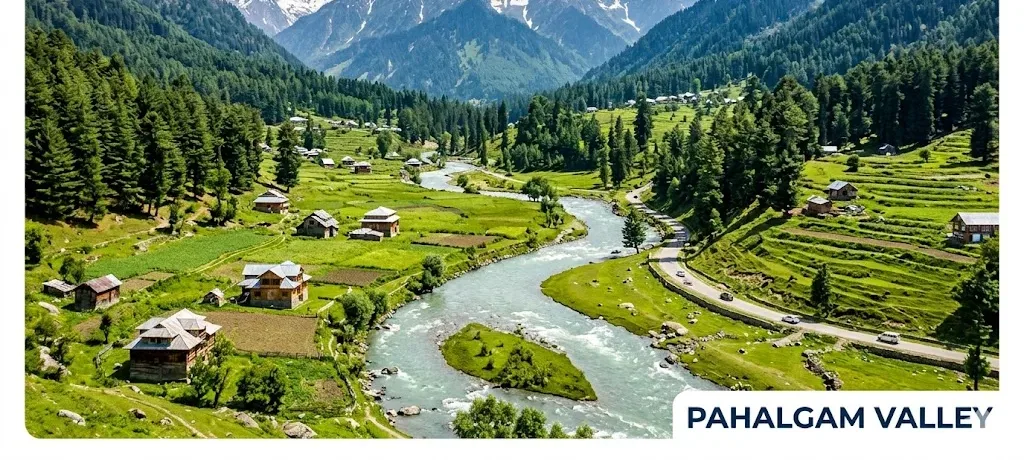

Every year, hundreds of thousands of devotees leave behind their ordinary lives to undertake one of Hinduism’s most demanding and revered pilgrimages — the Amarnath Yatra. The destination is a high-altitude cave in the mountains of Jammu and Kashmir, inside which a naturally formed ice Shivling is worshipped as a manifestation of Lord Shiva. The cave sits at approximately 3,888 metres above sea level, and reaching it requires either a multi-day trek through the Himalayas or a steep same-day climb depending on the route you choose.
The Amarnath Yatra 2026 officially runs from 3 July to 28 August 2026 — a 57-day window that coincides with the auspicious Hindu month of Shravan and concludes on Raksha Bandhan. The ceremonial Pratham Puja (first worship) was held on 29 June 2026, marking the formal opening of the season.
This guide covers everything a first-time or returning pilgrim needs to know — official dates, registration process, route comparison, what to pack, health requirements, accommodation options, safety rules, and practical tips to make the journey as smooth and meaningful as possible.
Amarnath Yatra 2026: Key Dates at a Glance
| Event | Date |
|---|---|
| Medical certificate valid from | 8 April 2026 |
| Registration opens | 15 April 2026 |
| Pratham Puja (ceremonial first worship) | 29 June 2026 |
| Yatra officially begins | 3 July 2026 |
| Yatra concludes (Raksha Bandhan) | 28 August 2026 |
| Total duration | 57 days |
The first two to three weeks of July are generally considered the best period for undertaking the Yatra. The ice Shivling tends to be at its largest early in the season, trails are clear, and weather is more stable than in August, which can bring heavier and less predictable rainfall.
Registration for Amarnath Yatra 2026
Registration is mandatory for all pilgrims. No one is permitted to enter the Yatra route without a valid permit issued by the Shri Amarnathji Shrine Board (SASB). The registration process opened on 15 April 2026 and can be completed through two methods.
Online Registration
- Visit the official SASB portal at jksasb.nic.in
- Complete the registration form with personal details
- Upload your Compulsory Health Certificate (CHC), valid ID proof, and passport-size photograph
- Select your preferred route (Pahalgam or Baltal) and trekking date
- Pay the registration fee of ₹150 per person
- Download and print your Yatra permit — carry at least 3 printed copies
Offline Registration
- Visit any of the 554+ designated bank branches across India, including branches of SBI, PNB, and J&K Bank
- Submit a filled application form along with your CHC and ID proof
- Collect your permit from the branch
Important: Your permit specifies the route and date. This cannot be changed after registration. Print multiple copies — the permit is checked at the base camp entry, security checkpoints, and at the cave entrance.
Compulsory Health Certificate (CHC): What You Need to Know
The CHC is a medical clearance document that every pilgrim must obtain before registering. It is mandatory without exception — even for those who plan to use helicopter services.
- The CHC must be issued by an SASB-authorized doctor or medical institution
- It is valid only if issued after 8 April 2026
- The list of authorized doctors and medical centers is available on the official SASB website
- The CHC is designed to screen out pilgrims with conditions that could be dangerous at high altitude — such as severe heart disease, uncontrolled hypertension, chronic respiratory illness, or advanced diabetes
Without a valid CHC, registration will not be approved. Obtain your health certificate early — authorized centers can get crowded as registration demand picks up.
Age Limits and Who Cannot Participate
Due to the physically demanding nature of the trek and the high-altitude conditions, SASB enforces strict eligibility rules:
- Minimum age: 13 years
- Maximum age: 70 years
- Children below 13 are not permitted on the Yatra
- Adults above 70 are not allowed, regardless of physical fitness
- Pregnant women beyond 6 weeks of pregnancy are not permitted
These restrictions exist for safety reasons and are strictly enforced at checkpoints along both routes.
RFID Card: Mandatory for All Pilgrims
After registration, every pilgrim receives an RFID (Radio Frequency Identification) card. This card must be worn around the neck at all times during the Yatra. It serves as your tracking identification — security personnel and medical teams use it to locate pilgrims in emergencies. RFID cards are collected from designated centers in Jammu or Srinagar before the trek begins. Do not leave your RFID card behind or remove it during the journey.
Amarnath Yatra 2026: Route Comparison
There are two official routes to the Amarnath Cave. Choosing the right one for your fitness level and time availability is one of the most important decisions of your trip.
Pahalgam Route (Traditional Route)
Route: Pahalgam → Chandanwari → Pissu Top → Sheshnag → Mahagunas Pass → Panjtarni → Holy Cave
One-way distance: Approximately 46–48 km from Chandanwari
Duration: 3 to 4 days (one way)
Difficulty: Moderate — gradual ascent, suitable for most pilgrims including families and first-timers
Overnight halts: Chandanwari (Day 1), Sheshnag Lake (Day 2), Panjtarni (Day 3), Cave darshan and descent (Day 4)
The Pahalgam route is the traditional path pilgrims have used for centuries. It passes through some of the most stunning landscape in the Kashmir Himalayas — dense pine forests, the rushing Lidder River, the emerald waters of Sheshnag Lake, and wide mountain meadows at Panjtarni. The gradual altitude gain makes acclimatization easier and the risk of altitude sickness lower. Pony, porter, and palki (palanquin) services are available at multiple points along this route.
Best for: First-time pilgrims, families, senior citizens (within the age limit), and those who want to fully experience the journey.
Baltal Route (Short and Steep)
Route: Baltal → Domail → Barari Top → Sangam → Holy Cave
One-way distance: Approximately 14–16 km
Duration: 1 day (most pilgrims complete the return trip in a single day)
Difficulty: Difficult — steep ascent through narrow gorges, physically demanding
Base camp: Baltal, near Sonamarg in Ganderbal district
The Baltal route is significantly shorter but considerably steeper. The terrain is rocky and uneven, with sharp altitude gain over a short distance. Most pilgrims who choose this route complete the round trip — ascent and descent — in a single gruelling day. Regular pony service is restricted on this route due to the steepness and safety concerns; dandies (carried chairs) are available for those who need assistance.
Best for: Young, physically fit pilgrims with trekking experience who have limited time.
Route Comparison Table
| Feature | Pahalgam Route | Baltal Route |
|---|---|---|
| Distance (one way) | ~46–48 km | ~14–16 km |
| Duration | 3–4 days | 1 day |
| Difficulty | Moderate | Difficult |
| Altitude gain | Gradual | Steep |
| Overnight stays | Required (3 nights) | Not required |
| Pony/porter service | Available throughout | Limited (dandies available) |
| Best for | Families, beginners | Fit trekkers, time-limited |
What to Pack for Amarnath Yatra 2026
Packing correctly can be the difference between a comfortable, spiritually fulfilling journey and a miserable, physically exhausting one. The cave sits at nearly 3,888 metres, and even in July the temperature near the cave can drop to near-freezing. Weather changes rapidly in the high Himalayas — mornings can be clear and by afternoon you may be trekking through rain or hail.
Clothing
| Item | Why You Need It |
|---|---|
| Thermal inner wear (top and bottom) | Temperatures near the cave drop sharply, especially at night |
| Woollen sweater or fleece jacket | Essential layer for cold mornings and high-altitude sections |
| Windproof / waterproof outer jacket | Protects against rain, hail, and mountain wind |
| Light cotton clothes | For base camp areas and lower-altitude sections |
| Woollen socks (2–3 pairs) | Wet or cold feet cause blisters and frostbite risk |
| Woollen gloves and cap | Hands and ears are the first to feel altitude cold |
| Waterproof trekking boots | Rocky, wet terrain — footwear is non-negotiable |
| Rain poncho or compact umbrella | Sudden showers are common on both routes |
Pack in layers — this allows you to add or remove clothing as altitude and temperature change throughout the day.
Medical and First Aid
| Item | Purpose |
|---|---|
| Altitude sickness tablets (Diamox) | Consult your doctor before taking; helps with acclimatization |
| Paracetamol / pain reliever | For headaches and general aches from trekking |
| Antacid tablets | Mountain exertion can cause digestive discomfort |
| Bandages and antiseptic cream | For blisters, cuts, and minor wounds |
| Glucose powder / ORS sachets | For quick energy and hydration |
| Personal prescription medicines | Bring adequate supply for the entire trip plus extra |
| Hand sanitizer | Hygiene at remote campsites |
Medical Aid Centers (MACs) and Emergency Aid Centers (EACs) are stationed at regular intervals along both routes, but having your own basic first aid is always wise.
Trekking Essentials
- Trekking pole / walking stick — greatly reduces knee strain on steep descents
- Waterproof backpack or rain cover — keeps all your gear dry
- Headlamp or torch with extra batteries — useful for early morning starts and camp use
- Power bank (fully charged) — mobile charging is not available on the trail
- Reusable water bottle (1–2 litres) — stay hydrated; dehydration accelerates altitude sickness
- Dry snacks — roasted chana, dry fruits, energy bars, glucose biscuits, dark chocolate
- Lightweight sleeping bag — essential if staying in free community tents
Documents (Carry in a Waterproof Pouch)
- Yatra permit (at least 3 printed copies)
- RFID card (worn around neck at all times)
- Compulsory Health Certificate
- Valid government-issued photo ID (Aadhaar, Voter ID, or Passport)
- Passport-size photographs (2–3 extra copies)
- Emergency contact details written on paper
Accommodation Along the Routes
Accommodation on the Yatra ranges from free to paid, with options at every major halt point.
| Type | Cost | Where Available |
|---|---|---|
| Community tents (by NGOs/trusts) | Free | Along both routes at major halts |
| SASB prefab huts | Nominal charge | Baltal, Nunwan, Sheshnag, Panjtarni |
| Tourist bungalows / guesthouses | ₹800–₹2,500/night | Pahalgam base camp, Sonamarg |
| Hotels / houseboats in Srinagar | ₹2,000–₹8,000/night | Pre/post-trek comfort stay |
Free langars (community food stalls run by religious organizations) operate at regular intervals along both routes, providing hot meals, tea, and snacks at no cost. These are one of the most heartening aspects of the Yatra — the collective spirit of seva (service) that sustains hundreds of thousands of pilgrims through a challenging journey.
Safety Rules and Important Guidelines
- Wear your RFID card at all times. It is your emergency identification throughout the trek.
- Stick to the designated route. Do not deviate from the marked Pahalgam or Baltal trail.
- Travel with a group. Solo trekking is not recommended, especially for first-timers.
- No plastics. SASB has strict eco-rules for 2026 — carry a reusable bag, do not litter, use designated dustbins at camps.
- Walk slowly and rest often. Rushing at altitude increases the risk of altitude sickness significantly.
- Drink water regularly. Dehydration at altitude is a serious risk and is easily overlooked.
- Do not trek in heavy rain. Rain increases the risk of slippery terrain and landslides. Wait at the nearest camp if weather deteriorates sharply.
- Monitor your body. Persistent headache, nausea, loss of appetite, or dizziness are early signs of altitude sickness. Descend immediately if symptoms worsen.
- Beware of scam websites. Only book services through the official SASB portal. Fraudulent websites offering helicopter packages or fake permits have been reported — do not share personal or payment details on unofficial sites.
Physical Preparation Before the Yatra
Many pilgrims underestimate the physical demands of the Yatra and arrive poorly prepared. Even the Pahalgam route covers 46 km of mountain terrain over 3–4 days. Here is how to prepare:
- Start 4–6 weeks before your departure date. Begin daily walking or jogging — work up to 5–8 km per day.
- Include incline training. If you live in a flat area, use stairs or a treadmill on incline settings.
- Strengthen your knees. Squats, lunges, and leg presses build the muscle needed to handle steep descents.
- Practice carrying a backpack. Walk with a loaded pack (5–7 kg) to simulate trek conditions.
- Acclimatize on arrival. Spend at least one day in Srinagar (1,600 m) before proceeding to the base camps. Your body needs time to adjust to reduced oxygen levels.
Key Takeaways
- Amarnath Yatra 2026 runs from 3 July to 28 August 2026 (57 days), with registration open from 15 April 2026 at jksasb.nic.in.
- Registration fee is ₹150 per person; a valid Compulsory Health Certificate is mandatory for everyone.
- Only pilgrims aged 13 to 70 are permitted; pregnant women beyond 6 weeks are not allowed.
- The Pahalgam route (46–48 km, 3–4 days) is best for families and beginners; the Baltal route (14–16 km, 1 day) suits fit trekkers with limited time.
- Wear the RFID card around your neck throughout the journey — it is your emergency tracking device.
- Thermals, a waterproof jacket, trekking boots, and a rain poncho are non-negotiable items in your packing list.
- Begin physical preparation 4–6 weeks early and spend at least one acclimatization day in Srinagar before starting the trek.
- Free langars provide meals along both routes; basic paid accommodation is available at major halt points.
Conclusion
The Amarnath Yatra is unlike any other journey. It demands physical effort, careful preparation, and genuine mental resolve — but it offers something that few experiences in life can match: the feeling of having completed something both deeply personal and profoundly communal, in one of the most magnificent mountain environments on earth.
Whether you approach it as a pilgrimage of faith, a high-altitude trek, or simply a rare chance to experience the raw beauty of the Kashmir Himalayas up close, the Yatra rewards those who prepare thoughtfully and travel with humility and patience.
Register early, get your health certificate done, pack for cold and rain even in July, choose your route based on honest assessment of your fitness, and most importantly — walk at your own pace. The cave will be there. Har Har Mahadev.
Frequently Asked Questions
Q1. When does Amarnath Yatra 2026 start?
3 July 2026. It ends on 28 August 2026 (Raksha Bandhan) — 57 days total.
Q2. How do I register?
Online at jksasb.nic.in or offline at any designated bank branch. Fee is ₹150 per person. A Compulsory Health Certificate (CHC) is mandatory.
Q3. Which route is easier — Pahalgam or Baltal?
Pahalgam. It is longer (46–48 km, 3–4 days) but gradual. Baltal is shorter (14–16 km, 1 day) but very steep. First-timers should choose Pahalgam.
Q4. Is helicopter service available in 2026?
No. Helicopter services have been suspended for 2026 by the J&K Government. Both trekking routes remain fully operational.
Q5. What are the age limits?
Only pilgrims aged 13 to 70 are allowed. Children below 13, adults above 70, and pregnant women beyond 6 weeks are not permitted.
Q5. Is helicopter service available for Amarnath Yatra 2026?
As per Order No. 321–HOME of 2026, the J&K Government suspended helicopter services over the Yatra corridor for the 2026 season due to security, environmental, and crowd management concerns. Both trekking routes remain fully operational with CRPF security cover, medical camps, and langar facilities. Pilgrims who previously relied on helicopter access should plan to use pony, palki, or trekking options instead. Any website currently offering helicopter bookings for Amarnath Yatra 2026 should be treated with caution — verify any service only through the official SASB portal.
Official Resources
- Shri Amarnathji Shrine Board (SASB) — Official Portal: https://jksasb.nic.in
- J&K Tourism Department: https://www.jktourism.jk.gov.in
- J&K Traffic Police (Route Updates): https://jktraffic.gov.in
- India Meteorological Department (Weather Alerts): https://www.imd.gov.in
- J&K Disaster Management Authority: https://jkdma.jk.gov.in

Rahul Naik is a Jammu & Kashmir local who has spent years exploring the Kashmir Valley, Jammu region, and high-altitude areas of the Union Territory. He has personally visited every major destination covered on VisitJK — from Dal Lake houseboats to Gulmarg slopes to the remote villages of the Gurez Valley. VisitJK is built on that firsthand experience — honest, practical travel content written for visitors who want real information, not brochure language.